A shipping manifest is a consolidated record of cargo or shipments associated with a transport movement. In international freight, it is often called a cargo manifest or freight manifest. Carriers, terminals, customs authorities and other logistics parties may use manifest data to identify what is being transported, where the cargo is moving and which individual shipments are included.
A shipping manifest is not the same as a packing list or bill of lading. A packing list describes how a commercial shipment is physically packed. A bill of lading is a transport document associated with a specific ocean shipment. By contrast, a cargo manifest can bring together relevant information from multiple shipments or transport documents moving under the same vessel, aircraft, vehicle or carrier movement.
The exact format and required fields depend on the transport mode, carrier, country and regulatory system. Therefore, importers and exporters should focus on making the underlying cargo information accurate and consistent rather than assuming that every manifest follows one universal template.
What Is a Shipping Manifest?
A shipping manifest is a structured record used to identify cargo or shipments connected with a transportation movement. In international freight, the term commonly refers to a cargo-level record compiled for carrier, terminal, operational or customs purposes.
For example, one vessel may carry containers belonging to many exporters and importers. Each shipment can have its own shipper, consignee, bill of lading, package count, weight and cargo description. A cargo manifest brings relevant shipment information together so the parties handling the overall transport movement can identify what is being carried.
The same basic principle can apply to air cargo and road freight. However, terminology, filing systems and required data vary by transport mode and jurisdiction.
For importers, the practical point is simple: manifest data usually depends on information already created during booking and document preparation. Incorrect cargo descriptions, package counts, weights or consignee details can therefore create problems later in transportation or customs processing.
What Information Can a Shipping Manifest Include?
There is no single worldwide shipping-manifest format. Nevertheless, a cargo or freight manifest may contain information such as:
- Shipper or consignor: The party shown as sending the cargo.
- Consignee: The party receiving or controlling the shipment at destination.
- Transport reference: Vessel, voyage, flight, vehicle, carrier or other movement reference where applicable.
- Port or place of loading: The point where the relevant transport movement begins.
- Port or place of discharge: The destination gateway or unloading point.
- Bill of lading or Air Waybill reference: The transport-document number associated with an individual shipment.
- Package count: Cartons, pallets, crates, drums or other shipping units.
- Cargo description: A description that identifies the goods being transported.
- Gross weight: Shipment weight including packaging where required.
- Measurement or volume: CBM or another cargo measurement where applicable.
- Container number: Used for containerized sea freight.
- Seal number: Used to identify the container seal where required.
- Dangerous-goods information: Additional information may be required for regulated cargo.
The actual fields depend on the carrier, transport mode and regulatory system. Therefore, importers should not use a general online example as a substitute for the carrier’s shipping instructions or destination-country filing requirements.
More importantly, the basic shipment facts should remain consistent across manifest data, transport documents, the packing list and the commercial invoice.
Shipping Manifest vs Packing List vs Bill of Lading
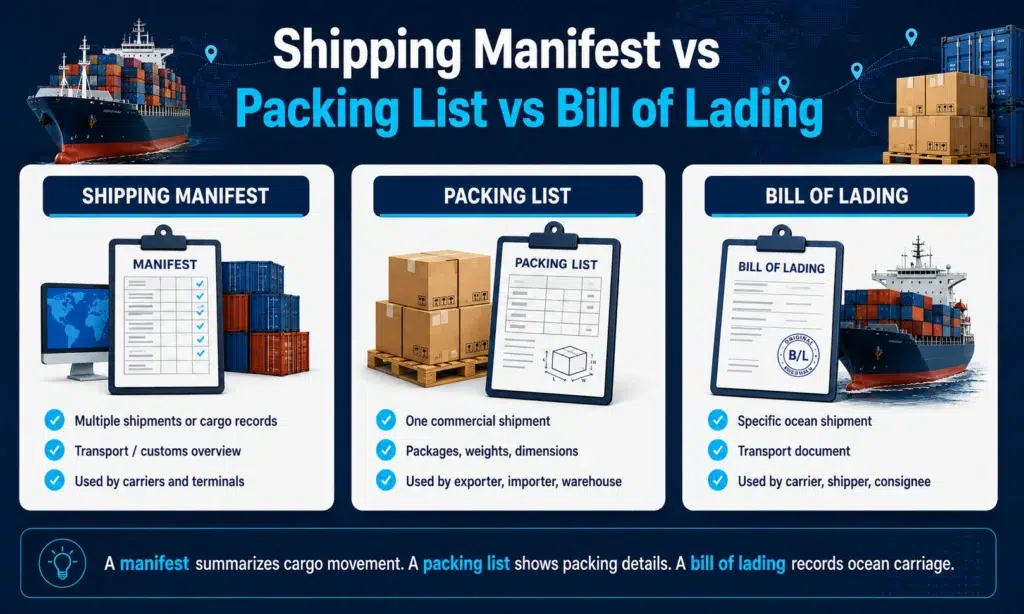
These records often contain overlapping shipment information, but they do not perform the same job. Understanding the distinction helps importers avoid document mismatches and prevents one document from being used as a substitute for another.
| Document or Record | Main Scope | Main Purpose | Typical Users |
|---|---|---|---|
| Shipping / Cargo Manifest | Multiple cargo records associated with a transport movement | Provides an operational or regulatory overview of cargo being transported | Carrier, terminal, customs authority or transport operator |
| Packing List | Physical packing details of a commercial shipment | Shows packages, quantities, weights, dimensions, CBM and packing structure | Exporter, importer, warehouse, freight forwarder and customs broker |
| Bill of Lading | A specific ocean shipment | Records cargo received for ocean carriage and the applicable transport-document relationship | Carrier or NVOCC, shipper, consignee and banks when applicable |
The easiest way to remember the difference is:
- A packing list answers: How is this shipment physically packed?
- A bill of lading answers: What cargo was received for ocean carriage, under which transport document and between which parties?
- A cargo manifest helps answer: What shipments or cargo records are associated with this transport movement?
If you need carton-level information, use our packing list for international shipping guide. It explains package numbering, quantities, gross and net weight, dimensions, CBM and how a packing list should match the other shipment documents.
Shipping Manifest vs Commercial Invoice
A shipping manifest and commercial invoice can contain information about the same cargo, but their main purposes are different.
The commercial invoice records the commercial transaction. It normally identifies the seller, buyer, product description, quantity, unit price, total value, currency and agreed trade terms. Customs authorities may use commercial-invoice information when reviewing customs value and classification.
A shipping manifest, by contrast, is primarily a transport or cargo record. It is not normally the main document used to prove the commercial sale value between the exporter and importer.
However, obvious inconsistencies between the commercial invoice and manifest-related cargo data can cause questions. Product descriptions, quantities, package counts and shipment references should therefore be reviewed before departure.
Who Prepares a Shipping Manifest?
The answer depends on the type of transport and the manifest being discussed.
For international freight, the carrier, airline, shipping line, NVOCC or another responsible transport party may compile or transmit manifest information using data collected during booking and shipping-document preparation.
The exporter or importer may not personally create the final carrier manifest. However, they still need to provide accurate commercial and cargo information to the freight forwarder, carrier, broker or other party responsible for the transport record.
A freight forwarder may help collect information such as:
- Shipper and consignee details
- Product description
- Package quantity
- Gross weight and CBM
- Container information
- Bill of lading or Air Waybill instructions
- Battery or dangerous-goods information when applicable
That information may later flow into booking records, shipping instructions, transport documents and manifest systems.
As a result, correcting inaccurate data before departure is usually easier than trying to amend a shipment after the carrier, terminal or customs system has already received it.
Types of Shipping Manifests
The word manifest can describe several related transport records. The terminology is not identical across every carrier or regulatory system, but importers may encounter the following types.
Cargo Manifest
A cargo manifest summarizes cargo associated with a vessel, aircraft or another transport movement. It may contain multiple shipment records and transport-document references.
Freight Manifest
The term freight manifest is often used in a similar operational context. Depending on the carrier or logistics system, it may describe shipment, routing, weight, handling or other transport information associated with freight being moved.
Customs Manifest
Customs authorities may require carriers or other responsible parties to submit specified cargo information before arrival or departure. The data, deadline and electronic filing system depend on the jurisdiction and transport mode.
Dangerous Goods Manifest
Dangerous goods can require additional transport records so carriers, terminals and emergency-response personnel can identify regulated cargo and its location.
This does not replace product-specific dangerous-goods documents. For example, lithium battery cargo may need classification, test and safety documentation before a carrier accepts the shipment. See our shipping batteries from China guide for the wider battery-shipping process.
Parcel or Carrier Manifest
Parcel networks also use the word manifest. A warehouse or shipping system may close a group of courier shipments and transmit the package records to the carrier before pickup.
This parcel workflow follows the same general idea of grouping shipment records, but it is operationally different from an international ocean or air cargo manifest.
What Is a Parcel Shipping Manifest?
In parcel and e-commerce fulfillment, a parcel shipping manifest usually refers to a consolidated electronic record of packages being handed to a courier or postal carrier.
For example, a fulfillment warehouse may prepare many parcels during one day and transmit the shipment batch to the carrier before pickup. Depending on the carrier and system, the manifest process may support batch handover, tracking-data transmission, shipment reconciliation and end-of-day closing.
Importers should not confuse this with the cargo manifest used in international freight or customs processes. Both are called manifests because they group shipment records, but the operating context is different.
How Shipping Manifest Data Fits Into International Freight
A shipping manifest does not appear in isolation. It normally sits within a wider flow of commercial, warehouse and transportation information.
A typical international shipment may follow this sequence:
- The supplier prepares product and commercial information.
- The final cartons, pallets or crates are confirmed.
- The packing list records the final package details.
- The commercial invoice records the commercial transaction and declared value.
- The freight forwarder or carrier receives the booking and shipping instructions.
- A Bill of Lading or Air Waybill is prepared for the shipment.
- Relevant shipment data can feed carrier or regulatory manifest systems.
- Destination customs and delivery processes use the required transport and import records.
This explains why one incorrect data point can affect several records. If the warehouse confirms 80 cartons but the packing list shows 78, or if the cargo description used for booking does not match the commercial invoice, the discrepancy should be corrected before departure.
The same principle applies when several Chinese suppliers are consolidated into one international shipment. Final export data should reflect the cargo that is actually shipped rather than outdated supplier estimates.
Manifest Data and Customs Filing Are Not Always the Same Thing
A cargo manifest can form part of the information used for transportation and customs control, but importers should not assume that one manifest automatically satisfies every destination-country filing requirement.
Different countries may require additional advance cargo, security or importer information. These filings can have different responsible parties and different submission deadlines.
For example, U.S. ocean imports may involve carrier or NVOCC manifest data as well as separate importer security requirements. These processes should be treated separately rather than assuming that one filing replaces another.
If you are planning a U.S. ocean shipment, our sea freight from China to USA guide explains the wider FCL, LCL, ISF, customs and destination process.
Common Shipping Manifest Mistakes
Many manifest problems begin with inaccurate source information rather than the final electronic filing itself.
Using a Vague Cargo Description
Descriptions such as “parts,” “accessories,” “samples” or “goods” may be too vague for transport or customs purposes. Use a commercially meaningful description that reflects the actual product.
Wrong Package Count
The final number of cartons, pallets, crates or other packages should match the warehouse record and transport-document instructions.
Incorrect Gross Weight
International freight should use final packed weight whenever possible. Repacking, crating or palletizing can change the actual gross weight after the supplier provides an initial estimate.
Consignee Details Do Not Match
The consignee or importer information should follow the agreed transport and customs structure. Do not reuse details from an earlier shipment without checking them.
Container or Seal Number Errors
For FCL shipments, container and seal information should be checked against the actual loading record when those details are required.
Battery or Dangerous-Goods Information Is Missing
Do not hide batteries, liquids, chemicals or dangerous goods to obtain a cheaper freight rate. The carrier needs the real product information before confirming acceptance.
One Document Changes but the Others Do Not
Updating the packing list without updating booking instructions or transport-document data can create inconsistencies. When one core shipment fact changes, review every document or record that depends on it.
How to Check Shipment Data Before Cargo Leaves China
Importers do not normally need to create the final carrier manifest themselves. However, they should make sure that the source information provided to the freight forwarder or carrier is accurate.
Before departure, check:
- Final product description
- HS code if available
- Shipper and consignee names
- Final package count
- Gross and net weight where applicable
- Carton or pallet dimensions
- Total CBM
- Container and seal information for FCL where applicable
- Commercial invoice quantities and values
- Packing list totals
- Bill of lading or Air Waybill draft information
- Battery, liquid, chemical or dangerous-goods status
- Destination customs or filing information requested by the carrier or broker
If several suppliers are involved, confirm the final consolidated data before international booking. A shipment should not rely on several separate supplier estimates after the goods have already been combined, repacked or palletized.
For the China export stage, you can also review our China customs clearance guide.
How VoltFreight Helps Coordinate Shipping Information
VoltFreight helps importers coordinate cargo information before international transportation from China. We do not replace the carrier, customs authority or licensed customs broker. Instead, our role is to help customers organize shipment data early so warehouse records, booking instructions and shipping documents use consistent information.
Depending on the shipment, our China-side support can include:
- Supplier pickup
- Warehouse receiving
- Carton-count checking
- Weight and dimension measurement
- Multi-supplier consolidation
- Repacking or palletizing when agreed
- Commercial invoice and packing-list coordination
- Air, sea, rail, truck or courier booking
- Bill of lading or Air Waybill data review
- Battery and restricted-cargo pre-checks
- Destination customs and delivery coordination where supported
The earlier a mismatch is identified, the easier it usually is to correct before carrier handover or customs submission.
If you are preparing a shipment from China, contact VoltFreight with the product name, supplier location, package quantity, dimensions, gross weight, cargo value and destination. We can review the available shipping options and the basic cargo information required before booking.
Frequently Asked Questions About Shipping Manifests
What does manifest mean in shipping?
In shipping, a manifest is a consolidated record of cargo, shipments or parcels associated with a transportation movement. In international freight, a cargo manifest can summarize multiple shipment records moving on the same vessel, aircraft or other conveyance.
Is a shipping manifest the same as a packing list?
No. A packing list describes how a commercial shipment is physically packed, including packages, quantities, weights, dimensions and CBM. A shipping or cargo manifest is generally a broader transport record used by carriers, terminals, customs authorities or other logistics parties.
Is a shipping manifest the same as a bill of lading?
No. A bill of lading is a transport document associated with a specific ocean shipment. A cargo manifest can compile information from multiple bills of lading or shipment records associated with the same transport movement.
Who prepares a shipping manifest?
It depends on the transport system. International cargo manifests are commonly compiled or transmitted by carriers, airlines, shipping lines, NVOCCs or other responsible transport parties using shipment information collected during booking and document preparation.
Do e-commerce parcels also use shipping manifests?
Yes. Parcel carriers and fulfillment systems may use manifests or end-of-day shipment records to group multiple packages for carrier handover. However, this parcel workflow is different from the cargo manifests used in international ocean, air or customs operations.
Final Thoughts
A shipping manifest is best understood as a consolidated transport record rather than another name for a packing list or bill of lading. In international freight, manifest data helps carriers, terminals and customs systems identify cargo associated with a transportation movement.
Importers usually do not need to create the final carrier manifest themselves. However, they do need to provide accurate shipment information. Product descriptions, package counts, weights, consignee details and transport-document data should remain consistent before cargo leaves China.
Good manifest data therefore starts with good source documents. Confirm the final cargo, prepare an accurate packing list, review the commercial invoice and check the transport-document instructions before departure.
Official and Industry Information Sources
- U.S. Customs and Border Protection — Importer Security Filing (ISF)
- U.S. Customs and Border Protection — Vessel Cargo Manifest and 24-Hour Rule Information
- Digital Container Shipping Association — Sea Waybill vs Bill of Lading
Important:
Manifest formats, filing deadlines, carrier procedures and customs requirements vary by transport mode and jurisdiction. This article provides general logistics information and does not replace carrier instructions, customs regulations or advice from a licensed customs broker.