In This Guide
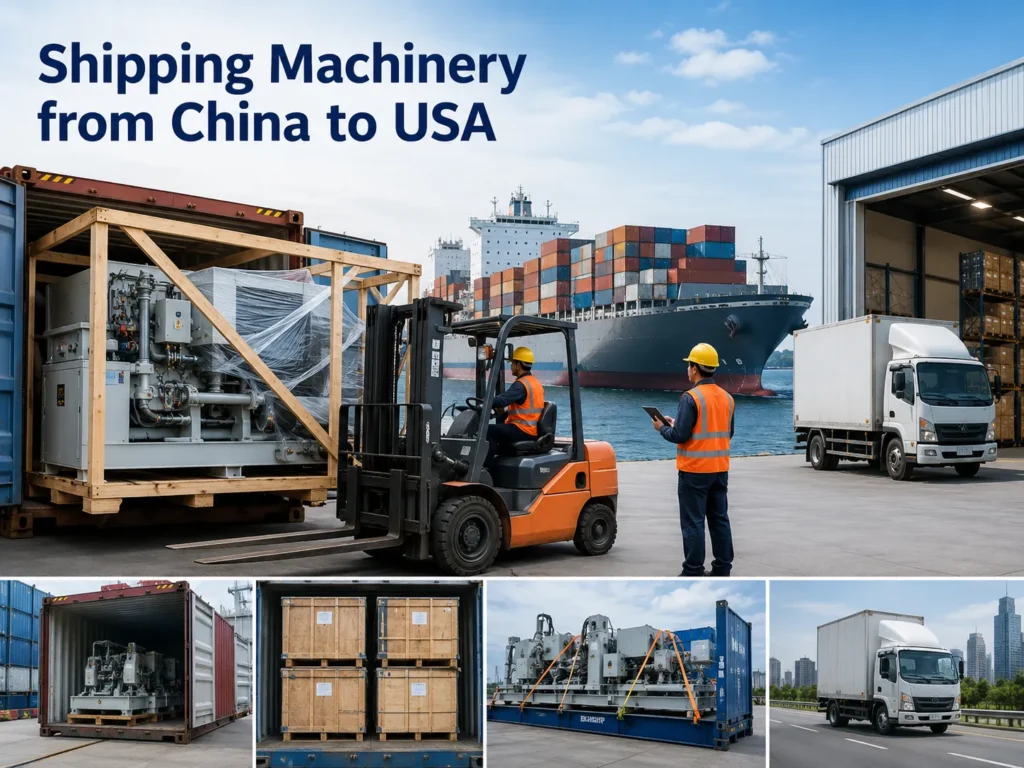
Shipping CNC machines from China to the USA by container can look straightforward until the packed machine is too tall for the container door, too heavy for the planned inland route, difficult to secure, or impossible to unload at the final site. A low ocean rate does not solve those problems. Importers need to confirm the complete movement from the Chinese factory floor to the U.S. delivery point before booking.
A workable plan starts with the machine’s bare and packed dimensions, gross weight, center of gravity, lifting points, packaging, loading method and destination unloading conditions. It must also account for export handling, ocean transport, U.S. customs coordination, inland trucking and delivery appointments. VoltFreight uses these details to compare standard containers, LCL, open-top or flat-rack equipment and an appropriate door-to-door scope.
For a general overview of the route, transport methods and delivery options, see our guide to shipping from China to the USA. This article focuses specifically on the physical transport and risk planning required for CNC machinery.
Can a CNC Machine Fit in a Standard Shipping Container?
A CNC machine may appear container-ready on a supplier’s quotation, but the result can change after the factory adds a reinforced base, moisture protection and an export crate. The packed dimensions, gross weight, weight distribution and loading method determine whether the machine can use a 20-foot standard container, a 40-foot high-cube container, LCL service or special equipment.
Before requesting a final rate, confirm whether the packed machine can pass through the container door, sit safely on the floor, remain within the selected container’s certified capacity and move legally by road at both origin and destination. The container’s internal space alone does not answer those questions.
Why CBM and gross weight are not enough
Volume and weight provide a starting point, but CNC machinery is different from uniform cartons. A machine may be tall, top-heavy, dense, delicate and difficult to lift. One 12 CBM shipment may be compact and straightforward to crate. Another shipment with the same volume may have an offset center of gravity, a narrow base or a packed height that prevents normal door loading.
For container planning, VoltFreight normally requests:
- Machine make, model and intended use.
- Bare machine length, width and height.
- Final packed length, width and height.
- Net weight and packed gross weight.
- Photos or video of the machine and its final package.
- Center-of-gravity information where available.
- Marked lifting points, forklift pockets or the manufacturer’s handling drawing.
- Whether protruding parts can be removed safely for transport.
- Whether the wooden case is stackable or non-stackable.
- China pickup address and factory loading conditions.
- U.S. delivery address and unloading equipment available on site.
The factory should approve any dismantling and reassembly plan. Removing a control panel, tool changer or enclosure may reduce the shipping envelope, but the freight forwarder should not decide how to dismantle precision machinery without the manufacturer.
Common container options for CNC machinery
| Equipment or service | Typical use | Main planning concern |
|---|---|---|
| 20-foot standard container | Compact, dense CNC machines | Payload, floor loading, axle weight, door access and weight distribution |
| 40-foot high-cube container | Larger or taller packed machines and multiple units | Door opening, securing space and safe distribution of heavy cargo |
| LCL shipping | Smaller machines, control cabinets, tooling or spare parts | Extra handling, non-stackable space and warehouse lifting capacity |
| Open-top container | Over-height cargo that needs top loading | Crane access, over-height approval, weather protection and extra charges |
| Flat-rack container | Out-of-gauge machinery that cannot use an enclosed container | Professional securing, OOG approval, exposure and origin and destination lifting |
A 20-foot container is often reviewed first for a heavy, compact machine because it can place dense cargo in a smaller loading area. A 40-foot high-cube provides more volume and height, but additional space does not solve floor-loading or road-weight restrictions. Open-top and flat-rack equipment can accept cargo that does not fit normal enclosed containers, although they require a cargo drawing, confirmed over-dimensions, special securing and carrier approval.
Published container specifications are useful for preliminary planning only. Dimensions, tare weight and payload can vary by container series and manufacturer. The booking must use the specifications of the equipment the carrier can actually supply, together with port, terminal, trucking and road limits.
The three fit checks that matter most
- Can the packed machine enter the container? The internal height may appear sufficient while the door opening is smaller. Also check whether the loading angle, ramp, forklift mast or overhead crane changes the required clearance.
- Can the container and inland route carry the weight? Review the cargo weight, container tare, floor concentration, chassis, axle distribution and applicable road restrictions. A container’s marked payload does not override the legal limits of the truck route.
- Can the factory load and secure the machine safely? The site may need forklifts of adequate capacity, a crane, machinery skates, ramps, chains, blocks or professional riggers. Access space around the container also matters.
Confirm the final packing drawing or crate dimensions before issuing a firm door-to-door quotation. A machine that fits when bare can require different equipment after the supplier adds a high base or thick timber frame.
What Information Is Needed for a CNC Machine Shipping Quote?
A preliminary port-to-port estimate may be possible with dimensions and weight. A reliable door-to-door quotation needs details about pickup, loading, customs coordination, inland transportation and unloading. Without them, a low initial number may change when the shipment is ready to move.
VoltFreight reviews the following information before recommending a container and service scope.
CNC machine quotation checklist
| Information needed | Why it matters |
|---|---|
| Supplier name and pickup address | Determines China trucking, suitable loading port and factory access planning |
| Cargo-ready date | Affects equipment availability, booking and sailing schedule |
| Machine make, model and function | Supports an accurate cargo description and customs discussion |
| Bare and packed dimensions | Shows whether the proposed package fits the door and selected equipment |
| Net and gross weight | Affects container selection, lifting, trucking, permits and unloading |
| Center of gravity and lifting points | Helps the loading and rigging teams plan safe handling and securing |
| Packing method | Influences damage prevention, carrier acceptance and insurance review |
| Photos, video and drawings | Reveal access, protrusions, lifting arrangements and visible packing risks |
| U.S. delivery address and ZIP code | Determines the port or rail option, inland route and delivery cost |
| Site type and access | Warehouse, factory, farm, workshop and residential-style sites need different delivery planning |
| Forklift, crane, dock or rigger availability | Determines the trailer, unloading method and appointment requirements |
| Importer and customs broker arrangements | Clarify who supplies entry data, files customs documents and pays import charges |
| Requested service boundary | Distinguishes port-to-port, port-to-door, DAP and eligible DDP planning |
Why door-to-door quotations require more detail
Port-to-port freight covers a narrower portion of the journey. A door-to-door plan must connect several dependent operations:
- Factory pickup and loading in China.
- Export documents and declaration.
- Container drayage and origin terminal handling.
- Ocean freight and any transshipment.
- Importer Security Filing coordination for applicable vessel shipments.
- U.S. customs broker coordination and cargo release.
- Destination port, CFS or inland rail-ramp handling.
- Final trucking, permits or special equipment where required.
- Delivery appointment and site readiness.
- Live unloading, container drop or devanning arrangements.
If the destination lacks a forklift rated for the machine, a normal container delivery may not work. The shipment may need a flatbed, crane, rigging team, warehouse devanning or re-delivery. Those services should be identified before the machine reaches the United States. For a deeper explanation of destination unloading options, see our guide to container devanning in the USA.
Customs and document preparation
VoltFreight coordinates the transportation documents and works with the importer and appointed customs broker under the agreed scope. The importer should confirm the HTS classification, duty treatment and any product-specific requirements with its broker or request a binding ruling where appropriate. There is no single duty rate for every item described as a CNC machine because classification depends on the machine’s design and function.
A typical document and information set includes:
- Commercial invoice.
- Packing list.
- Bill of lading instructions.
- Importer of record and consignee information.
- Detailed machine description, model and function.
- HTS classification reviewed by the importer or customs broker.
- Declared value and country of origin.
- Manufacturer information where requested.
- Any product-specific declaration or supporting document identified by the broker or relevant authority.
For applicable U.S.-bound vessel cargo, the ISF importer or its agent must submit the required Importer Security Filing data within the CBP deadline, generally no later than 24 hours before the cargo is laden aboard the vessel at the foreign port. The importer should provide accurate information to the broker early enough to meet the filing cut-off. Incorrect or late data may create penalties, holds or delays.
A good quotation is a route plan based on verified facts. Complete machine, site and importer information allows VoltFreight to state what the price covers and identify assumptions that could change the cost.
What Are the Main Risks When Shipping CNC Machinery?
The largest risks usually come from packaging, lifting, securing, moisture, concentrated weight, insurance gaps and an unprepared delivery site. These risks are connected: a weak base can fail during lifting, movement inside the container can damage a control cabinet, and a delivery failure can lead to storage and re-delivery charges.
Risk 1: A crate that cannot support the machine
CNC machines may contain control panels, electrical components, motors, tool changers and precision assemblies. The manufacturer should identify transport locks, vulnerable parts and approved lifting points. The export package then needs a base designed for the machine’s weight and load concentration.
A suitable protection plan may include:
- A reinforced export base or wooden case engineered for the gross weight.
- Moisture-barrier or waterproof wrapping appropriate for the machine.
- Padding and restraint for control panels and vulnerable assemblies.
- Clearly marked center of gravity and lifting points.
- Forklift pockets or a reinforced base suitable for the planned handling method.
- Internal blocking that prevents the machine from moving inside the case.
- Photographs before closing the crate and after the final package is complete.
An attractive outer crate can still have insufficient bottom support. Heavy machinery places stress on the base during forklift handling, loading, vessel movement and final unloading. The supplier or professional packing company should confirm that the base, runners, fasteners and lifting arrangement suit the actual machine.
If the crate uses regulated solid wood packaging material, the importer should also confirm ISPM 15 compliance. U.S. APHIS requires regulated wood packaging entering the United States to be treated and properly marked. Plywood and other processed wood products may be treated differently, so the packing supplier should identify the materials used rather than applying a generic statement to every crate.
Risk 2: Poor securing and weight distribution
A strong crate still needs to be secured inside the container. Ocean movement, road braking, rail vibration and lifting can make a top-heavy machine slide or tilt. The securing method must suit the weight, base and available container lashing points.
Common measures can include:
- Timber blocking and bracing.
- Heavy-duty straps, steel wire or chains selected for the load.
- Anti-slip material.
- Bolting or fixing an engineered base where appropriate and permitted.
- Load spreading to avoid concentrating excessive weight on a small floor area.
- Positioning that keeps the combined center of gravity within a safe area.
- Photographic records of the completed blocking and lashing.
The objective is to prevent sliding, tipping and contact with the container wall. The IMO/ILO/UNECE CTU Code provides recognized guidance on safe packing, mass distribution and cargo securing in transport units. A qualified loading or rigging team should design the arrangement for the actual machine.
Risk 3: Moisture and corrosion
Temperature changes during ocean transport can cause condensation inside a container or package. Exposed metal surfaces, electrical cabinets and precision components may need specific corrosion protection. The machine manufacturer should select materials compatible with the equipment and the storage period.
| Protection method | Purpose |
|---|---|
| Sealed or barrier wrapping | Reduces exposure to humid air when correctly applied |
| Desiccant inside the package | Helps manage moisture within the calculated protected volume |
| Approved anti-rust oil or coating | Protects suitable exposed metal surfaces |
| Container desiccant | Supports broader container moisture control |
| Water-resistant outer protection | Reduces exposure during loading and terminal handling |
Protection materials must be installed correctly. A few desiccant bags cannot compensate for an open barrier, wet timber or a machine packed before it has been prepared. Ask the supplier for dated photos of the protection and sealed package before pickup.
Risk 4: Improper lifting
A forklift that is under-rated, positioned at the wrong point or unable to spread the load can damage the crate or tip the machine. A crane lift also needs confirmed lifting points, sling angles and capacity. The freight forwarder can coordinate the movement, but the machine manufacturer and qualified lifting contractor should provide the equipment-specific handling instructions.
Before loading, confirm:
- The weight used to select the forklift or crane is the final packed gross weight.
- Fork length, fork spacing and load center suit the crate.
- Lifting marks correspond to structurally suitable points.
- The factory floor and yard can support the equipment and load.
- There is enough clearance to approach and enter the container safely.
Risk 5: Unclear cargo insurance
CNC machinery is valuable and may be expensive to repair or replace. VoltFreight can arrange cargo insurance when requested and confirmed in the quotation. Before shipment, check the insured value, cargo description, route, coverage, exclusions, deductible and documents required for a claim.
Insurance does not replace suitable packing and securing. It provides financial protection under the policy, while proper preparation reduces the likelihood of physical damage, production delays and a disputed claim. Keep the supplier’s packing records, loading photos, commercial documents and delivery evidence.
Risk 6: Failed unloading at the U.S. destination
A standard truck driver does not unload a heavy CNC machine by hand. If the consignee cannot unload the container or trailer safely, delivery may fail and create waiting time, storage, chassis, detention or re-delivery charges.
Before confirming door delivery, verify:
- Whether the destination is a warehouse, factory, farm, workshop or residential-style site.
- Loading-dock height and availability.
- Forklift model, rated capacity and practical load center.
- Crane or rigging requirements.
- Driveway width, gate height, overhead obstacles and turning space.
- Surface and ground conditions.
- Delivery appointment and receiving hours.
- Whether the container will be live-unloaded, dropped or devanned elsewhere.
For a live unload, the receiver must complete unloading within the allowed time and make the container available for return. A drop arrangement may provide more time but can add chassis, container-use and return costs. Confirm the plan with the destination provider before dispatch.
How Does CNC Machine Shipping from China to the USA Work?
The shipment begins at the Chinese factory and finishes only when the machine reaches the agreed delivery point. Each handoff affects cost, timing and cargo safety.
Step 1: Confirm the machine and route before pickup
VoltFreight first reviews the final packing details, photos, pickup conditions, destination and requested service. If the cargo appears unsuitable for a standard container or normal truck, we request the additional information needed to compare open-top, flat-rack, special trucking, devanning or rigging options.
The supplier should disclose loose accessories, coolant or lubricants remaining in the machine, batteries, magnets or other features that could affect carrier acceptance. Accessories should be itemized and secured rather than placed loosely inside the crate.
Step 2: Arrange factory pickup and loading in China
China loading ports commonly used for machinery include Ningbo, Shanghai, Shenzhen and Qingdao. The best port depends on the factory location, container availability, sailing schedule and total inland cost.
Before factory loading, confirm:
- Whether the container truck can enter and turn at the site.
- Who supplies the crane, forklift, ramps and labor.
- Whether the machine will be loaded in its crate or packed after positioning.
- Who performs the blocking, bracing and lashing.
- Whether photos and a loading record will be provided.
- How the container seal number will be recorded.
When a supplier cannot load the machine safely, an alternative is to move it to a suitable warehouse or loading facility. That option requires a separate local transport and handling plan.
Step 3: Complete export handling and ocean freight
After loading, the sealed container moves to the terminal for export handling and vessel loading. The schedule can change because of equipment availability, port cut-offs, customs inspection, congestion, weather, transshipment or vessel rotation. VoltFreight confirms the planned sailing and estimated route when booking rather than treating a general transit range as a guaranteed delivery date.
Common U.S. gateways include:
| U.S. gateway | Typical routing consideration |
|---|---|
| Los Angeles / Long Beach | West Coast delivery and rail connections to inland markets |
| New York / New Jersey | Northeast delivery and access to eastern inland destinations |
| Houston | Texas, Gulf and selected central U.S. destinations |
| Savannah | Southeast delivery and inland distribution |
| Miami | Florida and nearby regional destinations |
The nearest port is not always the lowest-cost solution. Ocean freight, terminal routing, rail availability, heavy-container restrictions and final trucking must be compared as one plan.
Step 4: Coordinate ISF and U.S. customs clearance
The importer, customs broker and freight forwarder should coordinate before the vessel is loaded. The broker needs accurate shipper, consignee, manufacturer, product, value and routing information for the applicable filings and entry process.
Key points include:
- Timely and accurate ISF data for applicable vessel shipments.
- Consistent consignee and importer information.
- A commercial invoice and packing list that match the shipment.
- A clear machine description, model, function and country of origin.
- HTS classification and duty treatment confirmed by the importer or broker.
- Prompt response if CBP or another authority requests additional information or examination.
For wider duty and landed-cost planning, see our guide to import tax from China to the USA.
Step 5: Arrange destination handling and inland delivery
After customs release and terminal or rail availability, the container can move by truck, rail or a combination. Inland destinations may include Chicago, Dallas, Atlanta, Memphis, Detroit, Kansas City, Charlotte, Nashville and Minneapolis. The practical route depends on the arrival port, terminal availability, container weight, rail schedule and delivery-site requirements.
Heavy machinery may need an overweight permit, specialized chassis, transloading or a flatbed after devanning. Those services depend on state, local and route restrictions. U.S. federal Interstate standards include gross and axle limits, while state and local rules can add further restrictions. A carrier must review the actual route and equipment rather than relying on the machine weight alone.
Step 6: Confirm the delivery appointment and unloading plan
Before dispatch, the receiver should confirm the site contact, telephone number, receiving hours, truck access and unloading equipment. If a crane or rigger is required, schedule it around the delivery appointment with enough contingency for terminal release and trucking updates.
The final checklist should include:
- Site contact and backup contact.
- Appointment number or delivery reference.
- Gate, dock and turning-space confirmation.
- Forklift, crane or rigging schedule.
- Live-unload or drop arrangement.
- Allowed unloading time and possible waiting charges.
- Empty-container return plan.
- Instructions for checking the package before signing delivery documents.
Site readiness controls both safety and cost. A machine can cross the ocean without incident and still incur avoidable charges during the final few miles if the receiver is unprepared.
Should You Choose FCL, LCL or Door-to-Door Shipping?
The correct option depends on machine size, value, handling sensitivity, container fit, customs arrangements, destination and unloading capability. Compare cost together with the number of handling points and the amount of control each method provides.
Comparing the main shipping options
| Shipping option | Best suited to | Main advantage | Main concern |
|---|---|---|---|
| 20-foot FCL | Heavy, compact machines | Dedicated container and cargo-specific securing | Payload, floor concentration and inland weight restrictions |
| 40-foot or 40-foot high-cube FCL | Larger packages or several machines | More internal space | Space does not remove weight-distribution or road-limit issues |
| LCL | Small machines, accessories and spare parts | Avoids paying for a full container | More handling and potentially high non-stackable or heavy-lift charges |
| Open top or flat rack | Over-height, over-width or otherwise out-of-gauge machinery | Accommodates cargo that cannot use an enclosed box | OOG approval, exposure, securing and special lifting costs |
| Door-to-door coordination | Importers that want one planned route from factory to delivery point | Connects origin, ocean, customs coordination and inland delivery | Requires complete and accurate site and importer information |
| Sea-rail intermodal | Suitable inland U.S. destinations | Can provide an efficient inland route | Rail-ramp handling, schedule and final-mile restrictions |
Why FCL is often preferred for valuable CNC machinery
FCL reduces the number of warehouse handling points because the machine remains in a dedicated container between loading and destination release or devanning. The loading team can arrange blocking and lashing around the machine rather than fitting it into shared space with unrelated cargo.
FCL still requires careful planning. A 20-foot container may suit dense machinery, while a 40-foot high-cube may suit a larger package. A machine outside the enclosed-container limits may need an open top or flat rack. The final decision must use the packed cargo drawing, container availability and inland restrictions.
When LCL may be practical
LCL can work for a small, strongly packed machine, control cabinet, tooling or spare parts. It can also help an importer avoid booking an entire container for a low-volume order. However, the shipment passes through origin consolidation, shared-container loading, destination deconsolidation and final collection or delivery.
Every additional handling point adds exposure. The warehouse must be able to lift the machine safely, and the package may attract non-stackable, heavy-lift or oversized charges. Compare the complete LCL cost with FCL, especially when the crate is dense or occupies a large floor area. Our LCL shipping guide explains consolidation, W/M calculations and destination charges in more detail.
Why door-to-door coordination can reduce gaps
Door-to-door service is useful when an importer wants one logistics plan connecting the Chinese supplier with the U.S. destination. Depending on the confirmed quotation and cargo eligibility, VoltFreight can coordinate:
- China factory pickup.
- Container or special-equipment planning.
- Export handling and ocean freight.
- ISF and customs broker coordination.
- Destination port or rail handling.
- Inland trucking and delivery appointment.
- Devanning or special delivery planning where arranged.
- Cargo insurance under the confirmed policy and quotation.
A transparent door-to-door quotation should state what is included, which party acts as importer of record, who pays duties and exams, whether unloading is included and which storage or waiting risks remain with the importer. For a broader explanation of service boundaries, see door-to-door shipping from China.
Frequently Asked Questions
How much does it cost to ship a CNC machine from China to the USA?
The cost depends on the final packed dimensions, gross weight, container or equipment type, Chinese pickup location, U.S. destination, ocean route, customs scope, inland trucking and unloading requirements. A useful quotation needs the machine photos, packing method, both addresses and delivery-site conditions. A rate based only on CBM and weight may omit lifting, special equipment or destination services.
Can a CNC machine be shipped by LCL?
Some smaller CNC machines, control cabinets, accessories and parts can use LCL when the packing is suitable and the consolidation warehouses can handle the weight. LCL creates more handling points, so heavy, valuable or sensitive machinery needs a careful packing and cost comparison before booking.
Do I need a customs broker to import a CNC machine into the USA?
Commercial importers commonly appoint a licensed customs broker to prepare the entry and coordinate classification, duty and customs requirements. The importer remains responsible for the accuracy of the import information. VoltFreight can coordinate freight documents and work with the appointed broker under the agreed service scope.
Which HTS code applies to a CNC machine?
There is no single code for every CNC machine. Classification depends on the machine’s function, design and technical characteristics. Provide the broker with the model, specifications, operating description, photographs and manufacturer literature. If classification remains uncertain, the importer can consider requesting a binding ruling from CBP before import.
Does the wooden crate need an ISPM 15 mark?
Regulated solid wood packaging entering the United States must comply with U.S. ISPM 15 requirements. Ask the Chinese packing supplier to identify the crate materials and provide clear photographs of the treatment mark where applicable. Do not assume that every material described casually as “wood” receives the same treatment.
Who unloads the machine at the U.S. destination?
The receiver normally arranges unloading unless the quotation specifically includes another service. The site may need an adequately rated forklift, crane, loading dock, flatbed or professional rigging crew. Confirm the method before the truck is dispatched.
Is cargo insurance necessary?
Cargo insurance is strongly recommended for high-value machinery. Confirm the insured value, coverage, exclusions, deductible and claim procedure before departure. Insurance does not correct weak packing or unsuitable securing, so it should form part of a broader risk-control plan.
Can VoltFreight arrange delivery to an inland U.S. city?
VoltFreight can review port, rail and truck options for suitable inland destinations. The final plan depends on the container weight, terminal or rail ramp, route restrictions, site access and unloading arrangements. Send the full delivery address and ZIP code rather than only the state or nearest large city.
Request a CNC Machine Shipping Plan
Shipping a CNC machine from China to the USA is a transportability and risk-planning project. Confirm the package, center of gravity, loading, securing, documents, inland route and unloading method before the booking is finalized.
For a shipment review, send VoltFreight:
- Machine name, model, function, value and photos.
- Bare and final packed dimensions.
- Net and gross weight.
- Packing drawing, center of gravity and lifting information where available.
- Chinese supplier address and cargo-ready date.
- U.S. delivery address and ZIP code.
- Details of forklift, crane, dock and truck access at destination.
- Your requested service scope and target delivery schedule.
Contact VoltFreight for a CNC machine shipping quotation. We will review the actual cargo and delivery conditions, compare suitable container and inland options, and explain the proposed service boundary before booking.
Official References
- IMO/ILO/UNECE Code of Practice for Packing of Cargo Transport Units
- Hapag-Lloyd 20-foot standard container specifications
- OOCL high-cube container specifications
- U.S. Customs and Border Protection: Importer Security Filing
- U.S. Customs and Border Protection: Rulings and Legal Decisions
- USDA APHIS: Importing ISPM 15-Compliant Wood Packaging Material
- Federal Highway Administration: Commercial Vehicle Size and Weight Program