Shipping from China to Nigeria
Get a tailored freight route from China based on your cargo details, destination, timeline and budget. VoltFreight supports pickup, consolidation, customs guidance and final delivery planning.
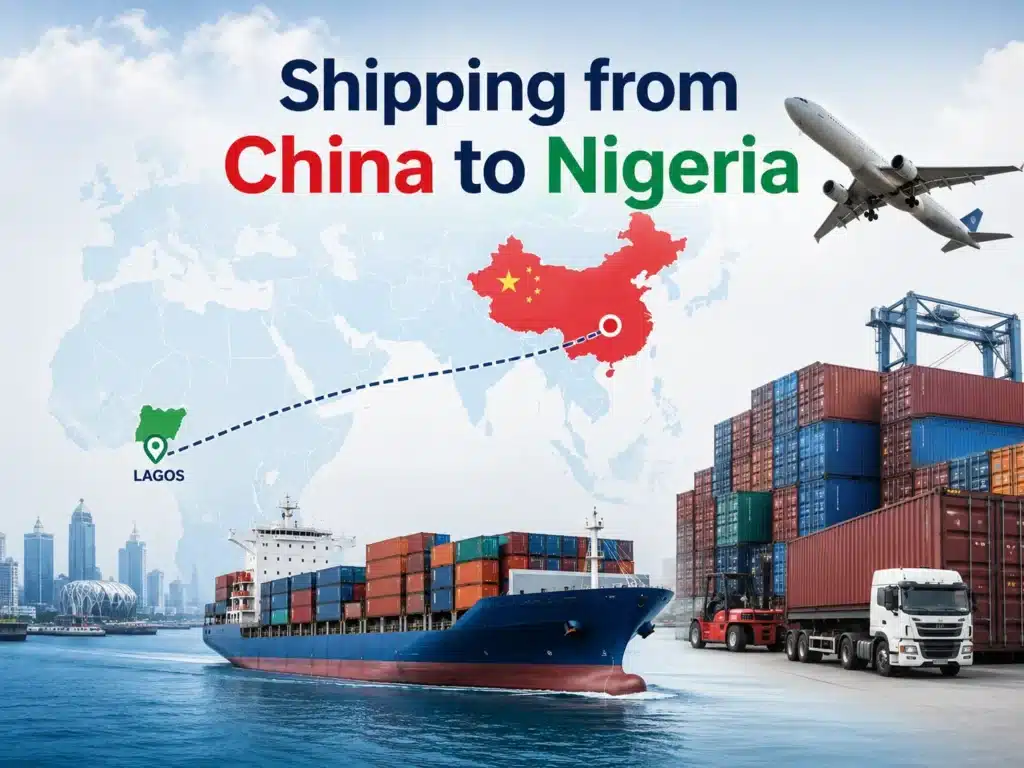
VoltFreight provides reliable shipping from China to Nigeria by sea freight, air freight, express, DDP and door-to-door delivery. We help Nigerian importers arrange supplier pickup, China warehouse consolidation, Form M and SONCAP document review, customs planning and delivery to Lagos, Abuja, Kano, Port Harcourt and other cities.
- Sea freight, air freight, express and DDP options
- Supplier pickup and consolidation from multiple China cities
- Support for Lagos, Abuja, Kano, Port Harcourt and more
- Form M, PAAR, SONCAP and customs document guidance
- Supplier pickup and warehouse receiving in China
- Cargo consolidation from multiple suppliers
- Customs document review and final delivery planning
Review available freight options, route details, customs notes and planning information for this destination.
Shipping from China to Nigeria requires more than choosing the lowest freight rate. Nigerian importers should also consider cargo size, shipping time, Lagos port handling, Form M, PAAR, SONCAP, customs duty, product compliance and final delivery before booking.
VoltFreight helps Nigerian importers, wholesalers, e-commerce sellers and B2B companies arrange sea freight, air freight, express shipping, DDP, DAP and door-to-door delivery from China. Depending on the cargo, the best route may be sea freight to Lagos, air freight to Lagos or Abuja, express courier for samples, or a reviewed DDP solution with customs and delivery coordination.
Many Nigerian buyers purchase from Alibaba, 1688, Yiwu, Guangzhou, Shenzhen, Foshan, Ningbo and other Chinese sourcing hubs. A reliable freight plan may therefore include supplier pickup, warehouse receiving, consolidation, export handling, international transport, customs-document review and final delivery in Nigeria.
Quick planning range: Express shipping commonly takes about 5–10 business days, standard air freight about 5–12 days, Air DDP about 8–18 days, sea freight to Lagos about 30–45+ days and Sea DDP about 40–65+ days. Final timing depends on cargo readiness, carrier schedules, customs documents, inspection and delivery city.
Still deciding what to buy? Read our guide to the best products to import from China to Nigeria, including beginner-friendly goods, regulated products and landed-cost planning.
To compare routes, send: product name, photos, HS code if available, carton quantity, gross weight, dimensions, supplier city, Nigerian destination and whether Form M, PAAR or SONCAP has been prepared.
Contact VoltFreight to compare sea freight, air freight, express, DDP, DAP and port-to-port options for your shipment.
Compare China-to-Nigeria Shipping Methods
Different shipping methods solve different problems. Before booking, compare cargo volume, urgency, customs responsibility, destination city, budget and whether the shipment requires port-to-port, airport-to-airport, DAP or DDP service.
| Shipping Method | Best For | Planning Notes |
|---|---|---|
| Sea Freight | Large cargo, heavy goods, LCL, FCL and wholesale inventory | Usually suitable for commercial cargo moving through Lagos, Apapa, Tin Can Island, Lekki, Onne or Port Harcourt. |
| Air Freight | Urgent cargo, higher-value goods, samples and spare parts | Commonly used for shipments moving through Lagos, Abuja or Port Harcourt airports. |
| Express Shipping | Documents, samples, trial orders and small parcels | Fast and convenient for small shipments, but often expensive for heavy or bulky cartons. |
| DDP Shipping | Importers seeking one coordinated landed-delivery plan | Must be reviewed based on product type, HS code, declared value, Form M, PAAR, SONCAP and destination. |
| DAP / Door Delivery | Importers who can manage duties and taxes but need local delivery | The forwarder arranges transport to the agreed address while the importer normally controls import clearance and taxes. |
| Port-to-Port or Airport-to-Airport | Experienced importers with a Nigerian customs broker | The importer normally handles customs clearance, duty, taxes, release and local delivery after arrival. |
Need a route comparison? Send VoltFreight your cargo details to compare freight methods based on weight, CBM, product type, customs status and Nigerian destination.
Before Shipping from China to Nigeria, Confirm These Six Points
Many import problems occur because freight is booked before the importer checks the Nigerian import process. Confirm the following points before the goods leave China:
- Confirm whether the goods are for commercial resale. Commercial shipments normally require accurate product descriptions, values, importer details and customs documents.
- Confirm the Nigerian importer or customs broker. The importer side may need to arrange Form M, PAAR, customs clearance, duty and taxes.
- Check whether the product needs SONCAP. Electrical goods, machinery, building materials, toys, auto parts and other regulated products may require conformity documents before shipment.
- Check whether Form M has been opened. Form M is an important pre-import document and should not be left until the cargo reaches Nigeria.
- Confirm PAAR preparation. PAAR forms part of the pre-arrival import assessment process and can affect customs-clearance timing.
- Choose the correct service scope. DDP, DAP, port-to-port and airport-to-airport services place customs, tax and delivery responsibilities on different parties.
The Nigerian Ports Authority explains that an Authorised Dealer Bank processes Form M and PAAR, while regulated goods may require relevant certificates before the import process proceeds. Review the Nigerian Ports Authority import and export guidelines before shipment.
Sea Freight from China to Nigeria
Sea freight from China is normally the most practical option for large, heavy or non-urgent cargo moving to Nigeria.
Common cargo includes furniture, machinery, building materials, solar products, auto parts, electronics, household goods, packaging products, wholesale stock and larger e-commerce inventory.
Common Chinese origin ports include:
- Shenzhen and Yantian
- Guangzhou and Nansha
- Ningbo
- Shanghai
- Qingdao
- Xiamen
- Tianjin
Common Nigerian destination ports include Lagos Port Complex at Apapa, Tin Can Island, Lekki Deep Sea Port, Onne, Port Harcourt, Calabar and Delta ports.
The Nigerian Ports Authority lists major facilities including Lagos Port Complex, Lekki Deep Sea Port, Tin Can Island Port Complex, Calabar Port Complex, Delta Ports, Rivers Port Complex and Onne Port Complex. Current port information is available on the Nigerian Ports Authority website.
Lagos is often the main destination for commercial shipments because many customs brokers, warehouses, wholesale markets and business receivers operate there. However, cargo for Port Harcourt, Onne, Aba, Onitsha or southeastern Nigeria may require a different port or inland-delivery plan.
LCL Shipping from China to Nigeria
LCL means Less than Container Load. It is suitable when the cargo does not fill an entire container.
LCL can work for:
- Small and medium commercial shipments
- Mixed supplier orders
- Wholesale cartons
- Regular B2B replenishment
- Multiple-supplier consolidation
LCL freight is generally calculated by CBM, but the final quotation may also depend on cargo weight, product type, destination handling, customs scope and delivery city.
FCL Container Shipping from China to Nigeria
FCL means Full Container Load. It is suitable for larger orders, furniture, machinery, construction materials, project cargo and high-volume wholesale stock.
Depending on cargo volume and weight, importers can use:
- 20ft container
- 40ft container
- 40HQ container
Compared with LCL, FCL can provide fewer handling stages, better cargo control and a lower unit cost when the shipment volume is large enough.
A container moving to Lagos may discharge through Apapa, Tin Can Island or Lekki, depending on the shipping line, vessel schedule and final delivery plan.
Air Freight from China to Nigeria
Air freight from China to Nigeria is suitable for urgent, high-value or time-sensitive cargo moving to Lagos, Abuja or Port Harcourt.
Common air-freight cargo includes:
- Electronics and phone accessories
- Spare parts
- Samples
- Fashion products
- Replacement components
- Medical-related equipment subject to regulatory review
- E-commerce replenishment
Air freight can be arranged as airport-to-airport service, air freight plus local delivery, or Air DDP when the cargo and customs route are suitable.
Chargeable weight is critical. The forwarder compares actual gross weight with volumetric weight and charges using the higher result. Therefore, both carton weight and dimensions must be provided before quotation.
Express Shipping from China to Nigeria
Express shipping from China can be a practical option for samples, documents, trial orders and small urgent parcels to Nigeria.
Depending on the destination and product, the route may use DHL, FedEx, UPS or another courier network.
Express is fast and relatively simple for small parcels, but it may become expensive when:
- The cartons are heavy
- The volumetric weight is high
- The shipment contains many commercial cartons
- The destination attracts remote-area charges
- The goods require special customs or carrier review
Once the shipment becomes larger, standard air freight or LCL sea freight may provide better cost control.
Commercial courier shipments can still face customs duties, taxes, document requests or importer-verification requirements in Nigeria.
DDP, DAP and Port-to-Port Shipping to Nigeria
Many Nigerian importers search for DDP because they want one company to coordinate the full shipment. However, DDP is not the only available service model.
The most suitable arrangement depends on:
- Importer status
- Customs-broker support
- Product type
- HS code
- Declared value
- SONCAP and permit requirements
- Final delivery address
DDP Shipping from China to Nigeria
DDP shipping from China to Nigeria may include supplier pickup, China warehouse handling, export processing, international freight, Nigeria customs coordination, duty and tax treatment under the agreed scope, and final delivery.
DDP can simplify logistics when the route is lawful, transparent and suitable for the product. It does not remove Nigerian import requirements.
Before confirming DDP, VoltFreight reviews:
- Product name and photos
- HS code
- Declared value
- Brand status
- Battery, liquid, powder or chemical content
- SONCAP risk
- Form M and PAAR status
- Importer and permit requirements
- Final Nigerian delivery address
When DDP Needs Additional Review
DDP may be restricted or require extra documentation for:
- Batteries and power banks
- Liquids, powders and chemicals
- Food and cosmetics
- Medical-related goods
- Branded products
- Used goods
- High-value cargo
- Regulated electrical products
- Goods requiring importer-specific licences or certificates
DDP should not be used as a shortcut for undervaluation, vague product descriptions or missing compliance documents.
| Service Term | Typical Responsibility | Best For |
|---|---|---|
| Port-to-Port | The importer generally handles Nigeria customs clearance, duty, taxes, port release and delivery. | Experienced importers with a local customs broker and trucking arrangement. |
| Airport-to-Airport | The importer handles customs clearance and delivery after airport arrival. | Urgent shipments where the buyer already has local clearance support. |
| DAP / Door Delivery | The forwarder arranges delivery to the agreed place, while the importer normally handles import duty and taxes. | Importers that can manage customs but need transport to a warehouse, office or project site. |
| DDP | The forwarder coordinates the confirmed landed-delivery scope after reviewing the cargo and import requirements. | Suitable cargo where the importer wants a simplified delivery arrangement. |
For a broader explanation of service responsibility and delivery scope, review our door-to-door shipping from China service.
Nigeria Customs Clearance, Form M, PAAR and SONCAP
Nigeria customs clearance is one of the most important parts of the shipping plan. The importer should not wait until the goods arrive before confirming product classification, documents and regulatory requirements.
Form M and PAAR
Nigeria Customs Service guidance states that e-Form M becomes valid for importation after registration by the Nigeria Customs Service.
The Form M and proforma invoice should contain accurate product information, including where applicable:
- Generic product name
- Brand
- Model
- Specifications
- Quantity
- Packaging
- Value
PAAR means Pre-Arrival Assessment Report. It is part of the import-assessment process and can affect customs-clearance timing.
Incomplete Form M, PAAR, invoice or product data can result in questions, delays and additional costs.
Official guidance is available through the Nigeria Customs Service guidelines page.
SONCAP for Regulated Products
SONCAP is a pre-shipment conformity-verification programme for selected regulated goods imported into Nigeria.
The Standards Organisation of Nigeria explains that SONCAP verifies whether regulated products conform to applicable Nigerian Industrial Standards, approved equivalents and technical regulations before shipment.
Products commonly requiring additional review may include:
- Electrical and electronic goods
- Machinery
- Building materials
- Toys
- Automotive parts
- Household products
- Other regulated consumer goods
Confirm the product’s SONCAP status before it leaves China. Review official information on the SON SONCAP service page.
Documents to Prepare
The exact documents depend on the product, shipping method, importer arrangement and customs procedure. Common requirements may include:
- Commercial invoice
- Packing list
- Bill of Lading, Sea Waybill or Air Waybill
- HS code or tariff classification
- Importer and tax information
- Form M
- PAAR
- SONCAP documents where required
- Certificate of Origin where required
- Product photos and material details
- Brand authorisation for branded goods
- MSDS, battery documents or permits for sensitive cargo
Nigeria Customs guidance also requires attention to English product labelling and consistent shipment descriptions. The commercial invoice, packing list, labels and actual goods should match.
For general importer preparation and document review, see our customs clearance services.
Shipping Cost from China to Nigeria
The shipping cost from China to Nigeria depends on more than the first freight rate shown in a quotation.
Important cost factors include:
- Shipping method: Sea freight, air freight, express, DAP and DDP follow different pricing structures.
- Weight and CBM: Air and courier use chargeable weight, while sea freight usually follows CBM or container size.
- China pickup city: Supplier location affects domestic trucking, warehouse receiving and consolidation costs.
- Nigerian destination: Lagos, Abuja, Kano, Ibadan, Port Harcourt and remote locations require different delivery plans.
- Customs scope: DDP, DAP, port-to-port and airport-to-airport include different services and responsibilities.
- Product type: SONCAP goods, batteries, liquids, branded cargo and regulated items may require additional handling.
- Port and destination charges: Handling, storage, demurrage, customs delay and trucking can materially affect landed cost.
- Season and capacity: Airline space, vessel availability and peak-season demand can change pricing.
Online rates are only rough references. An accurate Nigeria freight quotation should use the actual weight, carton dimensions, CBM, product details, customs status and delivery address.
The lowest freight rate is not always the lowest total landed cost.
Shipping Time from China to Nigeria
Shipping time depends on supplier pickup, warehouse handling, export processing, carrier schedules, customs clearance, Form M and PAAR status, SONCAP documents, inspection and final delivery.
| Shipping Method | Estimated Planning Range | Best Use Case |
|---|---|---|
| Express Shipping | About 5–10 business days | Samples, documents and small urgent parcels |
| Standard Air Freight | About 5–12 days | Urgent commercial goods, spare parts and higher-value cargo |
| Air DDP / Air Door-to-Door | About 8–18 days | Urgent cartons and e-commerce replenishment |
| Sea Freight to Lagos | About 30–45+ days | LCL, FCL, wholesale inventory and bulk commercial cargo |
| Sea DDP / Sea Door-to-Door | About 40–65+ days | Large or cost-sensitive landed-delivery shipments |
These are planning ranges rather than guaranteed delivery promises. Customs inspection, missing documents, port congestion, airline space, vessel changes and delivery appointments can extend the final timeline.
Door Delivery Across Nigeria
Door delivery planning should include the final destination rather than stopping at the port or airport. Inland trucking distance, road conditions, cargo size, warehouse access and unloading requirements can change both cost and timing.
- Lagos State: Lagos, Ikeja, Apapa, Lekki, Victoria Island and Alaba are common delivery areas for sea, air and express cargo.
- Abuja and the Federal Capital Territory: Cargo may move by air directly to Abuja or by inland delivery after Lagos clearance.
- Northern Nigeria: Kano, Kaduna and surrounding areas require long-distance inland transport planning.
- South-South Nigeria: Port Harcourt, Onne, Warri and nearby industrial areas may use different port and delivery combinations.
- Southeast Nigeria: Aba, Onitsha and Enugu are important commercial destinations, but delivery routes should be confirmed before booking.
For palletised, oversized or project cargo, also confirm unloading equipment, access restrictions and delivery appointments.
Common Cargo Shipped from China to Nigeria
Nigerian importers purchase a wide range of products from China, including:
- Clothing, shoes and bags
- Furniture and household products
- Hardware and hand tools
- Packaging materials
- Machinery and spare parts
- Auto parts
- Building materials
- Solar and lighting products
- Electronics and phone accessories
- Small appliances
- Wholesale inventory
- E-commerce goods
Products requiring additional review include batteries, liquids, powders, chemicals, cosmetics, food-related goods, medical-related products, branded goods, used goods, regulated electrical equipment and high-value cargo.
China Supplier Pickup and Warehouse Consolidation
Many Nigerian importers purchase from several suppliers in China. Instead of arranging separate international shipments, the cargo can be collected and consolidated at one warehouse before export.
VoltFreight can coordinate goods purchased through Alibaba, 1688, Yiwu Market, Shenzhen suppliers, Guangzhou suppliers, Foshan factories, Ningbo manufacturers and other Chinese sourcing locations.
Available support can include:
- Supplier pickup in different Chinese cities
- Warehouse receiving
- Carton-count checking
- Basic weight and dimension measurement
- Multiple-supplier consolidation
- Repacking and carton-mark coordination
- Export-document preparation support
- Comparison of sea, air, express and DDP routes
Consolidation can reduce duplicated minimum freight charges and make the shipment easier to control. However, all suppliers should provide accurate carton data and product descriptions before warehouse delivery.
What We Need to Quote Shipping from China to Nigeria
To prepare an accurate freight quotation, send:
- Product name and photos
- HS code if available
- Carton or pallet quantity
- Gross weight
- Dimensions of each carton or pallet
- Total CBM for sea freight
- Supplier city and pickup address in China
- Nigerian destination city and full delivery address
- Preferred method: sea, air, express, DDP, DAP or port-to-port
- Cargo-ready date
- Declared value
- Form M and PAAR status
- SONCAP status where applicable
- Details of batteries, liquids, powders, chemicals, cosmetics, branded or used goods
With this information, VoltFreight can compare the route, chargeable weight, customs risk, transit time and delivery scope before shipment.
Send your shipment details to VoltFreight for a China-to-Nigeria freight quotation.
Why Choose VoltFreight for China-to-Nigeria Shipping?
VoltFreight helps Nigerian importers plan shipments from supplier pickup in China through international freight and final delivery.
Our support can include:
- Sea freight, air freight, express and reviewed DDP options
- Supplier pickup from multiple Chinese cities
- Warehouse consolidation
- LCL and FCL container shipping
- Door-delivery planning to Lagos, Abuja, Kano, Ibadan, Port Harcourt and other areas
- Commercial-invoice and packing-list review
- DDP feasibility review based on product, HS code, Form M, PAAR and SONCAP risk
- Clear explanation of what the quotation includes and excludes
VoltFreight is a freight forwarder rather than a Nigerian customs, legal or regulatory authority. The importer should confirm final customs, tax, Form M, PAAR, SONCAP and permit requirements with its customs broker and relevant authorities.
FAQ: Shipping from China to Nigeria
What is the best shipping method from China to Nigeria?
The best method depends on cargo size, urgency, budget, customs scope and destination. Sea freight is suitable for large or heavy cargo, air freight works for urgent commercial goods, express is useful for samples, and DDP can be reviewed for suitable cargo requiring coordinated delivery.
How long does shipping from China to Nigeria take?
Express commonly takes about 5–10 business days, air freight about 5–12 days, Air DDP about 8–18 days, sea freight to Lagos about 30–45+ days and Sea DDP about 40–65+ days.
Final time depends on carrier schedules, customs documents, inspection and delivery location.
Can VoltFreight provide DDP shipping to Nigeria?
DDP can be reviewed for suitable cargo. VoltFreight must first check the product type, HS code, declared value, Form M, PAAR, SONCAP risk, customs requirements and delivery address.
What documents are needed for Nigeria customs clearance?
Common documents may include a commercial invoice, packing list, Bill of Lading or Air Waybill, HS code, importer information, Form M, PAAR, SONCAP documents for regulated goods, Certificate of Origin and other product-specific permits.
What is SONCAP, and does every product need it?
SONCAP is a conformity-assessment programme for selected regulated products imported into Nigeria. Not every product follows the same requirement, so the importer should confirm whether the goods fall within the SONCAP scope before shipping.
Should I ship to Apapa, Tin Can Island or Lekki?
The most suitable Lagos port depends on the shipping line, vessel schedule, customs-broker arrangement, port handling and final delivery location. The port should be confirmed before booking rather than selected only by name.
Can VoltFreight collect goods from Alibaba or 1688 suppliers?
Yes. VoltFreight can collect cargo from Alibaba, 1688, Yiwu Market and direct Chinese factories. Goods from several suppliers can be consolidated before shipment to Nigeria.
Get a clear freight quote for your cargo.
Send us your cargo details, supplier location and destination address. We will help review the suitable route and prepare a clearer quote.
Popular Freight Routes from China
Explore related China-to-destination shipping services for air freight, sea freight, customs support and door-to-door delivery.