Shipping from China to Japan
Get a tailored freight route from China based on your cargo details, destination, timeline and budget. VoltFreight supports pickup, consolidation, customs guidance and final delivery planning.
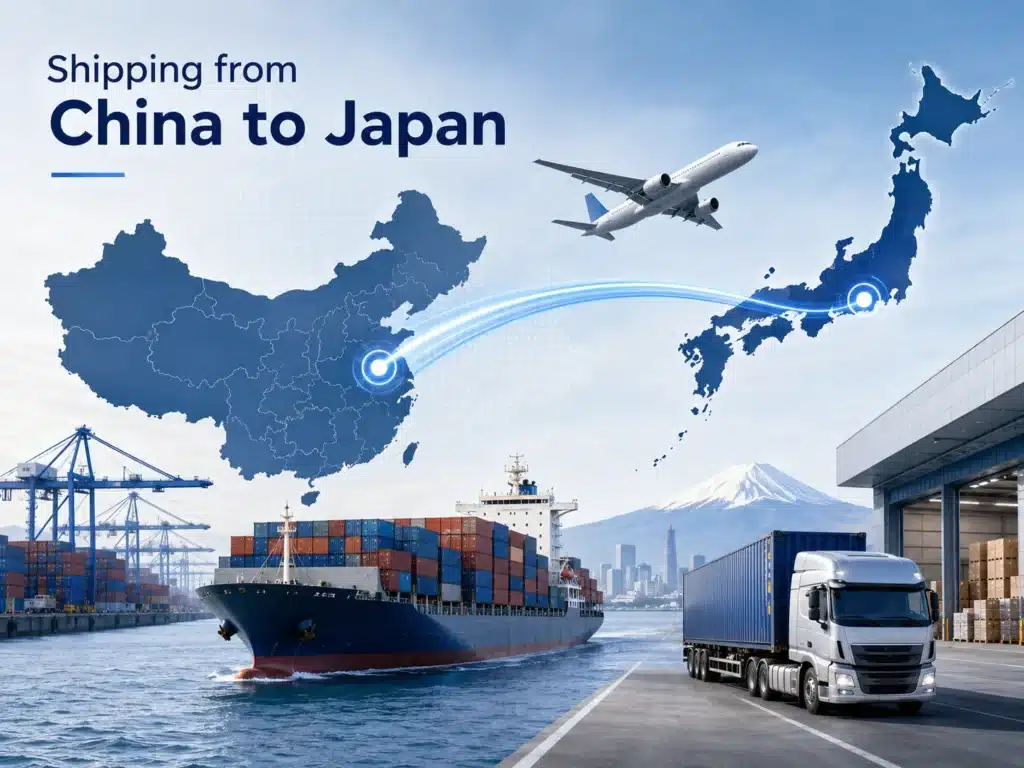
Planning to ship from China to Japan? VoltFreight compares sea freight, air freight, express courier, DDP and DAP according to your cargo size, urgency and delivery address, helping you balance shipping cost, transit time and delivery reliability.
Before booking, we review chargeable weight, quotation scope, Japan customs, duties, Consumption Tax, ACP/IOR, product compliance and Amazon FBA requirements. We can also consolidate orders from multiple Chinese suppliers, helping you avoid unnecessary costs and customs delays. Send your cargo details for a tailored shipping plan and quote.
- Supplier pickup and warehouse receiving in China
- Cargo consolidation from multiple suppliers
- Customs document review and final delivery planning
Review available freight options, route details, customs notes and planning information for this destination.
Quick Answer: Shipping from China to Japan
Shipping from China to Japan is one of the shortest international freight routes from China. Express courier commonly takes about 2–5 days, air freight about 2–6 days, and sea freight about 5–14 days port-to-port. However, the final door-to-door lead time also depends on supplier pickup, consolidation, export handling, Japan customs clearance and final delivery.
The best method depends on more than speed. Importers should compare the complete landed cost, chargeable weight, Japan Consumption Tax, import duty, product compliance and who will act as the importer. A low port-to-port rate can become expensive when it excludes China pickup, CFS or terminal charges, Japan customs fees, tax and last-mile delivery.
China-to-Japan Shipping at a Glance
| Shipping Method | Indicative Planning Cost | Typical Transit Time | Best For |
|---|---|---|---|
| Express courier | Often about USD 6–12/kg for common small-cargo planning | About 2–5 days door-to-door | Documents, samples and small urgent cartons |
| Air freight | Often about USD 3–8/kg for airport-freight planning | About 1–3 days airport-to-airport; 3–7 days door-to-door | Urgent commercial cargo and valuable inventory |
| LCL sea freight | Often about USD 50–120/CBM for base ocean freight before minimum and local charges | About 5–14+ days port-to-port | Regular inventory, dense cartons and 1–15 CBM shipments |
| FCL sea freight | Quoted per 20GP, 40GP or 40HQ container | About 4–12+ days port-to-port | Large shipments, machinery and stable replenishment |
| DDP or DAP delivery | Case-by-case landed quotation | Depends on the air or sea route and customs plan | Importers who need customs and final-delivery responsibility defined before booking |
What These Planning Ranges Include
These figures are planning ranges, not live quotations. Freight markets, fuel surcharges, cargo type, chargeable weight, origin city and Japan delivery area can change the final rate. Unless a quotation states otherwise, a base freight rate may exclude pickup, export handling, customs, duties, Japan Consumption Tax, inspections, storage and final delivery.
China remains a major source of electrical equipment, machinery, auto parts, apparel, furniture and consumer goods for Japan. Recent JETRO analysis of Japan–China trade also highlights the scale and variety of China-origin imports. Therefore, this route supports factory supply chains, Japanese wholesalers, e-commerce inventory, Amazon FBA Japan and small-business importers.
VoltFreight works as a China to Japan freight forwarder. We can review supplier pickup, China warehouse receiving, multi-supplier consolidation, export handling, sea freight, air freight, express courier, DDP or DAP delivery, Japan customs requirements and delivery to Tokyo, Yokohama, Osaka, Kobe, Nagoya, Fukuoka and other destinations.
You can also review our related services for ocean freight services from China, air freight from China, express freight from China and door-to-door shipping from China.
Shipping Cost from China to Japan
The shipping cost from China to Japan starts with the main freight rate, but the final payable amount includes several other parts. Before comparing quotations, ask each freight forwarder to confirm exactly what the rate includes.
What a Complete Freight Quote May Include
| Cost Component | Why It Matters |
|---|---|
| Supplier pickup in China | Pickup cost changes by supplier city, distance, truck type and whether several factories are involved. |
| China warehouse handling | Receiving, inspection, consolidation, repacking, palletizing and export labels may affect the total. |
| Export and origin charges | Export declaration, terminal handling, CFS, documentation and security screening are separate from the main freight in some quotations. |
| Main sea, air or courier freight | This is usually charged by container, CBM, gross weight or volumetric weight. |
| Japan arrival and customs charges | Customs brokerage, D/O, terminal or CFS charges, inspection and storage can apply after arrival. |
| Import duty and Japan Consumption Tax | These depend on customs value, HS classification, origin and the applicable tax treatment. |
| Final delivery in Japan | Truck size, delivery appointment, warehouse rules, remote areas and redelivery risk can change the last-mile cost. |
Actual Weight vs. Volumetric Weight
Japanese importer discussions frequently focus on unexpected freight caused by volumetric weight. This problem is especially common with furniture, pillows, display materials, plastic products and other light but bulky cargo.
Air freight and express carriers normally charge the higher of gross weight and volumetric weight. A common air-freight formula is:
Length × Width × Height in centimeters ÷ 6,000 = volumetric weight in kilograms
Some courier services use a divisor of 5,000 instead. Therefore, always confirm the carrier formula before comparing per-kilogram rates.
LCL sea freight commonly uses weight or measurement, often called W/M. The chargeable unit is usually the greater of 1 CBM or 1 metric ton, although fast sea-consolidation services may use a different volumetric-kilogram rule. Ask for the tariff basis and minimum charge in writing.
How to Reduce China-to-Japan Shipping Cost
- Ask suppliers for final packed carton dimensions, not only product dimensions.
- Consolidate several suppliers in one China warehouse instead of sending separate international parcels.
- Remove unnecessary retail packaging when product safety allows.
- Use sea freight for stable inventory and reserve air freight for urgent restocking.
- Match the Japan entry point to the delivery region to reduce domestic trucking.
- Confirm whether the quote includes customs, tax and final delivery before choosing the lowest rate.
If you buy from 1688, Taobao, Alibaba or several factories, review our guide to consolidating shipments from multiple suppliers in China.
Transit Time from China to Japan
China and Japan have frequent short-sea sailings, direct flights and courier connections. Nevertheless, carrier transit time is only one part of the total lead time. LCL consolidation, export cut-off, customs documents, inspection and warehouse appointments often matter more than the hours spent at sea or in the air.
Typical Planning Times
- Express courier: about 2–5 days door-to-door for suitable small parcels.
- Air freight: about 1–3 days airport-to-airport and usually 3–7 days door-to-door.
- Fast sea consolidation: often about 5–10 days door-to-door when the route, cargo and delivery area qualify.
- FCL sea freight: commonly about 4–12 days port-to-port.
- LCL sea freight: commonly about 5–14 days port-to-port, plus consolidation and deconsolidation time.
- DDP or Amazon FBA delivery: case by case because customs, importer setup and warehouse appointment affect the schedule.
Common Port and Airport Route Planning
- Shanghai or Ningbo to Tokyo, Yokohama or Nagoya often provides a short East China route.
- Qingdao or Tianjin can serve Tokyo Bay, Osaka, Kobe and other Japanese ports.
- Shenzhen, Guangzhou and Hong Kong commonly connect South China cargo with Osaka, Kobe, Tokyo and Yokohama.
- PVG, SZX, CAN and HKG offer air connections to NRT, HND, KIX, NGO and FUK.
What Commonly Causes Delays?
- The supplier misses the warehouse cut-off or provides incorrect carton data.
- The commercial invoice uses a vague product description or inconsistent value.
- The shipment needs an importer, ACP, permit, certificate or product test that was not prepared.
- Battery, liquid, powder, food, cosmetics, wireless or branded goods were booked without prior review.
- LCL cargo waits for consolidation, deconsolidation or a Japan CFS release.
- The FBA or commercial warehouse requires an appointment that was not available immediately.
Express, Air Freight, LCL or FCL: Which Method Should You Choose?
Express Courier for Samples and Small Cartons
DHL, FedEx, UPS, EMS and other courier services can be practical for samples, documents, spare parts and small urgent cartons. Express is simple because it combines transport and basic customs handling. However, courier rates increase quickly for bulky cartons, and duties, tax, remote-area fees or special-product restrictions can still apply.
Air Freight for Urgent Commercial Cargo
Air freight from China to Japan suits time-sensitive inventory, electronics, auto parts, fashion products and production components. Standard air cargo often becomes more economical than express when the shipment has enough chargeable weight. It also gives importers more control over the airport, customs broker and final delivery plan.
Before booking, confirm gross weight, carton dimensions, airport route, security-screening requirements, product documents and whether the quotation is airport-to-airport or door-to-door.
Fast Sea Consolidation for Dense Mid-Sized Cargo
Japanese importers often compare conventional LCL with faster sea-consolidation or ferry-style services. When available, these routes can suit dense cargo that is too expensive by air but does not need a full container. Minimum weights, volumetric conversion rules, product restrictions and delivery coverage differ by route, so availability must be checked before quoting.
LCL and FCL Sea Freight for Regular Inventory
Sea freight from China to Japan usually gives the lowest unit cost for stable inventory, machinery, furniture, equipment and wholesale cargo. LCL works when several shippers share a container. FCL works when the shipment can justify a 20GP, 40GP or 40HQ and the importer wants more control over container loading.
For LCL, compare the total of ocean freight, CFS, documentation, customs and delivery rather than the per-CBM rate alone. For FCL, also confirm free time, detention, demurrage, container delivery restrictions and unloading arrangements in Japan.
Door-to-Door, DDP and DAP Shipping to Japan
Door-to-door shipping can cover supplier pickup in China, export handling, main freight, Japan customs clearance and delivery to the final address. However, the Incoterm and importer structure must still be clear.
When DDP May Be Suitable
DDP shipping from China to Japan may suit a shipment when the product, HS code, invoice value, tax scope, importer arrangement and delivery address are confirmed before departure. A proper DDP quotation should state whether it includes:
- China pickup and export handling
- International freight
- Japan customs brokerage
- Import duty and Japan Consumption Tax
- Inspection or special-document fees
- Final delivery and remote-area surcharges
- FBA or warehouse appointment charges
DDP does not remove the need for a lawful importer, accurate valuation or product compliance. Therefore, VoltFreight confirms DDP only after reviewing the cargo and customs structure.
When DAP Is Better
DAP often works better when the Japanese consignee has its own importer registration, customs broker and tax process. Under DAP, the shipper arranges delivery to the agreed place, while the importer normally handles customs duties and Japan Consumption Tax. “DDU” is an older term that people still use in freight conversations, but DAP is the current Incoterm.
Non-Resident Importers and ACP
A foreign company without a Japanese office may need a Customs Procedure Agent, commonly called an ACP, when it performs customs procedures in Japan. Japan Customs explains that the non-resident appoints a Japan-based person or entity to process specified customs matters. The ACP does not automatically replace the importer or customs broker. Review the official Japan Customs ACP procedure before shipping.
Japan Customs, Duties, Consumption Tax and Documents
How Japan Import Clearance Works
After arrival, commercial cargo normally enters a bonded area. The importer or its customs broker submits an import declaration, supporting documents and tax information. Japan Customs may review the declaration, request additional documents or inspect the cargo. Customs releases the goods after the importer completes the required examination and payment process. See the official Japan Customs import procedure.
Customs Value, Import Duty and Japan Consumption Tax
Japan usually bases customs value on the transaction value with required adjustments, including freight and insurance to the point of import when applicable. Import duty depends on the HS code, origin and tariff treatment. You can check current classifications and rates through the Japan Customs tariff schedule.
Japan applies a standard 10% consumption tax and an 8% reduced rate to eligible goods. The tax calculation depends on customs value, duty and other applicable internal taxes. Therefore, a freight forwarder needs the HS code, product description and declared value before estimating landed cost.
Low-Value Shipments
Goods with a total customs value of JPY 10,000 or less may qualify for duty and consumption-tax exemption, but exceptions apply. Commercial importers should not split inventory or understate value to rely on this rule. Product type, sale purpose, import frequency and customs assessment still matter. See the official Japan Customs low-value exemption guidance.
RCEP Preferential Tariff
Eligible China-origin goods may receive a preferential tariff under RCEP when they meet the product-specific origin rule, direct-consignment conditions and proof-of-origin requirements. The importer should check the HS code before shipment and keep the supporting documents. Review the official Japan Customs RCEP guidance.
Common Customs Documents
- Commercial invoice with a precise product description, quantity, unit value and total value
- Packing list with carton count, gross weight, net weight and dimensions
- Bill of lading, Sea Waybill or Air Waybill
- Freight and insurance information when required
- HS classification and product specifications
- Importer and ACP information when applicable
- RCEP proof of origin when claiming preferential treatment
- Product permits, test reports, labels or notifications for controlled goods
Japan Customs lists the usual supporting papers on its import-clearance documents page. Accurate documents are especially important because vague descriptions such as “parts,” “accessories” or “samples” can delay classification and valuation review.
Common China-to-Japan Import Cases
The following scenarios reflect recurring questions found in Japanese importer discussions and commercial freight enquiries. They are planning examples, not guaranteed customs decisions or fixed quotations.
| Import Scenario | Main Risk | Practical Shipping Plan |
|---|---|---|
| 1688, Taobao or Alibaba orders from several suppliers | Separate domestic deliveries, inconsistent cartons, duplicate minimum freight charges and incomplete invoices | Receive goods in one China warehouse, verify quantity and dimensions, consolidate cartons and create one international shipping plan |
| Amazon FBA Japan inventory | Amazon importer restriction, ACP/IOR setup, customs valuation, labels and warehouse appointment | Complete importer, valuation and FBA delivery review before booking DDP or DAP |
| Electronics and auto parts from Shenzhen, Dongguan or Guangzhou | PSE, radio conformity, batteries, vague part descriptions and urgent replenishment | Review compliance first, then compare air freight for urgent stock with sea freight for regular orders |
| Furniture, machinery or bulky equipment | Volumetric weight, wooden packing, forklift access and Japan delivery restrictions | Confirm final packed dimensions, consider disassembly or repacking, and compare LCL with FCL and the correct truck type |
| Food, tableware, cosmetics or medical-related goods | Import notification, permits, Japanese labels, testing and product-specific laws | Confirm the Japanese compliance path before production completion or freight booking |
Why Multi-Supplier Consolidation Matters
Many 1688 suppliers only arrange delivery inside China. If each factory ships internationally on its own, the importer may pay several minimum charges and receive inconsistent documents. VoltFreight can receive cartons at a China warehouse, record incoming shipments, combine suppliers and prepare one air or sea freight plan. If you also need supplier coordination, review our China sourcing agent service.
Why Bulky Products Need a Pre-Purchase Freight Check
A large Taobao furniture item may look inexpensive before packing, yet the international freight can exceed the product value after the carrier calculates volume. Before purchasing beds, sofas, display racks, cabinets or equipment, request the export carton size, gross weight, packing material and whether the product can be disassembled.
Japan Ports, Airports and Delivery Regions
| Japan Region | Main Entry Points | Common Delivery Areas |
|---|---|---|
| Kanto / Tokyo Bay | Tokyo, Yokohama, Chiba, Narita and Haneda | Tokyo, Kanagawa, Chiba, Saitama and nearby FBA or commercial warehouses |
| Kansai / Hanshin | Osaka, Kobe and Kansai Airport | Osaka, Kobe, Kyoto, Hyogo and western Japan |
| Chubu | Nagoya Port and Chubu Centrair Airport | Aichi, Gifu, Mie, Shizuoka and industrial supply chains |
| Kyushu | Hakata, Moji and Fukuoka Airport | Fukuoka, Kitakyushu and other Kyushu destinations |
| Hokkaido | Tomakomai and Sapporo-area connections | Sapporo and regional destinations that may need domestic transfer |
The nearest port is not always the lowest-cost option. Sailing frequency, CFS charges, customs scope, truck availability and delivery appointments can make another entry point more practical. For example, Osaka or Kobe may fit Kansai delivery better, while Tokyo or Yokohama usually works well for Kanto warehouses.
Shipping from China to Amazon FBA Japan
Shipping from China to Amazon FBA Japan requires more than freight and carton labels. Overseas sellers must confirm the importer, ACP, customs valuation, product compliance and warehouse delivery arrangement before cargo leaves China.
Amazon Japan Cannot Be the Importer of Record
Amazon states that Amazon and its Japanese entities cannot act as the IOR or ACP for an FBA import. The seller should establish a lawful importer and customs procedure before booking. Review Amazon’s official Japan tax and regulatory guidance.
FBA Customs Valuation
FBA inventory can require additional valuation review when the overseas seller sends its own stock to Japan before a normal sale to a Japanese buyer. In that situation, transaction value may not apply in the usual way, and Japan Customs may examine another valuation method. The seller should provide the Japan selling price, invoice basis, Amazon fees and other relevant information when requested.
Deductive valuation may start from the Japan domestic selling price and deduct allowable domestic costs, duties and taxes. It does not mean under-declaration or guaranteed tax adjustment. Review the official Japan Customs valuation Q&A.
FBA Japan Checklist
- Amazon shipment plan, warehouse code and final address
- FNSKU labels and FBA carton labels
- Carton count, dimensions, gross weight and pallet requirements
- Importer and ACP structure
- Commercial invoice and customs valuation basis
- PSE, food, cosmetics, wireless, battery or other compliance review
- DDP or DAP responsibility and tax scope
- Delivery appointment and return plan if the warehouse refuses cargo
For a wider preparation workflow, see our guide to shipping from China to Amazon FBA.
Japan Product Compliance Before Shipping
A freight route can be available while the product itself is not ready for legal import or sale. Therefore, review compliance before the supplier finishes production, prints labels or ships the goods.
Electrical Products and PSE
Covered electrical appliances and materials may require importer notification, technical conformity, testing and the correct PSE marking before sale in Japan. METI explains that the Electrical Appliances and Materials Safety Act regulates manufacture, import and sale. Review the official METI PSE guidance.
Wireless and Battery Products
Bluetooth, WiFi, radio-frequency and other wireless products may require Japanese radio conformity review. Lithium batteries may also need an MSDS, UN38.3 test summary, battery specification, suitable packing and carrier approval. Do not book these products as ordinary cargo until the documents are checked.
Food, Tableware and Food-Contact Products
Food, additives, tableware, containers, packaging and some children’s products imported for sale or business use may require notification and inspection under the Food Sanitation Act. MHLW states that the importer must submit an import notification for covered commercial goods. Review the official MHLW imported-food procedure.
Cosmetics, Medical and Health-Related Goods
Cosmetics, quasi-drugs, medical devices and health-related products may require a Japanese license holder, approval, notification, product testing and Japanese labeling. The requirement changes by product and intended use, so the importer should confirm the regulatory route before shipping.
Plants, Wood and Agricultural Materials
Plants, seeds and many agricultural materials may need a phytosanitary certificate and import inspection. Wooden pallets and crates should also meet ISPM 15 requirements when applicable. Review the official MAFF plant quarantine information.
How the China-to-Japan Shipping Process Works
- Send cargo details. Provide product name, photos, HS code if available, carton count, weight, dimensions, supplier city, invoice value and Japan destination.
- Confirm the import scenario. State whether the cargo goes to a Japanese company, private address, port, Amazon FBA, Rakuten/Yahoo warehouse or another fulfillment center.
- Review compliance and importer setup. Confirm product permits, Japan importer, ACP, customs valuation and DDP or DAP responsibility.
- Collect or receive the cargo in China. Suppliers can deliver to our China warehouse, or we can review factory pickup.
- Consolidate and verify cartons. We check incoming shipment details and combine suppliers when requested.
- Select the route and confirm the quotation scope. Compare express, air, fast sea consolidation, LCL or FCL based on cost and timing.
- Arrange export and international transport. Prepare export documents, carrier booking and departure handling.
- Complete Japan customs clearance. The importer or broker submits the required declaration, documents and tax payment.
- Deliver to the final address. Arrange truck, courier, FBA appointment or commercial warehouse delivery according to the plan.
Information Needed for an Accurate Quote
- Product name, material, intended use and product photos
- HS code if known
- Number of cartons, gross weight and carton dimensions
- Total CBM and cargo ready date
- Supplier pickup address or nearest China city
- Japan postcode, delivery address and warehouse type
- Commercial invoice value and preferred Incoterm
- Battery, liquid, powder, food, cosmetics, wireless or branded-product details
FAQ: Shipping from China to Japan
What is the cheapest way to ship from China to Japan?
Sea freight normally gives the lowest unit cost for dense or larger commercial shipments. However, express can be cheaper for a very small parcel because LCL has minimum, CFS and customs charges. Compare the total landed cost, not only the base rate.
How long does shipping from China to Japan take?
Express commonly takes about 2–5 days, air freight about 2–6 days, and sea freight about 5–14 days port-to-port. Supplier pickup, consolidation, customs and final delivery add time.
How much does air freight from China to Japan cost?
A practical market-planning range is often about USD 3–8/kg for standard air freight, while express may be about USD 6–12/kg. The final rate uses chargeable weight and may exclude pickup, customs, tax and Japan delivery.
Why is my chargeable weight higher than the actual weight?
Air and express carriers compare gross weight with volumetric weight and charge the higher figure. Large, light cartons can therefore cost more than expected. Send final packed dimensions before requesting a quote.
Can I ship DDP from China to Japan?
DDP may be available for suitable cargo after reviewing the HS code, invoice value, importer, ACP, Japan Consumption Tax, duty, product compliance and delivery address. DDP should not be confirmed before these points are clear.
Can Amazon Japan act as the importer for FBA cargo?
No. Amazon states that Amazon and its Japanese entities cannot act as the importer or ACP for FBA imports. The seller should arrange the correct importer and customs procedure before shipping.
Can I combine goods from several Chinese suppliers?
Yes. Suppliers can deliver cartons to one China warehouse for receiving and consolidation. This can reduce repeated international minimum charges and help create one coordinated shipping plan.
Are commercial goods under JPY 10,000 always tax-free?
No. Some low-value goods may qualify for exemption, but exceptions and customs conditions apply. Commercial importers should not use undervaluation or artificial shipment splitting as a tax plan.
What documents are required for Japan customs clearance?
Common documents include the commercial invoice, packing list, Bill of Lading or Air Waybill, HS classification, importer details and any required permit, certificate, proof of origin or product test report.
Get a China-to-Japan Freight Quote
VoltFreight can compare express courier, air freight, fast sea consolidation, LCL, FCL, DDP and DAP for your cargo. We can also review China supplier pickup, warehouse consolidation, Japan customs documents, Amazon FBA delivery and final delivery to Tokyo, Yokohama, Osaka, Kobe, Nagoya, Fukuoka and other destinations.
Send us the product name, carton count, weight, dimensions, supplier city, cargo-ready date, invoice value and Japan delivery address. We will review the shipping method, chargeable weight, customs scope and delivery requirements before preparing a clearer quotation.
Get a clear freight quote for your cargo.
Send us your cargo details, supplier location and destination address. We will help review the suitable route and prepare a clearer quote.
Popular Freight Routes from China
Explore related China-to-destination shipping services for air freight, sea freight, customs support and door-to-door delivery.