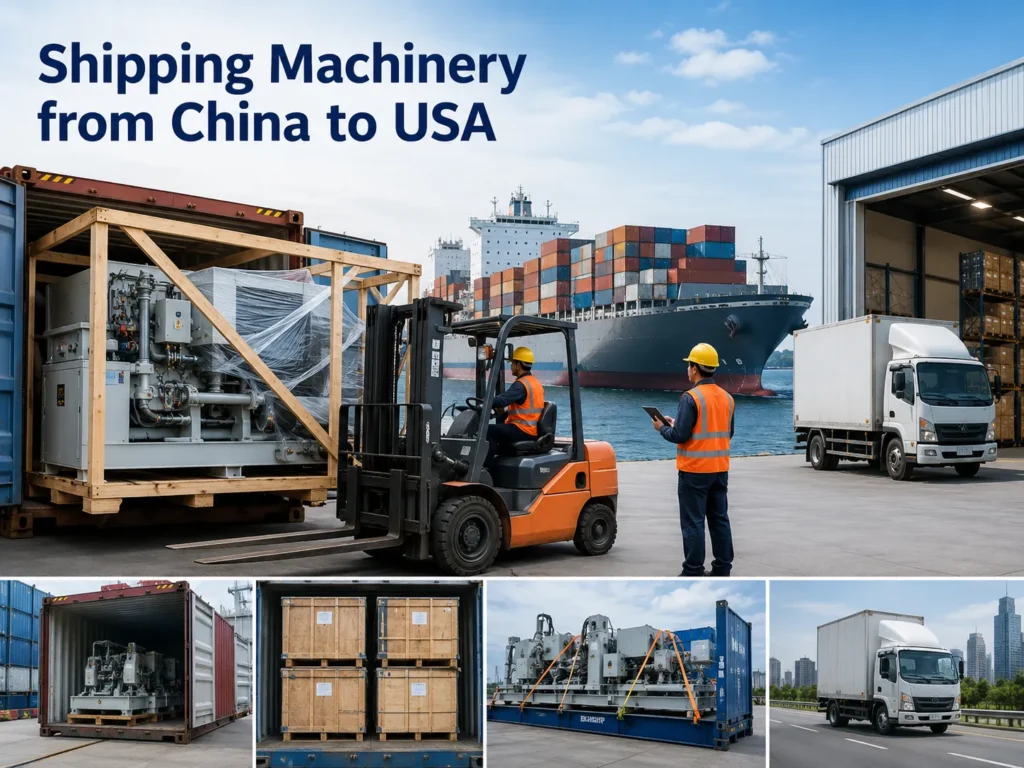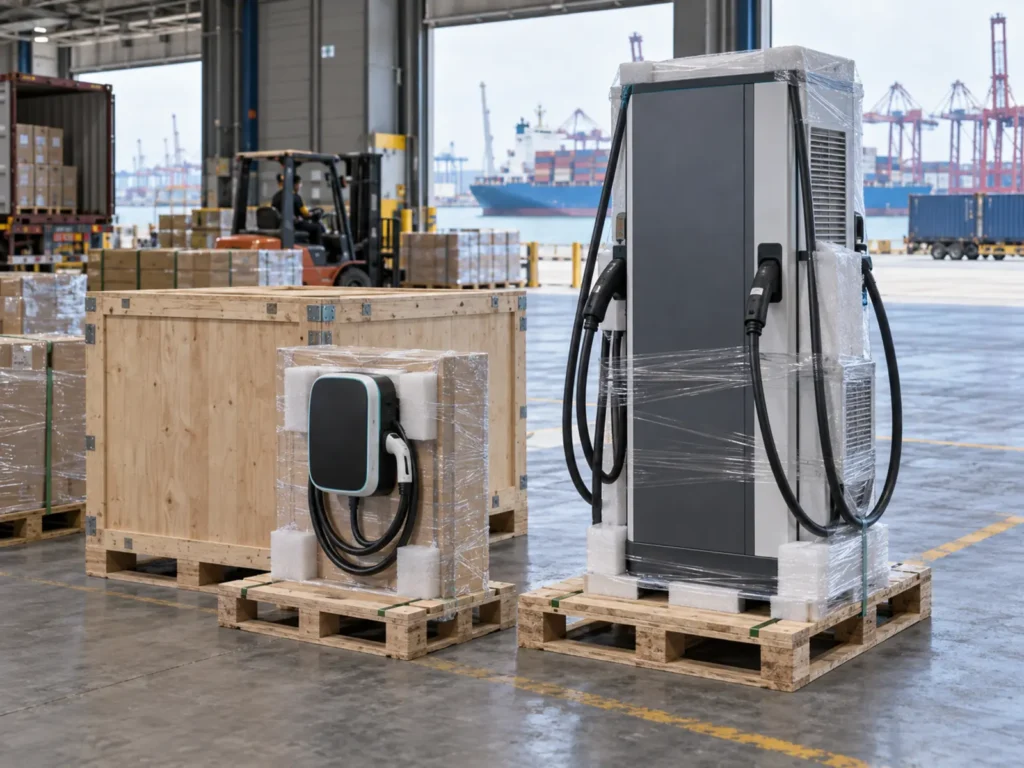
Oversized cargo DDP shipping from China to USA helps importers move large, heavy or bulky goods by sea freight with customs clearance, duty handling and final truck delivery under one confirmed door-to-door scope. It is often suitable when the cargo is too large for normal courier service, too expensive for air freight, but does not fill a full container.
Unlike small parcel delivery, oversized cargo requires package-level review. The forwarder must check the final packed dimensions, gross weight per piece, packaging type, product description, cargo value, U.S. ZIP code, address type, truck access and unloading conditions before confirming the route.
This guide explains when oversized Sea DDP works, how to compare U.S. West Coast and East Coast routes, what DDP can include, how large-item truck delivery works, and how to prepare furniture, gym equipment, machinery parts, commercial fixtures and other bulky products for shipment.
For a broader explanation of duties and customs responsibility, read DDP shipping from China to USA. For a complete country-level overview, read shipping from China to the USA.
Need to check an oversized DDP shipment? Send product photos, packing photos, packed dimensions, gross weight per package, total package quantity, supplier city, cargo value, U.S. ZIP code, address type and unloading details. Then, contact VoltFreight for a route and delivery review.
Quick Answer: Can Oversized Cargo Ship DDP Door-to-Door from China to USA?
Yes. Many large, heavy and bulky items can ship from China to the United States by Sea DDP door-to-door. Under a confirmed scope, the service may include China pickup or warehouse receiving, export handling, ocean freight, U.S. customs clearance, duty handling and final truck delivery.
However, DDP does not mean that every product, package or address is automatically accepted. Large-item delivery can require a loading dock, forklift, liftgate, appointment, limited-access service or a different truck. In addition, products involving batteries, FDA, EPA, DOT, anti-dumping duties, trademarks or other special rules need a separate review.
Oversized Sea DDP generally works best for consolidated cargo that is too large for parcel networks but still fits a normal LCL handling and truck-delivery process. Cargo requiring flat rack, open top, breakbulk, crane unloading or heavy-lift planning usually needs an FCL or project cargo solution instead.
When Should You Use Oversized Sea DDP?
Oversized Sea DDP fits a practical middle zone between small-parcel shipping and full-container freight. The buyer wants one landed delivery plan, while the shipment remains suitable for consolidated ocean freight and standard commercial trucking.
This service may work well when:
- The cargo is too large, too long or too heavy for DHL, UPS, FedEx or another parcel network.
- Air freight produces an unreasonable chargeable weight because the packages are bulky.
- The order does not fill a 20GP, 40GP or 40HQ container.
- The buyer wants customs clearance, duty handling and final delivery under one confirmed scope.
- The cargo can move through warehouses using a forklift, pallet jack or suitable handling equipment.
- The packaging can withstand consolidation, ocean transport, warehouse transfer and truck delivery.
- The consignee can receive the shipment at a warehouse, commercial site or reviewed residential address.
A separate solution may be better when the shipment fills most of a container, one piece exceeds normal route limits, the cargo cannot be safely consolidated, or delivery requires a crane, rigging team or complex site coordination. In those cases, compare Sea DDP with sea freight from China to USA, FCL delivery or project cargo service.
What Counts as Oversized Cargo?
For this service, oversized cargo means goods that do not fit normal parcel handling because of their length, width, height, weight, shape or packaging. The shipment may still move through consolidated sea freight, but every package must remain compatible with warehouse handling and final truck delivery.
Common examples include:
- Furniture, cabinets, tables, sofas and home-improvement products
- Commercial display units, store fixtures and exhibition materials
- Gym equipment, treadmills, squat racks and weight machines
- Machinery parts, industrial components and metal assemblies
- Large lighting products, signs and decorative structures
- Warehouse racks, tools and commercial equipment
- Long cartons, heavy pallets, wooden frames and plywood crates
- Bulky e-commerce or wholesale products going to a U.S. warehouse or business
Size alone does not determine the route. A compact 500 kg machine part may create a heavy single-piece problem, while a 100 kg furniture crate may create a volume and truck-space problem. Therefore, the quote must review each package rather than using only total weight or total CBM.
Gym Equipment as an Oversized Cargo Example
Gym equipment shows why a normal freight quote often fails for large items. Treadmills can be long and fragile, power racks may contain overlength steel parts, and dumbbells or weight plates can create extremely dense pallets. Commercial strength machines may also require a forklift, loading dock or special unloading plan.
The following examples show the package-level details that matter:
| Gym Equipment | Main Shipping Risk | What to Check |
|---|---|---|
| Treadmills and walking pads | Long cartons, motors, fragile consoles and residential delivery limits | Packed length, crate protection, electrical details and site access |
| Power racks and squat racks | Long steel beams and overlength cartons | Longest side, palletization and truck-handling limits |
| Dumbbells and weight plates | Dense cargo, heavy cartons and pallet failure risk | Weight per carton, pallet strength and weight distribution |
| Smith and cable machines | Heavy crates, multiple packages and difficult unloading | Forklift, loading dock, liftgate and delivery appointment |
| Pilates reformers | Long frames, damage-sensitive parts and home delivery expectations | Wooden protection, packed length and residential access |
| Commercial gym packages | Mixed machines, project timing and site receiving limits | LCL or FCL choice, loading plan, package list and site equipment |
For gym equipment and other large products, total kilograms are not enough. The forwarder also needs single-piece weight, longest packed side, stackability, packaging photos and unloading information. This same rule applies to commercial furniture, machinery, display units and other oversized goods.
How Oversized Sea DDP Door-to-Door Works
Oversized Sea DDP combines China handling, international freight, customs coordination and U.S. delivery into one reviewed route. The exact operating method depends on cargo size, supplier location, service level, product type and destination.
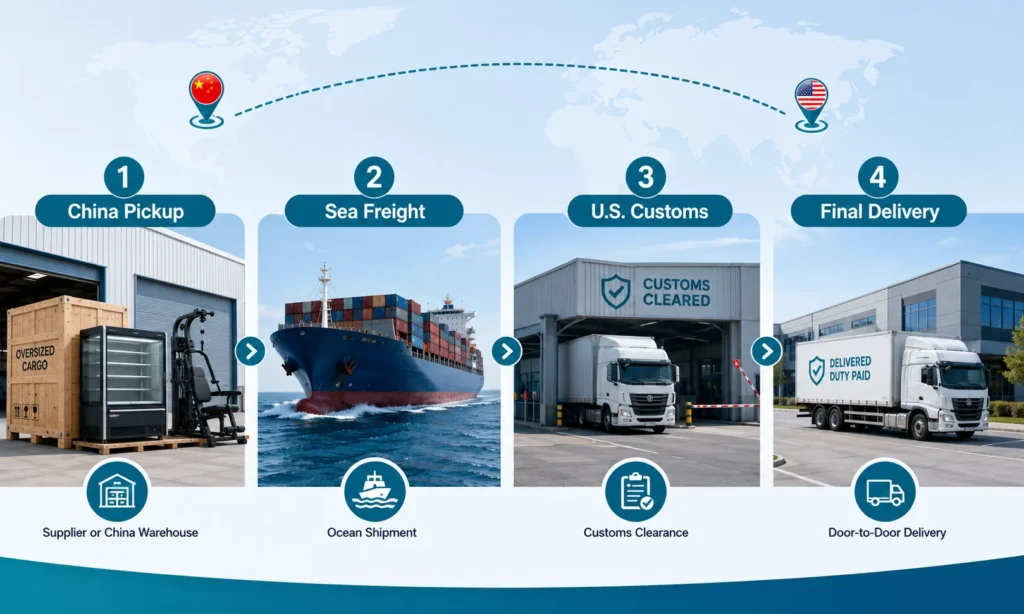
A typical shipment follows these steps:
- Cargo data review: Check product details, packed dimensions, package weight, cargo value, packaging and delivery address.
- Supplier pickup or warehouse receiving: Collect the goods or ask the supplier to deliver them to the China warehouse.
- Measurement and packaging check: Confirm actual dimensions, gross weight, stackability and handling condition.
- Route selection: Compare service speed, U.S. entry route, customs scope and final truck delivery.
- Export and ocean freight: Arrange China export handling and consolidated sea transportation.
- U.S. customs clearance: Process entry under the accepted product, value and DDP scope.
- Final dispatch: Transfer the cargo to the U.S. delivery network after release.
- Truck delivery: Deliver to the confirmed business, warehouse or residential address under the agreed delivery conditions.
The most important checks happen before booking. A route that looks inexpensive can fail later if the package exceeds warehouse limits, the product does not fit the customs scope, or the consignee cannot unload the cargo.
Which U.S. Route Works Best for Oversized Cargo?
The best route depends on the U.S. ZIP code, cargo size, service speed and final truck distance. A shorter ocean leg does not always create the lowest landed cost because oversized truck delivery can become expensive over long inland distances.
West Coast Delivery
A West Coast route often works well for California, Nevada, Arizona, Oregon, Washington and nearby western states. The ocean leg from China is generally shorter, while the inland delivery distance may remain manageable for western ZIP codes.
Nevertheless, a West Coast entry does not automatically suit every U.S. destination. Shipping a large crate through the West Coast and then trucking it across the country may cost more than using an all-water route to the East Coast.
East Coast Delivery
An East Coast or all-water route may work better for New York, New Jersey, Pennsylvania, Georgia, Florida, North Carolina, South Carolina and other eastern destinations. Although the ocean transit can be longer, the shorter U.S. truck distance may reduce final delivery cost and risk.
This difference matters for heavy crates, long cartons and bulky pallets. In many cases, reducing inland truck distance is more valuable than selecting the shortest ocean transit.
Central U.S. and Inland ZIP Codes
Texas, Illinois, Ohio, Colorado, Tennessee, Missouri and other inland destinations need closer comparison. Depending on the ZIP code, cargo size and current delivery network, the shipment may work through the West Coast, East Coast, Gulf region or another transfer point.
A state name alone is not enough. Even within one state, a warehouse near a logistics hub and a rural residential property can produce very different delivery plans.
Economy, Standard, Fast and Premium Options
Large-item Sea DDP may use different service levels. An economy route suits non-urgent cargo, while standard service balances cost and timing. Faster or premium routing may be available for time-sensitive replenishment, but the final choice still depends on vessel schedules, warehouse handling, customs review and truck capacity.
Before selecting a route, compare:
- Destination ZIP code and distance from the delivery hub
- West Coast, East Coast, Gulf or inland routing options
- Business, warehouse, residential or limited-access address
- Single-piece length, width, height and gross weight
- Liftgate, appointment, forklift or loading-dock requirements
- Economy, standard or faster service priority
How Route Choice Affects Cost and Delivery Time
Oversized cargo pricing depends on the complete route, not only the China-to-USA ocean freight. A low port-level rate may become expensive after inland trucking, residential service, liftgate fees or remote-area delivery are added.
For example, a California entry may give a shorter ocean transit. However, it may not be the best choice for a large shipment going to New Jersey or Florida. Conversely, an East Coast all-water route may take longer at sea but reduce the truck distance after arrival.
The same logic applies to delivery time. The fastest vessel does not always produce the fastest door delivery. Customs release, warehouse transfer, appointment scheduling, truck availability and consignee readiness can all affect the final delivery date.
Route cost and time usually depend on:
- Origin city and China-side pickup distance
- Ocean service level and sailing schedule
- U.S. port or regional entry route
- Distance from the delivery hub to the final ZIP code
- Residential, rural, farm, school, hospital, job-site or exhibition delivery
- Appointment, liftgate, limited-access or address-correction requirements
- Long-side length, single-piece weight and non-stackable cargo
- Customs inspection, document questions or product compliance review
Because schedules and truck rates change, public transit ranges and fixed prices can be misleading. A useful quote should use the actual cargo and destination details.
What DDP Includes and What Still Needs Review
DDP can simplify the shipping process, but the service scope must stay specific. It may include international freight, customs clearance, duty handling and final delivery. At the same time, some services require separate approval or additional charges.
A confirmed oversized DDP quote may include:
- Supplier pickup or China warehouse receiving, when stated in the quote
- China export handling and ocean freight
- U.S. customs clearance under the accepted product and declaration scope
- Duties and applicable tax handling under the confirmed DDP arrangement
- Final truck delivery to the approved address
- Basic coordination with the supplier and consignee
The following items need separate review:
- Residential, rural or limited-access delivery
- Liftgate, appointment or redelivery service
- Inside delivery, room-of-choice delivery or white-glove handling
- Forklift, crane, rigging or special unloading equipment
- Storage caused by missing documents or unavailable consignee
- FDA, EPA, DOT, anti-dumping, trademark or dangerous-goods issues
- Extremely long, heavy, fragile or irregular packages
DDP does not mean unlimited customs responsibility, free unloading or delivery to any location without review. A clear quotation should explain the endpoint, address type, customs scope and unloading responsibility before shipment.
U.S. Truck Delivery, Address Type and Unloading
Final truck delivery creates the biggest difference between normal parcel shipping and oversized cargo DDP. Parcel couriers usually carry small packages through an integrated network. Large goods may move by LTL truck, dedicated truck or another commercial delivery service.
Business and Warehouse Delivery
A business or warehouse address often works best when the consignee has a loading dock, forklift or experienced receiving staff. The buyer should still confirm receiving hours, appointment rules, site contact, dock conditions and package limits.
A warehouse may also require pallet labels, appointment numbers or receiving references. Missing information can lead to waiting time, failed delivery or redelivery charges.
Residential and Limited-Access Delivery
Residential delivery needs more review because large trucks may face narrow roads, gated access, parking restrictions, no loading dock or no unloading equipment. Farms, schools, hospitals, construction sites, airports and exhibition venues may also be treated as limited-access locations.
The quote should confirm whether delivery is curbside, driveway, dock or another agreed point. Standard freight delivery usually does not include carrying the product indoors, moving it upstairs, assembling equipment or removing packaging.
Liftgate, Forklift and Unloading Responsibility
A liftgate can lower suitable freight from the truck to ground level. However, it does not solve every oversized delivery problem. A very long crate, irregular machine or heavy pallet may exceed the carrier’s liftgate or pallet-jack limits.
Before booking, confirm:
- Can a large truck access and safely stop at the address?
- Does the site have a loading dock, forklift, pallet jack or crane?
- Does the shipment need liftgate service?
- Can the consignee move the cargo after it reaches ground level?
- Does the delivery require an appointment or site contact?
- Is the buyer expecting curbside delivery, inside delivery or installation?
Clear unloading information prevents waiting fees, redelivery charges, storage and failed delivery. It also protects workers and cargo from an unsafe unloading attempt.
Packing Large Items for Sea DDP Delivery
Packaging is part of the shipping method. Oversized goods pass through supplier loading, China warehousing, container handling, ocean movement, U.S. transfer and final delivery. Weak cartons or unstable pallets can fail during any of these stages.
Single-Piece Weight and Long-Side Limits
Total shipment weight does not show how difficult the cargo is to handle. A shipment weighing 800 kg in forty manageable cartons differs greatly from one 800 kg machine in a single crate.
For each package, provide:
- Final packed length, width and height
- Gross weight per carton, pallet or crate
- Longest side and package shape
- Stackable or non-stackable status
- Forklift entry points and center-of-gravity concerns
- Fragile, upright or special-handling marks
Single-piece data affects warehouse acceptance, forklift capacity, liftgate feasibility and final truck selection. Therefore, product dimensions should never replace final packed dimensions in a freight quotation.
Cartons, Pallets, Wooden Crates and ISPM 15
Strong export cartons may work for lighter components and compact accessories. Dense products such as dumbbells, metal parts or rubber flooring usually need strong pallets and balanced weight distribution. Meanwhile, long, fragile or high-value equipment may need a plywood case, wooden frame or reinforced crate.
Use foam, edge guards, corner protection, moisture protection and internal bracing where necessary. Also secure small parts, screws, cables and accessories in labeled bags or inner boxes.
When the packaging uses solid wood pallets, crates, frames or dunnage, check applicable ISPM 15 treatment and marking requirements before shipment. Plywood and processed wood may be treated differently from solid wood, so the supplier should identify the material clearly and provide packaging photos.
Good oversized packaging should support forklift handling, prevent shifting, protect against compression and make the unloading method obvious. For high-value or damage-sensitive products, cargo insurance should also be reviewed.
Real Oversized Cargo Shipping Examples
Real shipment scenarios show why package details and delivery conditions matter more than a simple per-kilogram quote.
Commercial Display Units to a U.S. Business
A U.S. buyer purchased several commercial display units from a China supplier. Each unit used wooden-crate packaging and weighed approximately 120–180 kg. Courier service was not suitable, while air freight created a high chargeable weight. The total volume also did not justify a dedicated container.
Before booking, the route review covered crate dimensions, gross weight, product description, cargo value, supplier city, U.S. ZIP code and unloading ability. Because the destination was a business address with suitable receiving conditions, Sea DDP could combine ocean freight, customs clearance, duty handling and final truck delivery.
The key step was confirming unloading before departure. Door delivery did not automatically include a forklift, inside placement or white-glove service.
Home Gym Equipment to a Residential Garage
Another buyer ordered a power rack, adjustable bench, weight plates and accessories. Several packages were long or heavy, but the order did not fill a container. A supplier’s basic shipping quote did not clearly explain residential service, liftgate availability or unloading responsibility.
The final route review used the packed dimensions and weight of each package, not only the total shipment. It also checked truck access, curbside delivery, liftgate feasibility and whether the receiver could move the equipment after delivery.
Sea DDP provided a workable landed route, but it did not include assembly, carrying equipment into the house or placing products inside a gym room. Confirming that boundary prevented an unrealistic delivery expectation.
When to Use Courier, Air Freight, Sea DDP, FCL or Project Cargo
Oversized Sea DDP is useful, but it is not the right method for every shipment. Compare the complete landed route before choosing a service.
- Express courier: Best for samples, spare parts and small urgent packages. It can reject large or heavy goods and becomes expensive as chargeable weight increases.
- Air freight: Suitable for urgent commercial cargo that is too large for courier but still justifies air transport. Bulky items may create high volumetric weight.
- Oversized Sea DDP: Suitable for large or heavy LCL cargo that needs customs, duties and final delivery under one confirmed scope.
- Standard LCL sea freight: Useful when the buyer has a customs broker and local delivery arrangement and wants to manage destination charges separately.
- FCL or FCL DDP: Better when the order fills most of a container, needs dedicated loading control or contains many long and heavy packages.
- Open top, flat rack or breakbulk: Necessary when cargo exceeds normal container or DDP route limits and requires project cargo planning.
For small urgent cargo, compare express shipping from China and air freight from China. For larger planned shipments, review sea freight from China and country-specific ocean routes.
Cost Factors for Oversized Cargo DDP Shipping
Large-item DDP pricing does not work like a simple parcel rate. Two shipments with the same total weight can produce different prices because of dimensions, single-piece handling and final delivery conditions.
Main cost factors include:
- Final packed volume and chargeable weight
- Actual gross weight and gross weight per package
- Longest side, irregular shape and non-stackable status
- Number of cartons, pallets, frames or crates
- Supplier city and China pickup conditions
- Product type, cargo value, HTS classification and duty rate
- Ocean service level and U.S. routing choice
- Destination ZIP code and inland truck distance
- Business, warehouse, residential or limited-access delivery
- Liftgate, appointment, storage, redelivery or special equipment
- Packaging improvement or repacking needs
A commercial warehouse with a forklift may cost less to serve than a residential address with no unloading equipment. Likewise, a compact machine part may use less truck space than a lightweight but oversized furniture crate.
For a broader landed-cost explanation, read China to USA shipping cost.
Customs, Product and Tariff Review
Oversized Sea DDP still requires accurate customs information. Large cargo does not receive simplified treatment merely because the forwarder offers a door-to-door service.
Before booking, confirm:
- Accurate product name, material, function and intended use
- Commercial invoice value and currency
- HTS classification or classification information for broker review
- Country of origin and supplier information
- Battery, motor, electrical or wireless components
- Trademark or brand authorization where applicable
- FDA, EPA, DOT or other agency requirements
- General duty, Section 301 exposure and possible anti-dumping duties
- Dangerous-goods, liquid, powder or chemical characteristics
Vague descriptions such as “parts,” “equipment,” “fitness goods” or “samples” can create customs questions. A better invoice uses specific descriptions such as “steel commercial display rack,” “motorized treadmill,” “rubber-coated weight plates” or “aluminum machinery housing.”
Gym Equipment HTS and Tariff Review
Gym equipment cannot use one universal HTS code. A treadmill, squat rack, dumbbell set, weight plate, electronic console and replacement part may require different classification analysis.
HTS heading 9506 may be a starting point for some exercise equipment, but importers should not assume that every fitness-related product belongs under the same subheading. Material, function, electronic components and whether the item is a complete machine or part can change the result.
The importer and customs broker should confirm the final classification, general duty rate, Section 301 exposure and any other applicable tariff measure before shipment. For customs preparation, read USA customs clearance from China and how to import from China.
Common Oversized Cargo Shipping Mistakes
Most extra charges and delivery failures begin with missing information before the cargo leaves China. Avoid these common mistakes:
- Sending product dimensions instead of final packed dimensions
- Providing total weight but not gross weight per package
- Ignoring the longest side, irregular shape or non-stackable status
- Using weak cartons or pallets for dense and heavy products
- Failing to check solid wood packaging and ISPM 15 requirements
- Providing only a state name instead of a complete ZIP code
- Providing a ZIP code without the address type
- Quoting a residential or limited-access location as a commercial address
- Assuming the driver will unload a heavy crate or long package
- Expecting DDP to include inside delivery, assembly or installation
- Forgetting liftgate, appointment, forklift or loading-dock requirements
- Using vague customs descriptions or unrealistic declared values
- Not checking HTS classification, Section 301 or anti-dumping exposure
- Changing the delivery address after the shipment enters the U.S. network
- Skipping cargo insurance for valuable or damage-sensitive equipment
A detailed review may look slower at the quotation stage, but it usually prevents larger problems during customs clearance and final delivery.
What to Send for an Accurate DDP Quote
An accurate oversized cargo quotation needs package-level and address-level information. Send the following details:
- Product name, material, function and intended use
- Product photos and final packing photos
- Number of cartons, pallets, frames or crates
- Final packed length, width and height of every package type
- Gross weight per package and total gross weight
- Longest side, stackability and handling marks
- Packaging type and whether solid wood is used
- Supplier city and complete pickup address in China
- Cargo value, currency and commercial invoice details
- HTS code if available
- Battery, motor, liquid, powder, chemical or magnetic components
- Brand or trademark information
- Complete U.S. delivery address and ZIP code
- Address type: business, warehouse, residence, farm, school, hospital, job site or exhibition venue
- Loading dock, forklift, pallet jack, crane or liftgate availability
- Appointment, inside delivery or other special delivery expectations
- Required delivery deadline and preferred service priority
- Whether cargo insurance is required
For Alibaba or factory purchases, ask the supplier for the final packing list before paying the shipping balance. You can also review shipping from Alibaba to USA before comparing supplier freight offers.
How VoltFreight Helps with Oversized Cargo DDP Shipping
VoltFreight helps importers review large, heavy and bulky shipments from China before booking. The goal is not only to provide an ocean rate. Instead, the route should connect China handling, customs scope and realistic U.S. delivery conditions.
Depending on the shipment, support may include:
- Supplier pickup and China warehouse coordination
- Package measurement, weighing and packing-condition review
- Comparison of economy, standard and faster Sea DDP options
- West Coast, East Coast and inland route comparison
- Commercial invoice and product-description review
- Customs, duty and special-product scope checks
- Business, warehouse and reviewed residential delivery planning
- Liftgate, appointment and unloading-condition review
- Comparison with courier, air freight, LCL, FCL or project cargo
- Shipment tracking and delivery coordination
Final advice: Do not book oversized cargo using only total kilograms, total CBM or a supplier’s short shipping quote. Confirm package-level weight, packed dimensions, U.S. routing, address type and unloading conditions first. That information determines whether Sea DDP is genuinely suitable.
Useful Official Resources
- U.S. Customs and Border Protection: Importing into the United States
- U.S. International Trade Commission: Harmonized Tariff Schedule
- Office of the U.S. Trade Representative: Section 301 Tariff Actions
- USDA APHIS: Wood Packaging Material Requirements
- Federal Motor Carrier Safety Administration
FAQ About Oversized Cargo DDP Shipping from China to USA
Can oversized cargo ship DDP from China to USA?
Yes. Many large, heavy and bulky products can move by Sea DDP when the cargo fits the route’s warehouse, customs and truck-delivery limits. The forwarder must review packed dimensions, weight per piece, product details, ZIP code, address type and unloading conditions before accepting the shipment.
Does DDP include customs duties and final delivery?
A confirmed DDP quote may include customs clearance, duty handling and final delivery. However, the scope must explain the accepted product, declared value, delivery endpoint and exclusions. Liftgate, inside delivery, storage, special inspection or heavy unloading may require separate approval.
Can oversized Sea DDP deliver to a residential address?
It may be possible, but residential delivery requires truck-access and unloading review. The buyer should confirm driveway or street access, liftgate needs, package weight, package length and whether the receiver can move the cargo after curbside or ground-level delivery.
Does door delivery include unloading or installation?
Usually not. Standard door delivery does not automatically include forklift unloading, inside placement, upstairs delivery, assembly, installation or packaging removal. These expectations must be discussed before booking.
Is Sea DDP better than FCL for large items?
Sea DDP can work well when the shipment is too large for courier but does not fill a container. FCL may be better when the order fills most of a container, needs dedicated loading control or includes packages that do not fit consolidated DDP limits.
How should I choose between a West Coast and East Coast route?
Compare total door-to-door cost and time rather than ocean transit alone. West Coast routing often suits western states, while East Coast or all-water routing may reduce truck distance for eastern destinations. Central and inland ZIP codes need a shipment-specific comparison.
Can gym equipment ship by oversized Sea DDP?
Yes, many treadmills, racks, benches, weights and commercial fitness machines can move by Sea DDP. However, package length, single-piece weight, pallet strength, HTS classification, residential access and unloading ability need review.
What packaging is best for oversized cargo?
The answer depends on weight, shape and fragility. Reinforced cartons may work for lighter goods, strong pallets suit dense packages, and plywood cases or wooden frames may protect long or high-value equipment. Solid wood packaging should meet applicable ISPM 15 requirements.
Why does the forwarder need weight for every package?
Single-piece weight controls warehouse handling, forklift requirements, liftgate feasibility and truck selection. One 500 kg crate creates a different operation from ten 50 kg cartons, even though the total shipment weight is the same.
What information is required for a quote?
Send product and packing photos, final dimensions, gross weight per package, package quantity, supplier city, cargo value, product details, U.S. ZIP code, address type and unloading conditions. Complete data allows the forwarder to check customs scope and final delivery before quoting.
Important note: This guide is for logistics planning only. Carrier acceptance, DDP scope, customs treatment, duties, Section 301 tariffs, anti-dumping exposure, agency requirements, route limits, transit time, truck delivery and unloading conditions depend on the actual product, value, packaging, destination and current regulations. Confirm the final plan with your freight forwarder, customs broker, importer and compliance specialist before shipment.