Shipping solar panels from China to Greece requires more planning than ordinary carton shipping. PV modules are fragile, high-volume and sensitive to loading damage. In many cases, a solar shipment also includes inverters, mounting systems, cables, connectors, combiner boxes, monitoring devices or battery storage equipment. Therefore, each product type can affect packing, container loading, HS code classification, customs documents and final delivery.
For most PV module shipments, sea freight works best. FCL shipping gives importers better control for larger orders, EPC project cargo and palletized solar panels because the supplier and forwarder can load the container as one shipment. Meanwhile, air freight mainly fits urgent inverter parts, samples, replacement components or warranty items.
However, importers should not plan only around the cheapest freight rate. Solar panels customs clearance in Greece also depends on commercial invoice, packing list, HS code, technical datasheets, product compliance files, EORI/importer details, duty, VAT and final delivery planning. In addition, Greece’s standard VAT rate is 24%, so VAT cash flow can strongly affect the landed cost of a solar project.
This guide explains how to ship solar panels from China to Greece, including sea freight, FCL and LCL options, DDP feasibility, container loading, Piraeus customs clearance, 24% Greek VAT, documents, battery storage review and project delivery to Athens, Piraeus, Thessaloniki, mainland Greece and Crete.
Need a solar logistics quote? Send your supplier city, product type, model list, pallet quantity, pallet dimensions, gross weight, total CBM, HS code if available, invoice value, Incoterms and final delivery address. Then, contact VoltFreight to review FCL, LCL, sea freight, customs documents and Greece delivery options.
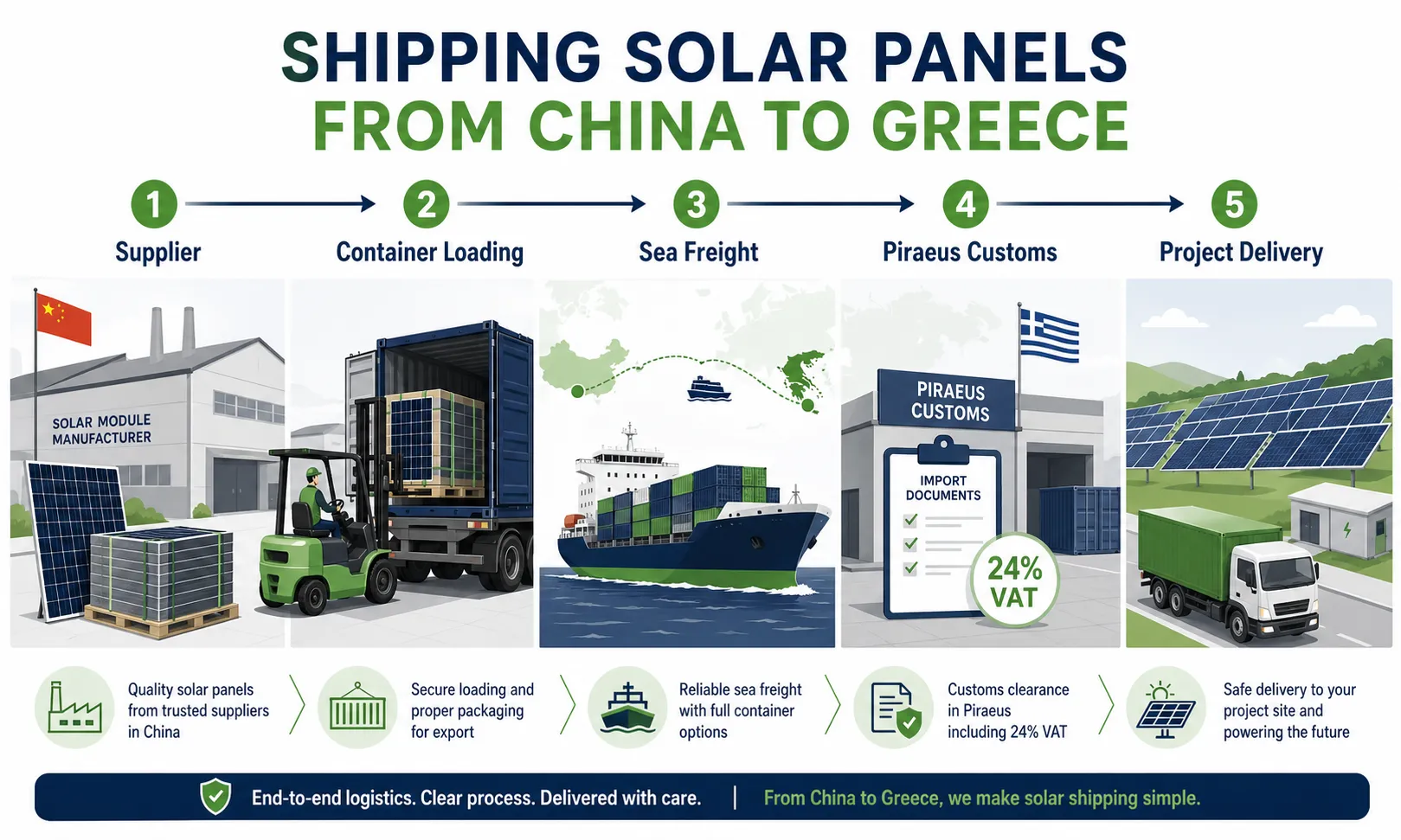
Quick Answer: What Makes Solar Panel Shipping Different?
Solar panel shipping differs from ordinary carton shipping because PV modules are fragile, bulky and usually palletized. Even a small mistake in loading, pallet handling or unloading can create cracked glass, frame deformation, hidden cell damage or rejected project delivery.
Moreover, one solar shipment can include several product categories. PV modules, inverters, mounting structures, cables and battery storage systems may use different HS codes and documents. For this reason, importers should separate the cargo list clearly before asking for a freight quote.
For larger commercial shipments, FCL sea freight to Greece usually gives the safest starting point. If the shipment only includes urgent accessories, importers can review air freight or express courier. Meanwhile, for DDP requests, the forwarder should check the cargo case by case because customs scope, VAT handling, product restrictions and delivery access can vary.
| Solar Cargo Type | Best Shipping Method | Main Planning Risk |
|---|---|---|
| PV modules / solar panels | FCL sea freight, sometimes LCL for small orders | Fragile pallet handling, container loading and project-site unloading |
| Solar inverters | Sea freight, air freight or express for urgent parts | Higher value, electrical compliance and model documentation |
| Mounting systems | FCL or LCL sea freight | Long profiles, mixed parts and weight distribution |
| Cables and connectors | Sea freight, air freight or consolidation | HS code, material details and mixed carton control |
| Battery storage systems | Special sea freight or approved battery route | Lithium battery documents, DG review, MSDS and UN38.3 |
Why Greece Is an Important Solar Logistics Market
Greece has become an active solar market, which creates steady demand for PV modules, inverters, mounting systems and project logistics. According to pv magazine reporting based on HELAPCO estimates, Greece installed about 1,893.5 MW of new PV capacity in 2025.
Even so, strong market demand does not remove import compliance risk. Solar importers still need accurate invoices, HS codes, product documents and VAT planning. This matters especially for shipments moving through major Greek gateways such as Piraeus.
In 2025, Reuters reported a large customs and VAT fraud case involving Chinese imports through Piraeus. Although that case did not focus specifically on PV modules, it shows why legitimate importers should avoid undervaluation, unclear product descriptions and risky customs shortcuts.
What Solar Products Can You Ship from China to Greece?
Importers can ship several solar product categories from China to Greece. Some items are fragile and bulky, while others have higher value or need stronger compliance review. As a result, the freight method and document checklist should match the real cargo.
Before booking, the buyer should confirm product names, model numbers, pallet details, carton details, HS codes and technical documents. If the shipment includes lithium batteries or battery energy storage systems, the forwarder must review battery documents before accepting the cargo. Otherwise, the shipment may face booking rejection, cargo hold or route changes.
| Product Type | Logistics Notes | Documents to Check |
|---|---|---|
| PV modules / solar panels | Fragile, palletized, bulky and sensitive to loading damage | Commercial invoice, packing list, HS code, technical datasheet and model list |
| Solar inverters | Higher value electrical equipment, often shipped with project cargo or urgent parts | CE documents, technical specification, model list, serial numbers if required |
| Mounting systems | Long rails, brackets and mixed hardware may need special packing | Material details, packing list, HS code and origin documents if needed |
| Cables and connectors | Forwarders can consolidate them with PV modules or ship them separately | Material details, specifications, HS code and packing list |
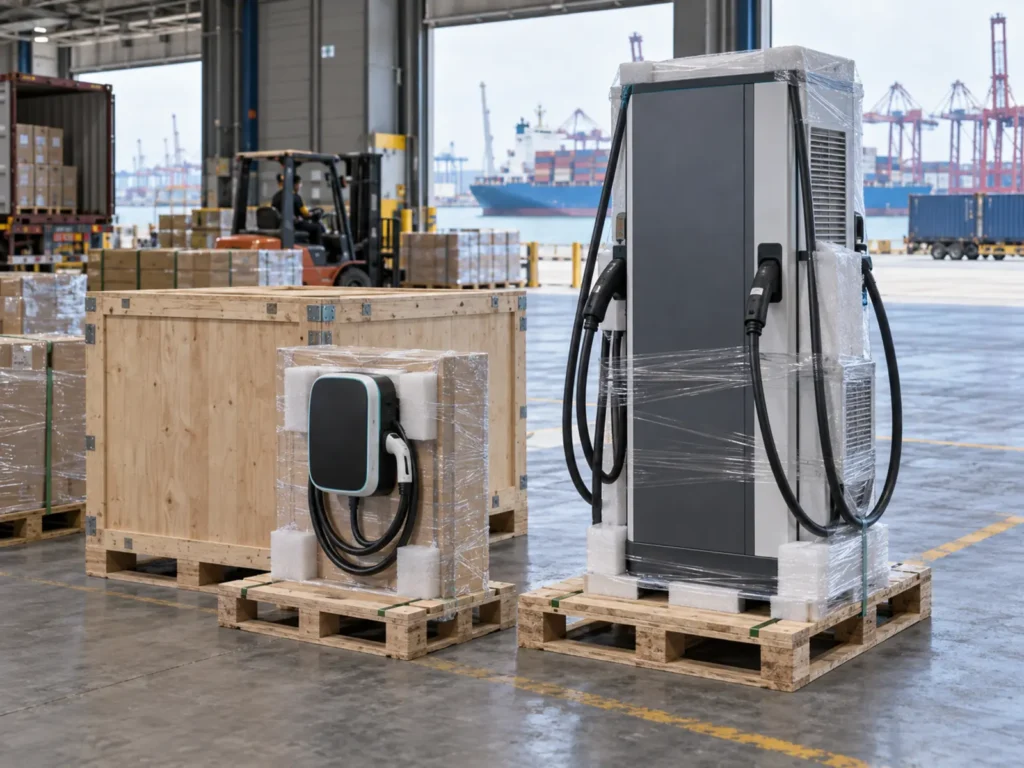
| Battery storage systems | Lithium batteries need special transport review | MSDS, UN38.3, battery declaration, packing method and DG review |
| Monitoring devices | Wireless or electronic functions may trigger extra checks | CE, EMC, RED review if wireless function is included, and product labels |
Sea Freight, Air Freight or DDP for Solar Panels?
The best shipping method depends on cargo volume, value, urgency and delivery address. Sea freight fits most PV modules because solar panels become bulky after palletization. In many cases, air freight costs too much for full PV module shipments.
Still, air freight can help when a project needs urgent inverters, small accessories, warranty parts or replacement components. DDP may also work for selected solar-related shipments. However, importers should not treat DDP as a tax-free shortcut.
| Method | Best For | Important Warning |
|---|---|---|
| FCL sea freight | Full-container PV module shipments, project cargo and bulk pallets | Check container loading plan, pallet height, gross weight and unloading method |
| LCL sea freight | Small accessories, limited panels or mixed supplier cargo | PV modules are fragile, and LCL handling can increase damage risk |
| Air freight | Urgent inverters, replacement parts, samples and warranty items | Air cost is high, and batteries need transport approval |
| Express courier | Small spare parts, documents and samples | Not suitable for bulky PV pallets or large project cargo |
| DDP service | Selected shipments where customs and delivery scope are clear | Confirm legal declaration, VAT handling, product restrictions and delivery limits |
For route comparison, review Shipping from China to Greece, Sea Freight from China to Piraeus Greece, Sea Freight from China and Air Freight from China.
FCL Container Planning for PV Modules
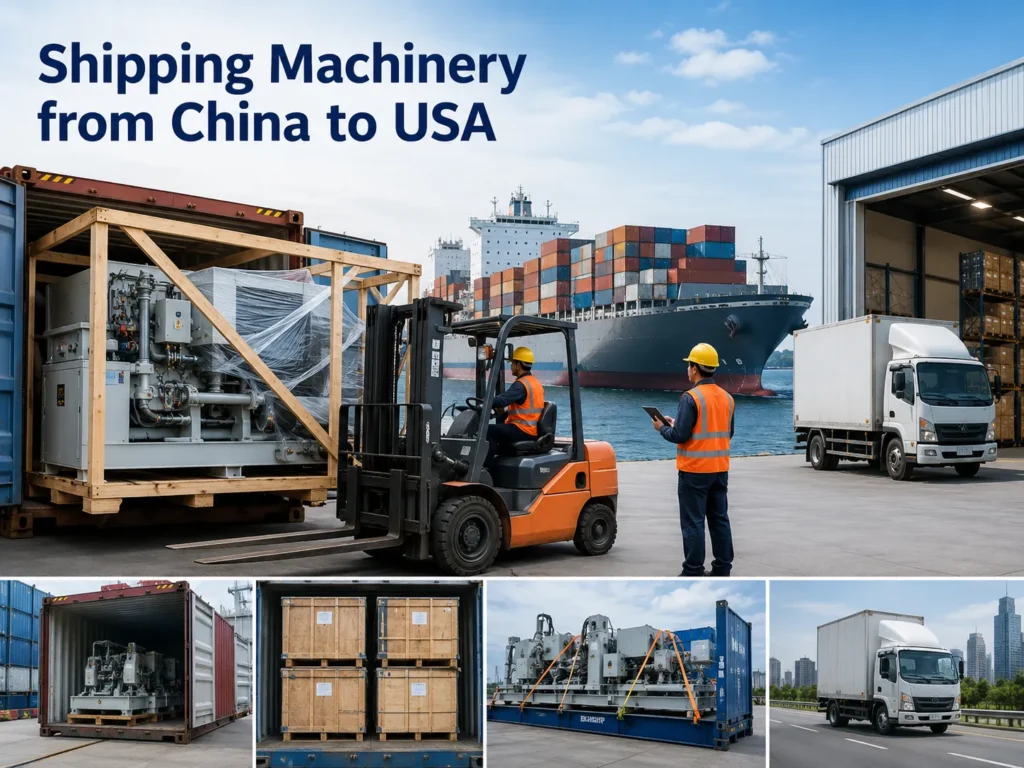
FCL usually gives the safest and most efficient route for larger PV module shipments. Because one importer or one shipment uses the container, the forwarder can better control loading, sealing, route planning and delivery. In addition, FCL reduces extra handling compared with LCL.
PV module loading still needs careful planning around pallet size, pallet weight, module size, stackability and container payload. Do not assume that every supplier can load the same quantity in a 40HQ container. Instead, ask for pallet dimensions, loading photos and total gross weight before booking.
20ft, 40ft or 40HQ container?
A 40HQ container often works for bulky PV module pallets, but it does not fit every shipment. If the cargo is heavy, a 20ft or 40ft standard container may suit the shipment better because of weight distribution and road limits. Therefore, container choice should depend on both volume and weight.
| Container Option | When It May Work | What to Check |
|---|---|---|
| 20ft container | Heavy mounting systems, dense hardware or smaller heavy shipments | Payload, floor load, weight distribution and local trucking rules |
| 40ft container | Standard commercial shipments with balanced weight and volume | Pallet layout, loading space, cargo weight and unloading access |
| 40HQ container | Bulky PV module pallets and high-volume solar panel shipments | Pallet height, safe stacking, door opening and project-site unloading |
Loading details to confirm before booking
- Pallet dimensions and gross weight per pallet
- Total pallet quantity and total CBM
- Module model, size and quantity per pallet
- Whether the supplier can stack pallets safely
- Container loading photos from previous shipments if available
- Forklift loading method at the supplier warehouse
- Whether the final site can unload pallets safely
- Whether the container needs direct delivery or warehouse transfer
LCL Shipping for Small Solar Orders
LCL can work for smaller solar accessories, cables, connectors, mounting parts, samples or limited PV module shipments. This method helps importers ship cargo without booking a full container. Moreover, it can reduce the entry cost for early-stage purchases or mixed supplier orders.
Nevertheless, LCL does not always suit PV modules. The cargo may move through consolidation and deconsolidation warehouses, which adds handling. For fragile solar panels, this can increase damage risk if the supplier uses weak packaging or unprotected pallets.
| LCL Cargo Type | Suitability | Risk Control |
|---|---|---|
| Solar cables and connectors | Usually suitable for LCL | Use clear carton labels and accurate packing list |
| Mounting accessories | Often suitable if the supplier packs them strongly | Check carton strength and part separation |
| Solar inverters | Possible, but importers should review value and damage risk | Use reinforced packaging and consider insurance |
| PV modules | Possible for small orders, but not always recommended | Use strong pallets, corner protection and handling marks |
Customs Clearance in Greece: HS Code, Duty and 24% VAT
Solar panels customs clearance in Greece starts with product classification. PV modules, inverters, solar glass, mounting systems, cables and batteries may fall under different HS or TARIC codes. Therefore, importers should not use one generic code for the whole shipment without review.
Greece’s standard VAT rate is 24%. Import VAT can strongly affect solar distributors, EPC contractors and project owners because project cargo often has high invoice value. In addition, importers should ask a customs broker to check duty rate and trade defence measures before booking.
Some solar-related items need extra attention. For example, EU trade defence measures and reviews may apply to certain solar glass products from China, depending on the exact product and tariff classification. This does not mean every PV module shipment has the same treatment. Instead, it means importers should check classification carefully before departure.
| Customs Item | Why It Matters | Importer Action |
|---|---|---|
| HS / TARIC code | Controls duty rate, restrictions and customs declaration details | Confirm EU import classification before departure |
| Customs value | Affects duty and VAT calculation | Use real invoices, payment records and correct Incoterms |
| Greek VAT | The standard rate is 24% unless a broker confirms otherwise | Plan VAT cash flow before cargo arrives |
| Importer / EORI details | EU customs procedures need accurate importer information | Confirm importer setup before vessel arrival |
| Product documents | Customs or market checks may require product files | Prepare technical datasheets, CE files and battery documents where needed |
| Trade defence check | Certain solar-related products may require extra review | Ask a customs broker to verify duty and TARIC measures |
For a broader customs guide, review China to Greece Customs Clearance.
Documents Needed for PV Module Customs Clearance
Clean documents reduce the risk of customs questions, storage fees and project delays. The commercial invoice, packing list and bill of lading should match the real cargo, including model numbers, pallet counts, weight, value and Incoterms.
For inverters, monitoring devices or battery storage products, technical and compliance documents matter more than they do for simple metal mounting parts. Therefore, the document checklist should follow the real product type. Otherwise, customs or market checks may request extra files after the shipment arrives.
| Document | Use | Common Problem |
|---|---|---|
| Commercial invoice | Shows buyer, seller, product, value, currency and Incoterms | Vague product descriptions or unrealistic declared value |
| Packing list | Confirms pallet count, carton count, dimensions and weights | Pallet count or weight does not match warehouse records |
| Bill of lading | Supports container release and customs clearance | Consignee or importer details do not match clearance setup |
| Technical datasheet | Supports model identification and product classification | Missing model numbers or inconsistent product details |
| CE / test documents | Supports compliance review for inverters and electrical products | Documents do not match the exact model shipped |
| Battery documents | Needed for battery storage or lithium battery products | Supplier prepares MSDS, UN38.3 or battery packing details too late |
| Importer details | Needed for customs release and tax handling | Importer does not confirm EORI, VAT or broker setup before arrival |
Battery Storage and Lithium Battery Shipping
Battery energy storage systems need special transport review. Lithium batteries are not ordinary cargo, and carriers may require MSDS, UN38.3, battery specifications, packing method, gross weight, watt-hour details and dangerous goods review.
If the solar project includes battery storage, do not combine it casually with PV modules without checking transport restrictions. In some cases, battery cargo may need a separate route, separate booking or special packing requirements. Therefore, ask the supplier for battery files before pickup.
Battery details to confirm
- Battery type and chemistry
- Whether the supplier packs batteries alone, with equipment or inside equipment
- UN38.3 test summary
- MSDS / SDS
- Battery capacity and watt-hour rating
- Gross weight and package details
- Dangerous goods declaration if required
- Carrier acceptance before pickup
Solar Project Delivery in Greece
After customs release, the final delivery plan becomes very important. PV module pallets may need forklifts, loading docks, cranes, flatbed trucks or scheduled unloading. If the final site cannot unload the cargo, storage and re-delivery costs can increase quickly.
VoltFreight can review delivery to Athens, Piraeus, Thessaloniki, mainland Greece and Crete. Other Greek islands are not supported under VoltFreight’s delivery service. For remote mainland project sites, the importer should confirm the delivery plan before the shipment leaves China.
| Delivery Destination | Planning Notes | What to Confirm |
|---|---|---|
| Piraeus / Athens warehouse | Common destination after port release | Truck access, warehouse hours, forklift and unloading method |
| Thessaloniki / northern Greece | Needs inland trucking after release | Delivery appointment, pallet handling and site restrictions |
| Mainland Greece project site | May require special truck access and unloading equipment | Road access, contact person, forklift, crane and delivery window |
| Crete | VoltFreight can review it separately because routing may differ | Address, cargo size, pallet count, unloading conditions and schedule |
| Other Greek islands | VoltFreight does not support this delivery service | Use another local delivery solution if needed |
Common Risks When Shipping PV Modules from China to Greece
The biggest risks in China-to-Greece solar logistics include cargo damage, customs delay, missing compliance documents, wrong HS code, unclear VAT planning, weak packaging, delivery equipment problems and poor responsibility control between supplier, buyer and freight forwarder.
A cheap ocean freight rate can become expensive if PV pallets arrive damaged, documents contain errors, containers wait at port or the final site cannot unload the truck. Therefore, importers should check the full logistics chain instead of only comparing the base freight rate.
- The supplier uses weak pallets or damaged cartons for PV modules.
- The supplier does not provide pallet dimensions before booking.
- The forwarder books the wrong container type.
- The commercial invoice uses vague product descriptions.
- The importer does not confirm the HS code before departure.
- Technical documents do not match the exact model shipped.
- The buyer does not plan VAT cash flow before cargo arrival.
- The supplier ships battery products without MSDS or UN38.3 review.
- The final project site has no forklift or unloading plan.
- The consignee does not confirm delivery appointment before truck dispatch.
How to Reduce Solar Logistics Delays
Solar project delays can become expensive because installation teams, cranes, subcontractors and grid connection schedules may depend on cargo arrival. Although no importer can control every delay, better preparation can prevent many common problems.
First, confirm cargo data with the supplier. Next, prepare customs documents, container loading plan, insurance, delivery address and unloading method before departure. In addition, tell the forwarder early if the shipment includes batteries, branded equipment or special project-site requirements.
- Confirm cargo ready date before booking.
- Request pallet photos, pallet dimensions and loading plan from the supplier.
- Choose FCL for larger PV module shipments when possible.
- Use strong export pallets and edge protection.
- Confirm HS codes and product descriptions before departure.
- Prepare invoice, packing list and technical documents early.
- Check VAT and duty cash flow before cargo arrives.
- Review battery documents before booking battery storage products.
- Buy cargo insurance for high-value solar shipments.
- Confirm forklift, crane or unloading equipment at the final site.
- Share delivery contact, appointment rules and access restrictions in advance.
How VoltFreight Helps with Solar Panel Shipping to Greece
VoltFreight helps importers, solar distributors and EPC companies plan solar panel shipping from China to Greece. Our team reviews cargo size, pallet data, supplier location, route options, document requirements and final delivery conditions before recommending a shipping plan.
For large PV module shipments, we can review FCL sea freight and container loading plans. For smaller solar accessories or urgent components, we can compare LCL, air freight or express options. In addition, for DDP requests, we review product type, value, customs scope and delivery feasibility before booking.
- Supplier pickup and warehouse coordination in China
- FCL sea freight for PV modules and project cargo
- LCL sea freight for accessories and smaller shipments
- Air freight for urgent inverters, samples and spare parts
- Battery storage transport review before booking
- Carton, pallet, CBM and gross weight checking
- Customs document checklist for Greece imports
- DDP feasibility review for suitable cargo
- Delivery planning to Athens, Piraeus, Thessaloniki, mainland Greece and Crete
- Cargo insurance support for high-value solar shipments
Quote Checklist: What to Send for Solar Panel Shipping China to Greece
The fastest way to get an accurate solar logistics quote is to send complete cargo and project information. This helps the forwarder compare FCL, LCL, DDP, customs clearance and final delivery options correctly.
- Supplier city and factory/loading address in China
- Product type: PV modules, inverters, mounting systems, cables, connectors or battery storage
- Product photos, model list and technical datasheets
- HS code or TARIC code if available
- Pallet count and module quantity
- Pallet dimensions and gross weight per pallet
- Total gross weight and total CBM
- Commercial invoice value and currency
- Incoterms: EXW, FOB, CIF, DAP or DDP
- CE, IEC, inverter certificates or other compliance files where applicable
- MSDS and UN38.3 for battery storage if applicable
- Cargo ready date
- Preferred shipping method: FCL, LCL, air freight, express or DDP review
- Final delivery address in Greece
- Whether delivery is to Athens, Piraeus, Thessaloniki, mainland Greece or Crete
- Unloading method, forklift availability, delivery appointment and site contact
Related China to Greece Shipping Guides
Use these VoltFreight guides to compare cost, time, sea freight, customs clearance and delivery options before booking solar panel shipping from China to Greece.
- Shipping from China to Greece
- Sea Freight from China to Piraeus Greece
- China to Greece Customs Clearance
- Shipping Cost from China to Greece
- China to Greece Shipping Time
- Sea Freight from China
- Air Freight from China
- Contact VoltFreight
FAQ About Shipping Solar Panels from China to Greece
What is the best way to ship solar panels from China to Greece?
Sea freight is usually the best option for PV modules because solar panels are bulky, palletized and fragile. For larger shipments, FCL often gives better control because it reduces handling compared with LCL.
Can solar panels go by air freight?
Importers can review air freight for solar panels, but it rarely offers a cost-effective solution for large PV module shipments. Instead, air freight suits urgent inverters, spare parts, samples or warranty replacement items better.
Can solar panels go DDP to Greece?
DDP may work for selected solar-related shipments, but the forwarder must review each case. The quote should clearly explain customs declaration, VAT handling, product restrictions, delivery address and service limits.
What documents do importers need for PV module customs clearance in Greece?
Common documents include commercial invoice, packing list, bill of lading, HS/TARIC code, technical datasheet, model list, importer/EORI details and compliance files where applicable.
Does Greece charge VAT on imported solar panels?
Greece’s standard VAT rate is 24%. Importers should confirm the final VAT treatment, duty rate and taxable base with a customs broker or tax advisor before shipment.
Which Greek port commonly handles solar panel shipments?
Piraeus is a common gateway for China-to-Greece sea freight. However, the best route depends on carrier schedule, final destination, cargo volume, customs plan and delivery address.
Can VoltFreight deliver PV modules to a project site in Greece?
VoltFreight can review delivery to Athens, Piraeus, Thessaloniki, mainland Greece and Crete. Before delivery, the project site must confirm truck access, unloading equipment, appointment rules and local contact.
Can VoltFreight deliver solar panels to Greek islands?
VoltFreight can review Crete separately. However, other Greek islands are not supported under VoltFreight’s delivery service, so importers should arrange a separate local delivery solution if needed.
Do battery storage systems need special shipping documents?
Yes. Battery storage systems may require MSDS, UN38.3, battery specifications, dangerous goods review and special packing information. Importers should check these details before pickup in China.
How can I reduce damage risk when shipping PV modules?
Use strong export pallets, request pallet photos, confirm the loading plan, avoid unnecessary LCL handling when possible, check unloading equipment and buy cargo insurance for high-value solar shipments.
Final Thoughts
Shipping solar panels from China to Greece requires more than booking a low sea freight rate. Importers need to review PV module packaging, pallet details, container type, HS codes, customs documents, 24% Greek VAT, battery restrictions, cargo insurance and final delivery conditions before shipment.
For most large PV module shipments, FCL sea freight gives the best starting point. Meanwhile, LCL, air freight, express or DDP can fit smaller accessories, urgent components or selected cargo. The right choice depends on volume, urgency, product type, customs scope and delivery address.
If you need help planning solar panel shipping from China to Greece, contact VoltFreight with your cargo details. Our team can review FCL, LCL, air freight, DDP feasibility, customs documents and project delivery options based on your real shipment requirements.
Information Sources
- pv magazine: Greece installs 1.9 GW of PV capacity in 2025
- gov.gr: Greece basic VAT rates
- European Commission Access2Markets: Customs clearance documents and procedures
- European Commission Access2Markets: Additional customs clearance documents
- EUR-Lex: Expiry review of anti-dumping measures on solar glass from China
- Reuters: EU prosecutors uncover Chinese import fraud scheme via Greece
Important note: This guide is for logistics planning only. Solar panel shipping, PV module classification, customs clearance, duty, VAT, DDP feasibility, battery transport, insurance coverage and final delivery requirements depend on product specifications, HS/TARIC code, declared value, importer setup, Incoterms, customs decision, carrier rules and current EU/Greece regulations. Always confirm final requirements with your freight forwarder, licensed customs broker, product compliance specialist and tax advisor before shipment.