Shipping from China to Durban is one of the main sea freight routes used by South African importers. For cargo destined for Johannesburg, Pretoria and other parts of Gauteng, the shipment commonly enters South Africa through Durban Port before moving inland by truck.
However, the complete route involves much more than booking ocean freight. Importers also need to plan supplier pickup in China, FCL or LCL loading, export documentation, vessel booking, Durban terminal handling, South Africa customs clearance, duties and VAT, cargo release, inland trucking and final unloading.
In addition, a low port-to-port rate may still lead to a high landed cost if the quotation excludes destination handling, customs brokerage, storage, demurrage, detention, container delivery or empty-container return.
Therefore, this guide explains how sea freight moves from Chinese suppliers to Durban Port and then to Johannesburg. It also explains the differences between FCL and LCL destination handling, common Durban port charges, customs requirements, inland-delivery risks and the information needed for an accurate quotation.
For a broader comparison of sea freight, air freight, express and door-to-door options, visit our main guide to shipping from China to South Africa.
How Sea Freight from China Reaches Johannesburg via Durban
Johannesburg is an inland city and does not have a seaport. Therefore, sea freight for Johannesburg must first enter South Africa through a coastal port.
Durban is commonly used for cargo moving to Gauteng because it connects containerized ocean freight with inland road transportation to Johannesburg, Pretoria, Midrand, Centurion, Germiston and surrounding industrial areas.
Step-by-Step China-to-Johannesburg Route
A typical China-to-Johannesburg sea freight shipment follows these stages:
- First, the Chinese supplier completes production and packing.
- Next, the supplier delivers the cargo to the forwarder’s warehouse, or the forwarder arranges factory pickup.
- The forwarder then checks the carton quantity, weight, dimensions and shipping marks.
- Afterward, FCL cargo is loaded into a full container, while LCL cargo enters a consolidation warehouse.
- The export team prepares the booking and coordinates China customs declaration.
- Once the cargo is ready, it departs from a Chinese port by container vessel.
- Before or after arrival, the shipping line or destination agent issues an arrival notice.
- The importer or customs broker then prepares the South Africa customs entry.
- Duties, VAT and applicable destination charges are subsequently confirmed or paid.
- After the declaration is accepted, SARS and other relevant authorities release the cargo.
- FCL cargo is collected as a complete container, whereas LCL cargo moves through deconsolidation.
- A truck then carries the container or individual shipment from Durban to Johannesburg.
- The consignee unloads the cargo at the agreed address.
- Finally, for FCL shipments, the empty container returns to the nominated depot before free time expires.
Because each stage can affect the final cost and delivery date, importers should compare the complete route rather than only the ocean freight rate.
| Route Option | Best For | Destination Process | Main Risk to Check |
|---|---|---|---|
| LCL to Durban | Smaller commercial shipments that do not fill a container | Deconsolidation, customs release and local cargo delivery | Destination warehouse and handling charges |
| FCL to Durban | Larger shipments using a 20ft, 40ft or 40HQ container | Container release, inland trucking, unloading and empty return | Demurrage, detention and unloading delays |
| Port-to-door | Importers with their own customs setup but needing inland delivery | Importer controls clearance; forwarder arranges final trucking | Unclear division of customs and delivery charges |
| Door-to-door or reviewed DDP | Eligible cargo requiring coordinated landed delivery | Forwarder coordinates the agreed transport, customs and delivery stages | Importer structure, taxes, permits and excluded charges |
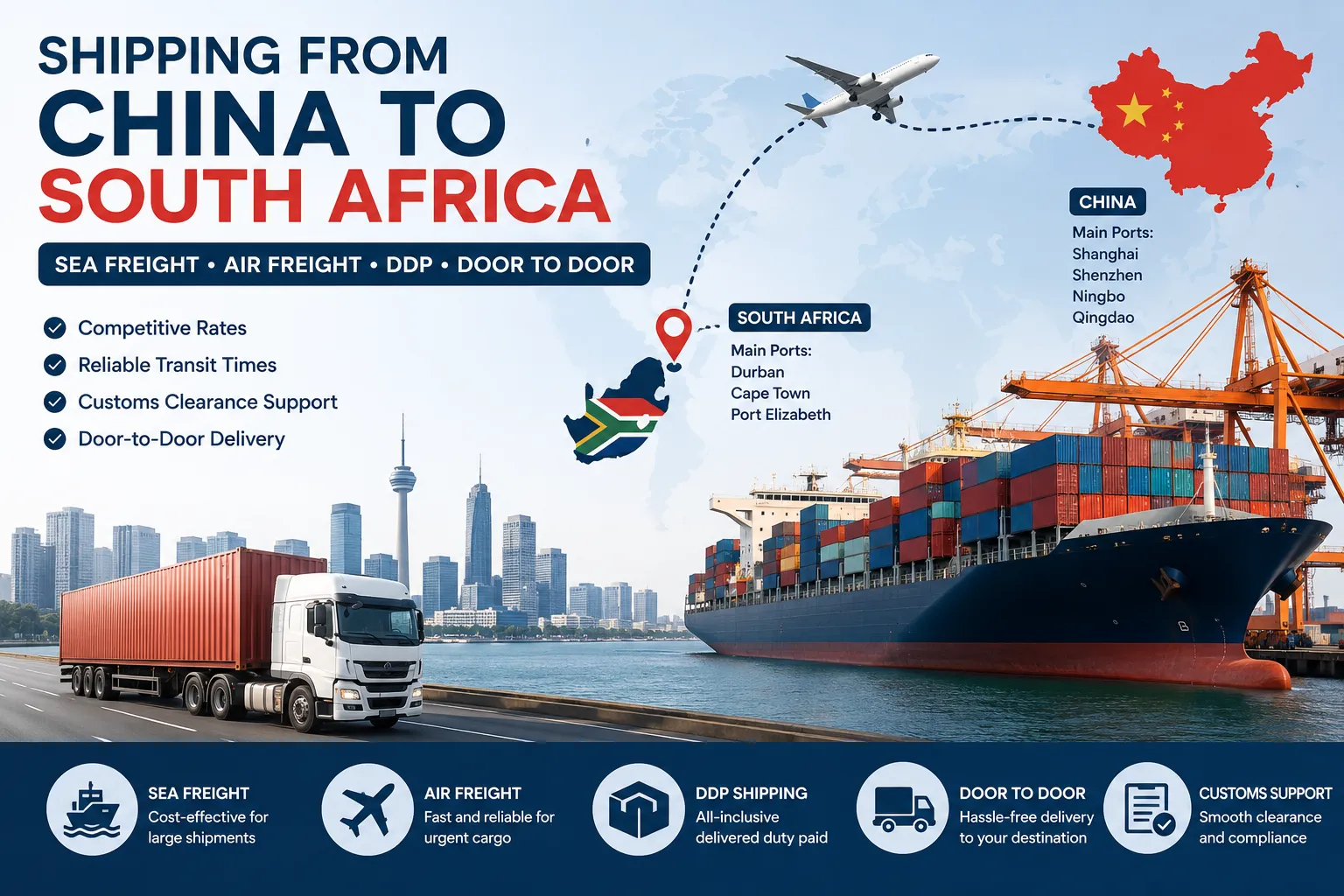
China Origin Ports and Supplier Pickup Options
The most suitable origin port depends on the supplier location, cargo type, container availability, vessel schedule and domestic pickup cost.
For example, sending every shipment through Shenzhen is not always the most economical choice. If the supplier is located close to Shanghai or Ningbo, moving the cargo to South China can add unnecessary trucking, handling and transit time.
Shenzhen, Guangzhou and South China
Shenzhen and Guangzhou are practical export regions for cargo produced in Guangdong and nearby provinces.
Common sourcing and manufacturing areas include:
- Shenzhen
- Guangzhou
- Foshan
- Dongguan
- Huizhou
- Zhongshan
- Jiangmen
Depending on the shipment, cargo may depart through Yantian, Shekou, Nansha or another suitable South China terminal.
In addition, this region often handles electronics, furniture, lighting, machinery, building materials, household products, clothing, packaging products and general commercial goods.
Shanghai, Ningbo, Yiwu and East China
Shanghai and Ningbo serve many suppliers in the Yangtze River Delta. Meanwhile, Yiwu buyers may consolidate small commodities before using an East China port.
Common supplier areas include:
- Shanghai
- Ningbo
- Yiwu
- Hangzhou
- Suzhou
- Wenzhou
- Taizhou
These origins can be suitable for machinery, auto parts, textiles, small commodities, household goods, hardware, plastics and wholesale inventory.
Qingdao, Tianjin and North China
Qingdao can serve cargo from Shandong and nearby manufacturing areas. Likewise, Tianjin may suit suppliers in northern China, including Beijing, Hebei and surrounding industrial regions.
Before moving northern cargo to another port, compare:
- Domestic trucking cost
- Vessel schedule
- Container availability
- Port handling charges
- Transit time
- Whether consolidation is required
As a result, the nearest port is often the most practical option, although sailing frequency and freight rates must also be reviewed.
Xiamen and Fujian
Xiamen can provide a practical origin for goods produced in Fujian, including footwear, clothing, stone products, sanitary products, machinery and general export cargo.
Therefore, the best origin should minimize unnecessary domestic transportation while maintaining a suitable vessel schedule to South Africa.
EXW Pickup or Supplier Delivery?
Under EXW terms, the buyer or freight forwarder normally arranges collection from the supplier.
The pickup quotation consequently depends on:
- Supplier address
- Number of cartons or pallets
- Gross weight
- Cargo volume
- Truck type
- Loading equipment
- Distance to the export warehouse or port
Alternatively, the supplier may quote FOB terms and deliver the goods through the agreed export process. Therefore, importers should clarify the Incoterm before comparing freight quotations because EXW and FOB quotes do not include the same origin services.
FCL and LCL Shipping from China to Durban
Choosing between FCL and LCL is not only a question of cargo volume. Importers should also compare packaging, cargo sensitivity, destination handling, delivery urgency and the risk of repeated handling.
FCL Shipping to Durban
FCL means Full Container Load. In this case, the importer uses an entire container, usually a 20ft, 40ft or 40HQ unit.
FCL commonly suits:
- Furniture
- Machinery
- Building materials
- Solar equipment
- Wholesale inventory
- Packaging materials
- Auto parts
- Large multi-supplier orders
Factory Loading
The container may be loaded directly at the supplier’s factory. This approach can reduce handling when one supplier has enough cargo and suitable loading conditions.
However, the factory must have enough space, labour and equipment to load the container safely within the allowed time.
Warehouse Loading
Warehouse loading can work better when:
- Goods come from several suppliers
- The cartons need inspection or relabeling
- The cargo requires palletization
- The total volume must be confirmed before loading
- The factories cannot load a container efficiently
After loading, the container receives a seal. The forwarder then coordinates export declaration, terminal delivery and vessel loading.
FCL Destination Process in Durban
After customs and shipping-line release, a truck collects the complete container from the port or nominated terminal.
The container then travels to the consignee’s warehouse or delivery address in Johannesburg. After unloading, the trucking company returns the empty container to the nominated depot.
What the Importer Should Confirm
- Container free time
- Port pickup appointment
- Truck access at the delivery address
- Forklift or unloading labour
- How long unloading will take
- Empty-container return location
- Whether the service is live unload or drop-and-return
Otherwise, a delay at the warehouse can cause truck waiting fees or container detention.
LCL Shipping to Durban
LCL means Less than Container Load. Under this method, the cargo shares container space with goods belonging to other shippers.
LCL can work well for:
- Trial orders
- Smaller wholesale shipments
- Mixed cartons
- Regular replenishment
- Cargo from several suppliers
- Shipments that do not justify a full container
China-Side Consolidation
First, the forwarder receives the cargo at a China consolidation warehouse. The warehouse checks the packages and prepares them for loading with other shipments.
Because several shipments share the container, LCL cargo usually passes through more handling stages than FCL cargo. Therefore, strong export packaging and clear shipping marks are especially important.
LCL Destination Process in Durban
When the consolidated container arrives, the cargo usually moves to a container freight station or deconsolidation warehouse.
Next, the destination team separates each house shipment. After the importer completes customs clearance and pays the relevant destination charges, the individual cargo can be released for delivery.
LCL destination costs may include:
- Deconsolidation
- Warehouse handling
- Documentation
- Customs-clearance service
- Storage when cargo remains uncollected
- Final delivery
Consequently, a very low LCL ocean rate can be misleading if the destination charges are not disclosed. Always ask for the destination-fee structure before booking.
When Supplier Consolidation Makes Sense
Importers often buy goods from several Chinese factories. Shipping each supplier’s order separately can create repeated pickup, documentation, minimum-charge and destination-handling costs.
Therefore, VoltFreight can receive the cartons at one China warehouse and coordinate:
- Supplier communication
- Factory pickup
- Warehouse receiving
- Carton counting
- Weight and dimension measurement
- Shipping-mark checking
- Basic packaging inspection
- Repacking or reinforcement when agreed
- LCL consolidation or FCL container loading
Moreover, consolidation can help the importer choose the shipping method based on the final measured volume rather than supplier estimates.
What Happens After Cargo Arrives at Durban Port?
The arrival of the vessel does not mean that the cargo is ready for immediate delivery. Instead, several commercial, customs and operational stages must take place before the container or LCL shipment can leave the destination facility.
Arrival Notice
The shipping line, NVOCC or destination agent normally sends an arrival notice to the consignee or nominated customs broker.
The notice may include:
- Vessel information
- Estimated or actual arrival date
- Bill of lading reference
- Container number
- Destination agent details
- Charges required before release
- Document-release instructions
Therefore, the importer should send the notice to the customs broker promptly if the broker has not already received it.
Delivery Order and Shipping-Line Release
The delivery order authorizes the release of the cargo or container after the required shipping-line or agent procedures are complete.
Depending on the shipment, the consignee may need to provide an endorsed original bill of lading, complete an electronic release procedure or satisfy other documentary requirements.
However, unpaid destination charges or missing release documents can prevent collection even after customs has released the goods.
Customs Entry
The customs broker prepares the import declaration using information supplied by the importer and exporter.
The declaration may include:
- Importer details
- Exporter details
- Product description
- HS tariff code
- Quantity
- Customs value
- Country of origin
- Freight and insurance information
- Permit or certificate references
For example, vague product descriptions such as “parts,” “accessories” or “samples” can cause questions because they do not clearly identify the goods.
Customs Assessment or Inspection
Customs may accept the declaration, request additional information or select the shipment for inspection.
In addition, an inspection can delay release and may create additional handling, unpacking, warehouse or transport charges.
Importers can reduce avoidable problems by preparing accurate documents before the vessel departs from China.
Customs and Commercial Release
The cargo requires both the appropriate customs release and the relevant shipping-line, NVOCC or warehouse release.
Therefore, customs release alone does not always mean the truck can collect the cargo immediately. The destination team must also complete the commercial release and operational pickup arrangement.
FCL Pickup or LCL Deconsolidation
For FCL, the trucking provider collects the complete container after release and terminal appointment.
By contrast, for LCL, the container is unpacked and the individual shipment becomes available from the deconsolidation warehouse. Delivery can only proceed after the shipment-level release and applicable warehouse charges are complete.
Durban Port Charges Importers Should Understand
Destination charges vary according to the carrier, forwarder, terminal, cargo type and service terms. Therefore, importers should not expect one fixed list or price for every shipment.
Nevertheless, understanding common fee categories makes it easier to compare quotations.
Terminal Handling Charges
Terminal handling covers activities related to moving and handling containers within the terminal system.
The exact charge and billing structure depend on the shipping line, terminal and freight arrangement. It may appear as a separate destination cost or form part of a broader freight quotation.
Delivery Order Fee
The shipping line, NVOCC or destination agent may charge a documentation or delivery-order fee before releasing the cargo.
Therefore, importers should confirm whether the freight quotation includes this fee.
LCL Deconsolidation Fee
LCL cargo requires unpacking and separation from other shipments. As a result, the destination warehouse may charge for deconsolidation, handling and shipment release.
This is one reason why an extremely low LCL ocean rate may not produce a low final cost.
Customs-Clearance Fee
The customs broker charges for preparing and submitting the import declaration and coordinating customs queries.
Moreover, tariff-classification support, permit coordination, amendments or additional document work may create separate charges.
Customs Examination Charges
If authorities select the cargo for inspection, the shipment may require movement to an inspection area, unpacking, labour, equipment and repacking.
Consequently, the importer normally needs to budget for these costs unless the written service agreement clearly states otherwise.
Port or Warehouse Storage
Storage can begin when cargo remains in a terminal or warehouse beyond the available free period.
Common causes include:
- Late customs documents
- Missing importer registration
- Unpaid duties or VAT
- Permit problems
- Customs inspection
- Delayed delivery arrangements
- Late collection from an LCL warehouse
Demurrage vs Detention vs Storage
These terms are often confused. However, they usually refer to different situations.
Storage generally relates to cargo or a container occupying space at a terminal, port or warehouse beyond the allowed period.
Demurrage, meanwhile, generally relates to the container remaining within the terminal or port system beyond the shipping line’s free time.
Detention generally relates to the container remaining outside the port after collection and not being returned to the nominated depot within the permitted time.
Nevertheless, carriers and terminals can define or bill these charges differently. Therefore, the booking terms and destination tariff remain the final reference.
Truck Waiting Time
The trucking company may charge waiting time when the truck cannot load, deliver or depart within the agreed period.
For example, waiting can occur because:
- The consignee is not ready
- The delivery appointment changes
- No forklift is available
- Unloading takes longer than planned
- The site has access restrictions
- Documents are not ready
South Africa Customs Clearance for Durban Imports
A freight forwarder can coordinate customs services, but the importer must still provide accurate commercial and product information.
Therefore, the importer should establish the customs arrangement before shipment rather than wait until the cargo arrives in Durban.
Importer Registration and Customs Broker
Commercial importers may need the appropriate SARS importer registration. In addition, a foreign importer may need to nominate a registered South African agent under the applicable customs arrangement.
The importer should confirm:
- Who acts as importer
- Who submits the customs entry
- Whether the importer code is active
- Whether a registered agent is required
- Who pays customs duties and VAT
- Who responds to customs questions
Official importer-registration guidance is available through the SARS importer registration page.
HS Classification, Duties and VAT
Customs duties depend on the HS tariff classification, product description, customs value, origin and applicable tariff rules.
Importers should not select an HS code only because it has a lower duty rate. Instead, the code must match the actual characteristics and use of the product.
SARS explains that the import VAT calculation uses an Added Tax Value. For goods imported from outside the relevant BLNS treatment, the calculation may include the customs value, a 10% uplift and non-rebated duties before applying the VAT rate.
Therefore, review the current official method on the SARS duties and taxes for importers page.
For a detailed explanation of product classification, duty rates, 15% VAT and customs-value calculations, review our guide to import duties from China to South Africa.
Because tariffs and customs treatment depend on the exact goods, the importer should obtain product-specific confirmation from a qualified customs broker.
Commercial Invoice
The commercial invoice should identify:
- Seller
- Buyer or consignee
- Detailed product name
- Quantity
- Unit price
- Total value
- Currency
- Country of origin
- Incoterm
In addition, the declared value should reflect the genuine commercial transaction and match supporting payment or purchase records where required.
Packing List
The packing list should match the physical cargo and commercial invoice.
It commonly shows:
- Carton or pallet quantity
- Shipping marks
- Gross weight
- Net weight
- Dimensions
- Package contents
Otherwise, differences between the invoice, packing list and physical shipment can lead to customs queries or document amendments.
Bill of Lading
The bill of lading contains the contractual transportation information and cargo-release details.
Before departure, check:
- Shipper name
- Consignee name
- Notify party
- Port of loading
- Port of discharge
- Cargo description
- Package quantity
- Gross weight
- Container and seal information
Import Permits and Controlled Goods
Not all products require an ITAC import permit. However, controlled goods and many used, second-hand, waste or scrap categories require advance checking.
ITAC states that used goods, second-hand goods, waste and scrap are generally subject to import-control measures, with limited exceptions.
Importers can review current guidance through the ITAC Import Control page.
Therefore, do not ship regulated cargo before confirming the required permit or approval. The cargo-ready date is not the same as the compliance-ready date.
Products That Need Additional Review
Additional documentation or carrier approval may be required for:
- Batteries and battery-powered equipment
- Liquids
- Powders
- Chemicals
- Cosmetics
- Food-related goods
- Medical-related equipment
- Used machinery
- Branded goods
- Hazardous materials
- Waste or scrap
Durban to Johannesburg Inland Delivery
Customs release is not the final stage. The cargo still needs a suitable inland-delivery plan from Durban to the destination in Gauteng.
FCL Container Delivery
For FCL delivery, the truck collects the sealed container and transports it to the consignee.
Before booking the truck, confirm:
- Container size and weight
- Delivery postcode
- Site opening hours
- Truck-access restrictions
- Loading-dock availability
- Forklift or crane requirements
- Unloading time
- Empty-return depot
Live Unload
Under a live-unload arrangement, the driver waits while the consignee unloads the container. The container then leaves on the same truck for empty return.
This option works when the consignee can unload quickly and has the required labour and equipment.
However, slow unloading can create waiting-time or detention charges.
Drop-and-Return
Under a drop arrangement, the container may remain at the delivery site for later unloading, subject to the trucking provider’s service and equipment availability.
Although this can give the consignee more time, it may create additional transport, chassis, lifting or container-use costs.
LCL Cargo Delivery
LCL goods leave the destination warehouse as individual cartons, pallets or crates rather than as a complete ocean container.
The delivery vehicle consequently depends on:
- Cargo dimensions
- Gross weight
- Number of pallets
- Address access
- Whether a tail lift is needed
- Whether the consignee has a forklift
Commercial and Warehouse Addresses
Commercial warehouses usually provide easier access than residential addresses. Nevertheless, the forwarder still needs to confirm appointments and unloading rules.
Some facilities require:
- Pre-booked delivery appointments
- Driver identification
- Purchase-order or booking references
- Palletized cargo
- Specific delivery windows
Residential, Remote and Project-Site Delivery
Residential addresses, mines, farms, factories and construction sites require additional review.
The delivery provider may need:
- A smaller vehicle
- A tail lift
- A crane or forklift
- Special access permission
- Long-distance or remote-area pricing
- A detailed offloading plan
Therefore, always provide the complete postcode and address type when requesting a quotation.
Port-to-Port, Port-to-Door or DDP via Durban?
The correct service term depends on the importer’s customs setup and delivery requirements.
Port-to-Port
Port-to-port service normally covers the international sea movement between the agreed origin and Durban.
The importer or local agent then handles:
- Destination charges
- Customs clearance
- Duties and VAT
- Port or warehouse collection
- Inland delivery
This can suit experienced importers with an established South African customs broker and transport network.
Port-to-Door
Port-to-door service may combine sea freight with inland delivery after customs clearance.
However, the importer often remains responsible for customs entries, duties and VAT, while the forwarder coordinates the trucking stage.
Therefore, the quotation should clarify whether destination handling and customs brokerage are included.
DAP or Door Delivery
Under a DAP-style arrangement, the logistics provider coordinates delivery to the named destination, while the importer generally remains responsible for import clearance, duties and taxes.
As a result, this can provide a clear structure when the importer has its own customs registration and broker.
Reviewed DDP Service
A reviewed DDP route may include a wider landed-delivery scope, such as China pickup, freight, customs coordination, agreed duties and VAT handling, and final delivery.
However, DDP availability depends on:
- Product category
- HS code
- Declared value
- Importer structure
- Permit requirements
- Brand status
- Final address
- Customs and tax arrangement
DDP does not remove customs law or product-compliance requirements. Therefore, avoid any proposal that relies on vague descriptions, unrealistic values or an unclear importer arrangement.
Shipping Cost from China to Durban and Johannesburg
The total cost depends on the origin, cargo, container type, destination process and final delivery address.
China-Side Cost Factors
- Factory pickup
- Warehouse receiving
- Storage
- Consolidation
- Repacking or palletization
- Export declaration
- Documentation
- Origin terminal handling
International Freight Factors
- FCL or LCL
- 20ft, 40ft or 40HQ container
- Origin port
- Shipping line
- Direct or transshipment route
- Fuel and carrier surcharges
- Peak-season capacity
Durban Destination Factors
- Terminal or destination handling
- Delivery order
- LCL deconsolidation
- Customs brokerage
- Inspection
- Storage
- Demurrage
- Detention
Johannesburg Delivery Factors
- Cargo or container weight
- Delivery postcode
- Truck type
- Fuel surcharge
- Delivery appointment
- Waiting time
- Tail-lift or crane service
- Empty-container return
Therefore, a proper quotation should state what is included, what is excluded and how long the rate remains valid.
Shipping Time and Delay Risks
The complete delivery time includes more than the ocean voyage.
Stages Included in Total Transit Time
A China-to-Johannesburg shipment may include:
- Supplier preparation
- China pickup
- Warehouse consolidation
- Export customs
- Vessel waiting time
- Ocean transit
- Durban discharge
- Customs clearance
- Container or cargo release
- Inland delivery
Common Causes of Delay
Common delay risks include:
- Supplier production delays
- Incorrect carton information
- Missed vessel cutoff
- Container shortages
- Transshipment delays
- Port congestion
- Customs inspection
- Missing importer registration
- Incorrect HS classification
- Missing import permits
- Late duty or VAT payment
- Unavailable inland trucks
- Delivery-appointment delays
For broader transit-time planning, read our dedicated guide to shipping time from China to South Africa.
When Durban Is Not the Best Entry Point
Durban is important for Gauteng-bound sea freight. However, it is not automatically the best option for every shipment.
Final Delivery Is in Western Cape
Cape Town may provide a more practical entry point when the destination is in Cape Town or another Western Cape location.
Otherwise, using Durban for a Western Cape delivery could add unnecessary inland transportation.
The Cargo Is Urgent
Urgent spare parts, high-value goods or stockout inventory may work better by air freight to Johannesburg.
Therefore, for urgent shipments, review our guide to air freight from China to South Africa.
The Shipment Is Very Small
A few samples or a small parcel may be more practical by express courier than LCL sea freight.
In particular, minimum destination and handling charges can make sea freight inefficient for very small shipments.
A Different Port Is Closer to the Project
Eastern Cape or coastal projects may justify another South African port, depending on vessel service and inland-delivery distance.
Import Documents Are Not Ready
Do not load the cargo simply because the supplier has completed production.
If importer registration, permits or product documents are not ready, delaying shipment may cost less than storage and customs problems after arrival.
Worked Example: 12 CBM from Foshan to Johannesburg
The following example illustrates route planning only. It is not a live freight quotation.
Assume an importer purchases 12 CBM of furniture from one supplier in Foshan. The final delivery address is a commercial warehouse in Johannesburg.
Possible Route
- First, the forwarder arranges pickup from the Foshan factory.
- Next, the cargo moves to a South China consolidation warehouse.
- The warehouse confirms the carton count and volume.
- The forwarder then books LCL shipping through Shenzhen or Guangzhou.
- Afterward, the export team completes China customs declaration.
- The cargo moves by sea to Durban.
- At destination, the agent arranges deconsolidation.
- The customs broker completes South Africa customs clearance.
- The importer pays applicable duties, VAT and destination charges.
- Finally, a truck delivers the cargo from Durban to Johannesburg.
Why LCL May Work
Twelve CBM may not justify paying for a complete container, especially if the furniture is well packed and the LCL destination costs are reasonable.
However, the importer should compare the complete LCL landed cost with an FCL option. Bulky furniture can produce high CBM charges, and LCL involves more handling.
Questions to Confirm
- Can the supplier improve carton efficiency?
- Are the goods fragile or easy to damage?
- What are the LCL destination charges?
- Does the importer have an active customs setup?
- Does the furniture require any product documentation?
- Does the Johannesburg warehouse have unloading equipment?
- Is the delivery address accessible to a large truck?
When FCL May Become Better
If the order increases, the importer adds goods from other suppliers or the cargo needs better handling control, a full container may become more attractive.
Therefore, the forwarder should compare:
- Final measured CBM
- LCL ocean and destination charges
- FCL container cost
- Container loading efficiency
- Johannesburg unloading requirements
- Empty-return risk
What We Need for a Durban and Johannesburg Quote
To prepare an accurate quotation, send the following details:
- Product name
- Product photos
- HS code if available
- Material and intended use
- Number of cartons, pallets or crates
- Gross weight
- Carton dimensions
- Total CBM
- Supplier address in China
- Cargo-ready date
- Commercial value
- Johannesburg delivery address and postcode
- Commercial, residential, warehouse or project-site address type
- Importer code and customs-broker information if available
- Preferred service: port-to-port, port-to-door, DAP or DDP
- Required delivery deadline
In addition, disclose whether the cargo includes:
- Batteries
- Liquids
- Powders
- Chemicals
- Magnets
- Cosmetics
- Food-related products
- Medical-related goods
- Branded products
- Used or second-hand goods
Otherwise, incomplete information may lead to a rate change after the warehouse measures or inspects the cargo.
Why Choose VoltFreight for China-to-Durban Shipping?
VoltFreight helps importers coordinate the full logistics chain from Chinese suppliers to Durban Port and inland destinations in South Africa.
China-Side Services
Our China-side services may include:
- Supplier communication
- Factory pickup
- Warehouse receiving
- Multiple-supplier consolidation
- Carton counting
- Weight and dimension measurement
- Shipping-mark checking
- Basic packaging inspection
- Repacking or palletization when agreed
- FCL and LCL route comparison
- Export-document coordination
South Africa Destination Support
For the South Africa stage, we can help coordinate:
- Sea freight to Durban
- Destination-agent communication
- Customs-support arrangements
- LCL cargo release
- FCL container delivery
- Durban-to-Johannesburg trucking
- Delivery appointments
- Shipment milestone updates
VoltFreight does not recommend the same route for every shipment. Instead, we compare the cargo size, supplier location, destination, customs arrangement and delivery deadline before suggesting LCL, FCL, air freight or express.
Importers who need direct supplier coordination and WhatsApp quotation support can also review our guide to finding a shipping agent from China to Johannesburg.
FAQ: Shipping from China to Durban and Johannesburg
How long does shipping from China to Durban take?
The time depends on the Chinese origin port, vessel schedule, transshipment, port conditions and carrier service. In addition, importers should allow time for supplier pickup, export handling, Durban customs clearance and inland delivery.
Does sea freight to Johannesburg arrive through Durban?
Many sea freight shipments for Johannesburg enter through Durban and then move inland by truck. However, the best port depends on the vessel service, cargo type and final destination.
Is LCL or FCL better for shipping to Durban?
LCL can suit smaller shipments that do not fill a container. By contrast, FCL can provide better control and unit cost for larger shipments. Therefore, compare the complete origin, ocean, destination and delivery costs before choosing.
What charges occur after cargo arrives at Durban Port?
Possible charges include destination handling, delivery order, LCL deconsolidation, customs clearance, duties, VAT, inspection, storage, demurrage, detention and inland delivery. However, the exact fees depend on the service and shipment.
How is a container delivered from Durban to Johannesburg?
After customs and commercial release, a truck collects the container and carries it to the consignee. The consignee then unloads the goods, and the empty container must return to the nominated depot within the permitted time.
Can VoltFreight arrange door-to-door shipping via Durban?
Yes. Depending on the cargo and customs arrangement, VoltFreight can coordinate China pickup, sea freight, customs support and final delivery to Johannesburg or another South African destination.
Conclusion
Shipping from China to Durban requires careful planning across the entire logistics chain. The ocean freight rate represents only one part of the final landed cost.
In addition, importers should consider China pickup, FCL or LCL handling, export documents, Durban destination charges, customs clearance, duties, VAT, storage risks, inland trucking and final unloading.
For Johannesburg-bound cargo, the difference between a smooth shipment and an expensive delay often comes down to preparation. Therefore, confirm the importer arrangement, product classification, documents, permits and delivery conditions before the goods leave China.
Contact VoltFreight with your cargo details to compare LCL, FCL, port-to-door and reviewed door-to-door shipping from China to Durban and Johannesburg.
Information Sources
- South African Revenue Service: Imports
- South African Revenue Service: Importer Registration
- South African Revenue Service: Duties and Taxes for Importers
- South African Revenue Service: Tariff Classification
- International Trade Administration Commission: Import Control
- Transnet National Ports Authority: Port of Durban
Important note: This guide provides general shipping information and does not replace legal, tax or customs advice. Freight rates, transit times, destination charges, customs requirements, permits and carrier terms vary by shipment. Therefore, confirm the final requirements with the relevant authorities, carrier and qualified South African customs broker before booking.