Quick answer: The most costly China-to-Amazon FBA shipping mistakes begin with incorrect customs data, poor inventory timing and non-compliant labels or cartons. Insurance gaps and a forwarder that cannot complete Amazon delivery create two more risks. In our reviewed records, these failures caused approximately USD 3,000–15,000 in avoidable costs and lost selling time.
This article explains how to prevent those five failures before cargo leaves China. It does not replace a complete route guide. For the full supplier-to-fulfillment-center process, see our guide to shipping from China to Amazon FBA.
- Wrong HS codes or undervalued customs declarations.
- Choosing air or ocean freight without calculating the stockout date.
- Missing, incorrect or unreadable FBA labels and carton data.
- Shipping without suitable insurance or using the wrong Incoterm.
- Using a freight forwarder without Amazon FBA delivery experience.
Mistake 1: Using the Wrong HS Code or Customs Value
An HS code affects product classification and duty treatment. It can also determine whether additional documents or trade measures apply. The code should reflect the product’s material, function and construction—not simply the lowest available duty rate.
Why it becomes expensive: Incorrect or incomplete classification appeared in approximately 34% of the reviewed China-to-U.S. customs-delay cases in our internal research. Depending on the facility and length of the hold, detention and storage exposure was approximately USD 150–400 per day. Serious undervaluation cases produced duty corrections, penalties and related expenses. The combined impact reached approximately five to eight times the duty initially avoided. CBP maintains a formal penalties program for trade non-compliance.
How to prevent it: Before booking, prepare the product name, materials, intended use and photos. Add the commercial invoice, packing list and proposed classification. Make sure the invoice entity, payment record and declared value are consistent. When classification remains uncertain, the U.S. importer should consult a licensed customs broker and consider a binding ruling rather than guessing.
VoltFreight can coordinate these details with the supplier and the appointed broker before departure. A correct document review cannot eliminate inspections, but it can prevent avoidable discrepancies from reaching the port of entry.
Mistake 2: Choosing Freight Without an Inventory Deadline
The cheapest rate is not always the lowest-cost decision. Ocean freight may save money, but it cannot protect a listing if inventory runs out before the shipment becomes sellable. The opposite mistake is sending an entire non-urgent order by air when only a smaller bridge quantity is needed.
Why it becomes expensive: In the original operating research, ocean freight cost approximately 60%–80% less than air freight for suitable larger shipments. Some sellers waited until inventory was nearly exhausted. They then paid approximately USD 8–12/kg for emergency air or express service and lost an estimated 15%–25% of product margin.
Air and Ocean Planning Ranges
| Shipping Method | Planning Transit Time | April 2026 Internal Reference | Best Use |
|---|---|---|---|
| Ocean FCL (40HQ) | 28–35 days door to fulfillment center | USD 320–480/CBM in the reviewed scenarios | Base inventory and about 90 days of supply |
| Ocean LCL | 32–40 days door to fulfillment center | USD 65–95/CBM in the reviewed scenarios | Test orders and about 30–60 days of supply |
| Standard air freight | 8–12 days door to fulfillment center | USD 4.50–6.50/kg | Launches, stockout prevention and seasonal surges |
| Air express | 3–5 days on eligible routes | USD 8–12/kg | Small emergency replenishment |
These figures preserve the researched planning ranges; they are not current quotations and should not be compared as identical service packages. The recorded shipments had different cargo profiles, origins, destinations and inclusions. A valid comparison must use the same chargeable weight or volume, pickup point, customs scope, destination services and Amazon delivery requirements.
How to prevent it: Work backward from the projected stockout date. Include production, China pickup, consolidation, export handling, main transit, customs clearance, U.S. transfer and Amazon receiving. A split shipment can send only the bridge quantity by air while the main order travels by sea. Many recurring sellers in the reviewed dataset used an approximate 70% ocean and 30% air split during sensitive replenishment periods. Their annual logistics spending fell by approximately 22%–31%. The correct ratio still depends on sales velocity and available inventory. See our Amazon FBA inventory replenishment guide.
Mistake 3: Sending Incorrect FBA Labels, Cartons or Pallets
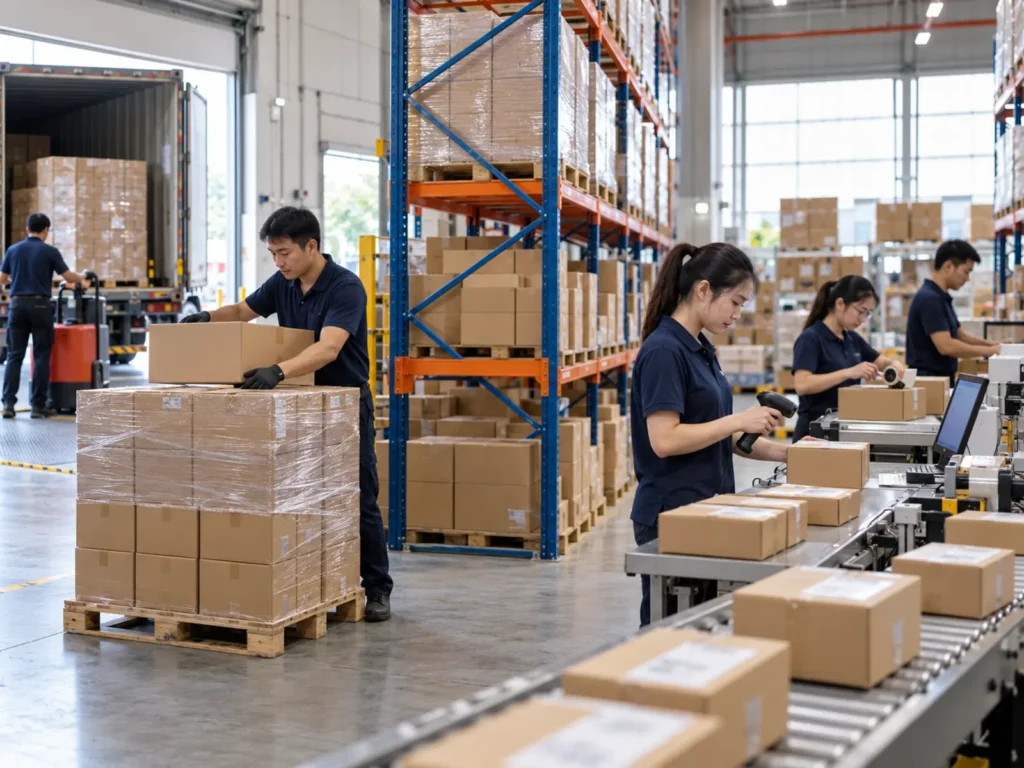
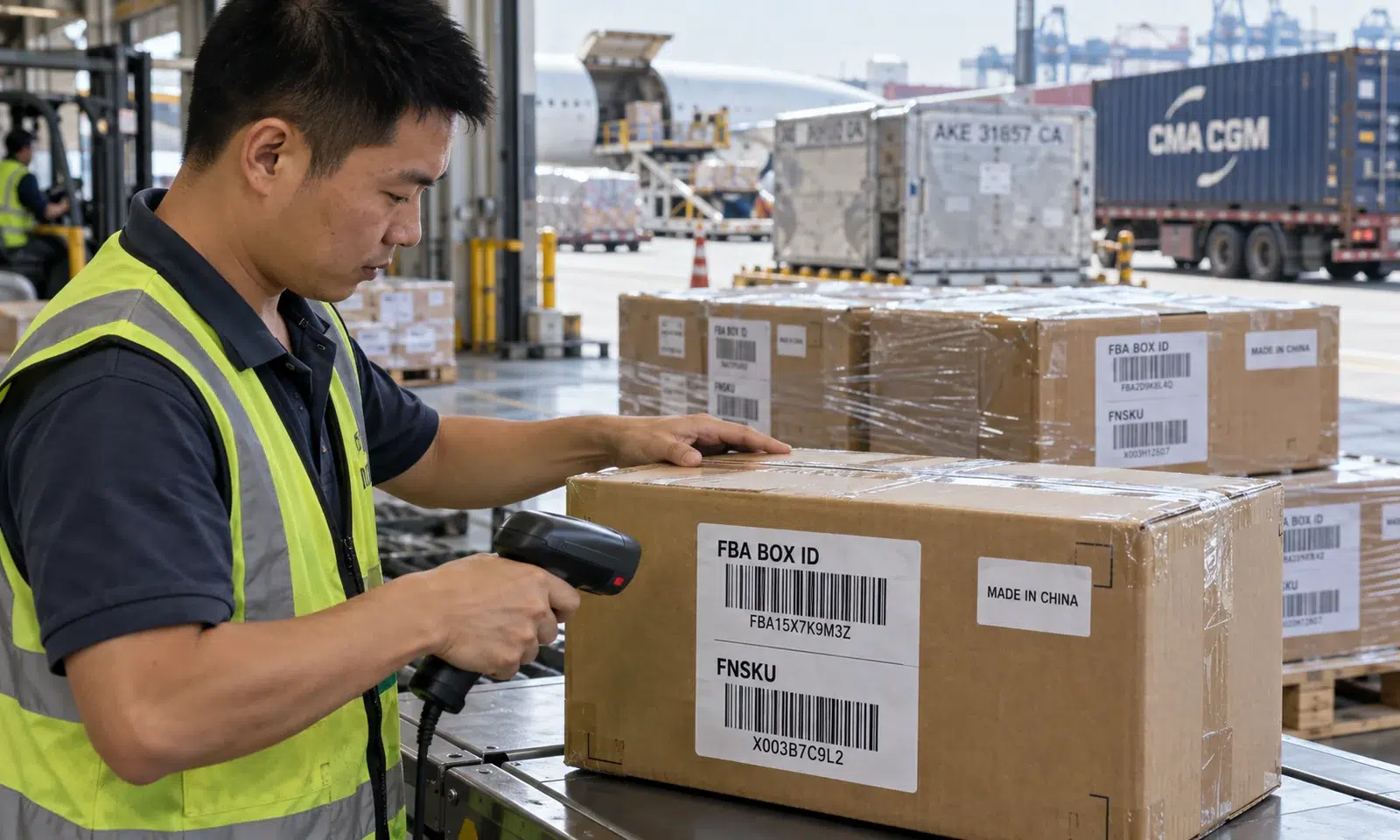
A shipment can clear U.S. customs and still fail during Amazon receiving. Typical causes include missing product labels, the wrong FBA Box ID and unreadable barcodes. Mismatched carton quantities and non-compliant pallets create additional problems.
Why it becomes expensive: Approximately 12%–18% of non-compliant inbound shipments in the reviewed sample required correction or experienced receiving disruption. Earlier workflows could incur relabeling expenses of approximately USD 0.30–0.50 per unit. Processing then took another three to seven days.
2026 FBA Prep and Pallet Checks
The risk is more important in 2026 because Amazon no longer offers U.S. FBA prep and item-labeling services for shipments created from January 1, 2026. Sellers must prepare inventory themselves or use a qualified third-party provider. Amazon explains the change in its official FBA Prep Service guidance.
How to prevent it: Before pickup, confirm that:
- each sellable unit has the barcode required by the listing and shipment setup;
- each carton has the correct, unique FBA Box ID label;
- SKU allocation, carton quantity, weight and dimensions match the shipment data;
- polybagging, bundling, warning labels and fragile-item preparation are complete;
- the fulfillment-center code and delivery address are current;
- pallet construction, dimensions, weight and labels match the current receiving instructions.
For standard U.S. LTL and FTL deliveries, Amazon commonly requires 40 × 48-inch, four-way-access wooden pallets. A single standard pallet generally should not exceed 72 inches in total height or 1,500 lb unless the shipment qualifies for an exception. Imported wood packaging must meet applicable ISPM 15 requirements. Always check Amazon’s current LTL, FTL and FCL delivery requirements before dispatch.
VoltFreight can receive cartons in China, count and measure them, take photographs, apply approved labels and coordinate polybagging or repacking. For the available scope, review our FBA prep service in China.
Does Amazon reject inventory simply because it comes from China? No. Amazon may act because of authenticity, safety, verification, documentation or policy failures. Origin alone is not a blanket rejection reason. The original 2023–2024 research referenced more than 50,000 China-linked seller accounts affected by enforcement actions. It also estimated that Chinese sellers represented approximately 48% of Amazon’s third-party marketplace, compared with 59% in 2020. The operational lesson is consistency: the supplier, invoice, product, customs entry and FBA shipment data must support the same transaction.
Mistake 4: Assuming Incoterms Include Insurance and Amazon Delivery
FOB, CIF, DAP and DDP allocate costs, tasks and risk differently. They do not automatically confirm adequate insurance or correct duty handling. They also do not prove that the service reaches an Amazon fulfillment center.
Why it becomes expensive: Approximately 47% of the reviewed Amazon sellers used FOB arrangements without separate marine cargo insurance. This exposed inventory worth approximately USD 15,000–50,000. Carrier liability depends on the contract and applicable law. For some U.S.-bound ocean shipments, liability may be approximately USD 500 per package or customary shipping unit. A higher value must be declared and accepted when the contract allows it.
CIF is frequently misunderstood. It covers cost, insurance and freight to the named destination port; it does not automatically include U.S. customs clearance, destination handling, inland transportation, pallet preparation or Amazon appointment delivery.
How to prevent it: Require the quote to list every included service. Check supplier pickup, export handling, main freight, brokerage, duties, destination charges, palletization, appointment delivery and insurance. For insurance, confirm the insured value, premium, deductible and exclusions before departure. VoltFreight can arrange cargo insurance when requested, but it should never be assumed from the Incoterm alone.
Mistake 5: Using a Forwarder That Cannot Complete FBA Delivery
A general freight forwarder may complete the international movement. Its responsibility may stop at a port, airport or warehouse. Amazon delivery adds shipment references, carton and pallet labels, small-parcel or LTL/FTL routing, appointments and possible storage or redelivery.
Why it becomes expensive: A missing appointment, incorrect pallet, wrong destination or unresolved importer arrangement can leave cleared inventory unavailable for weeks. General providers mishandled at least one FBA-specific step in approximately 40% of the problem cases examined in the original research. This does not mean 40% of all general-forwarder shipments fail; it means missing FBA knowledge contributed to those reviewed exceptions.
How to prevent it: Before booking, identify who will:
- contact the supplier and verify final carton data;
- check unit, carton and pallet labels;
- coordinate the Importer of Record and customs broker;
- handle deconsolidation, devanning or U.S. palletization;
- coordinate the Amazon delivery appointment;
- manage address changes, rejected appointments, storage and redelivery.
Amazon states that an Importer of Record is normally required when inventory enters the United States and that Amazon does not act as the seller’s importer. Review Amazon’s official requirements for delivering imports to Amazon.
How VoltFreight Prevents These Five FBA Shipping Mistakes
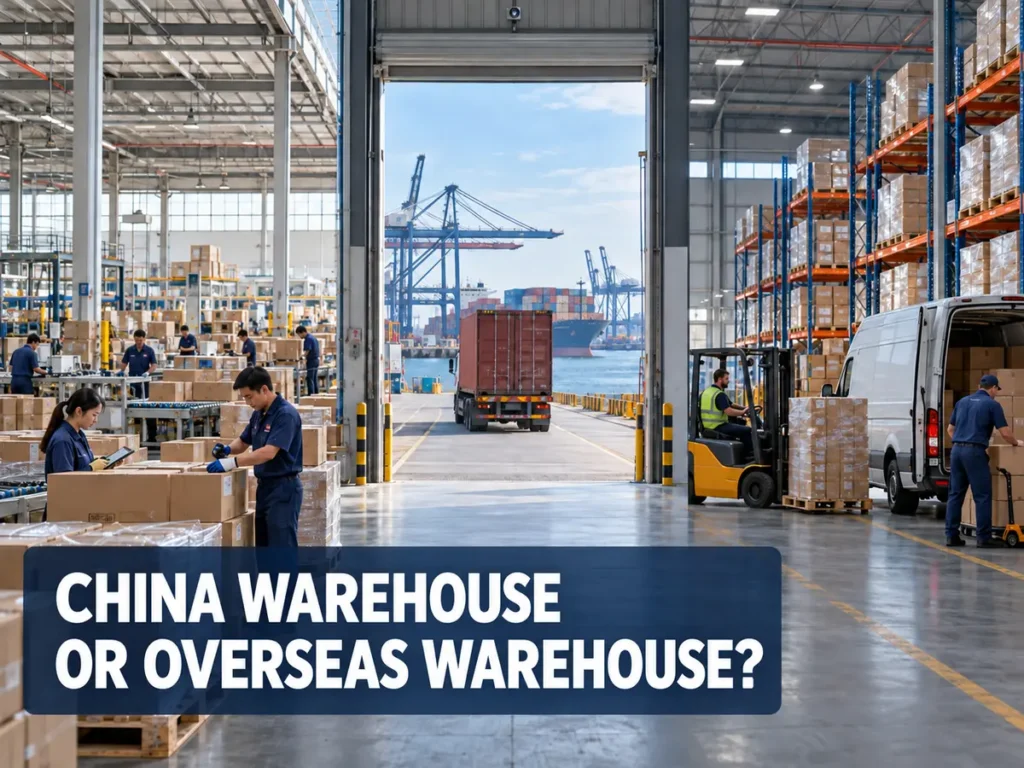
VoltFreight connects the supplier, China warehouse, international freight, customs scope and Amazon delivery before cargo departs. The workflow can include supplier pickup, consolidation, receiving photos and carton measurement. It can also cover label coordination, export documents, air or ocean booking, customs-broker coordination, U.S. palletization and appointment delivery.
The shared operating group behind VoltFreight and King-Hor has processed more than 12,000 customs entries. The reviewed dataset shows a 99.2% first-submission clearance rate. Its FBA preparation records also show a 100% fulfillment-center acceptance rate since 2022. The U.S. network includes approximately 15,000 square feet of Los Angeles transloading capacity. It handled more than 400 monthly deliveries to ONT8, LAX9, SMF3 and over 50 other U.S. fulfillment centers. The wider company history covers more than nine years and 1,000 clients. These figures describe historical reviewed operations, not guaranteed results for future shipments.
In the same dataset, reviewed clients reduced logistics costs by approximately 18%–27% during the first year. Stockout incidents fell by more than 60% after they improved replenishment planning. The value came from connecting the shipping method to inventory timing and resolving key responsibilities before departure.
What Should You Confirm Before Booking China-to-Amazon FBA Shipping?
A complete landed-cost review should include pickup, preparation, export charges, main freight, brokerage, duties, destination handling, palletization, appointment delivery, insurance and possible storage or redelivery. The internal review found that some customs-delay days created approximately USD 500–2,000 in combined storage and lost-sales exposure. A rejected or incorrectly prepared FBA delivery could keep inventory unavailable for approximately two to four weeks.
For a useful quotation, provide the product name, photos, supplier address and cargo-ready date. Add the carton quantity, dimensions, gross weight, value, proposed HS code and any special-product details. VoltFreight also needs the Amazon shipment ID, fulfillment-center code, label files and required delivery date.
VoltFreight can then compare express, standard air, sea LCL, sea FCL and split-shipment options on the same scope. When the information is complete and no additional product review is required, our target is to return an initial pricing review within four business hours. For a more detailed breakdown, see our China-to-USA shipping cost guide.
The best time to prevent an FBA rejection, customs delay or emergency air shipment is before the cargo leaves China.
Request a China-to-Amazon FBA shipping review from VoltFreight.
Data note: The percentages, cost ranges and operating results come from internal shipment records and market research. The review covers the same operating group under the King-Hor and VoltFreight brands. The figures describe reviewed samples and planning conditions rather than guaranteed results. Rates, Amazon requirements and customs outcomes can change.