Choosing a freight forwarder in China is one of the most important decisions an importer makes before shipping goods internationally. The right logistics partner can coordinate Chinese suppliers, arrange cargo pickup, consolidate shipments, prepare export documents, book carriers, support customs procedures and deliver goods to the final destination.
However, freight forwarding companies do not all provide the same service. One quotation may include pickup, customs clearance and final delivery, while another may cover only the international freight. A low rate can therefore become expensive after origin charges, destination fees, duties, taxes, storage or delivery costs are added.
Importers buying from Alibaba, 1688, Chinese factories or multiple suppliers should compare more than the headline shipping price. They should review the freight forwarder’s legal identity, destination experience, warehouse capability, quotation structure, communication quality and ability to handle the specific cargo.
This guide explains how to choose a reliable freight forwarder in China, what services a professional shipping agent should provide, how to compare freight quotes, which warning signs to avoid and what cargo information is needed before booking.
Need help planning a shipment from China? Send the product name, supplier city, carton quantity, gross weight, carton dimensions, total CBM, cargo ready date and destination address to VoltFreight. Our team can compare sea freight, air freight, rail freight, express courier, DDP, DAP and door-to-door shipping options.
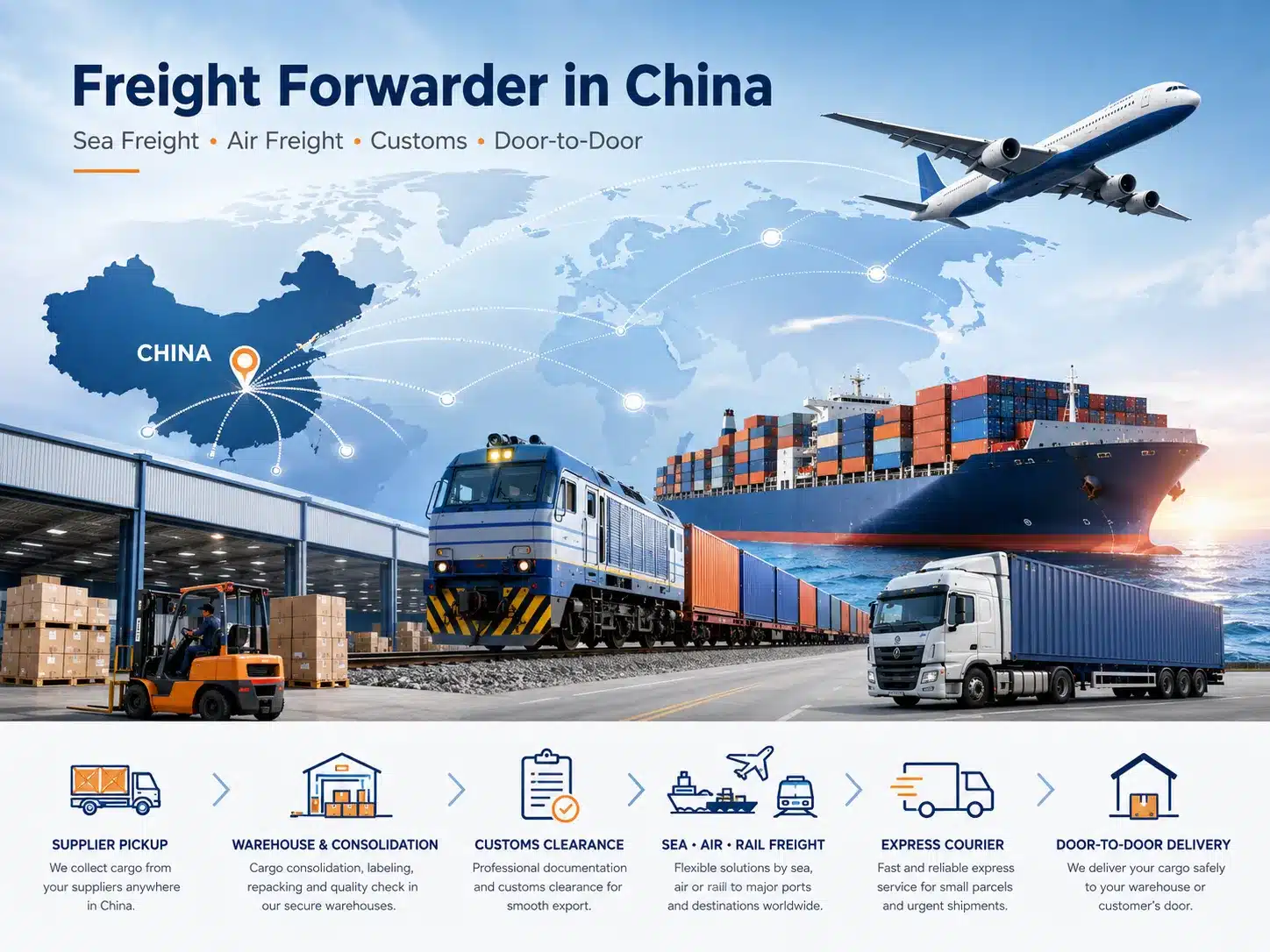
Quick Answer: How Do You Choose a Freight Forwarder in China?
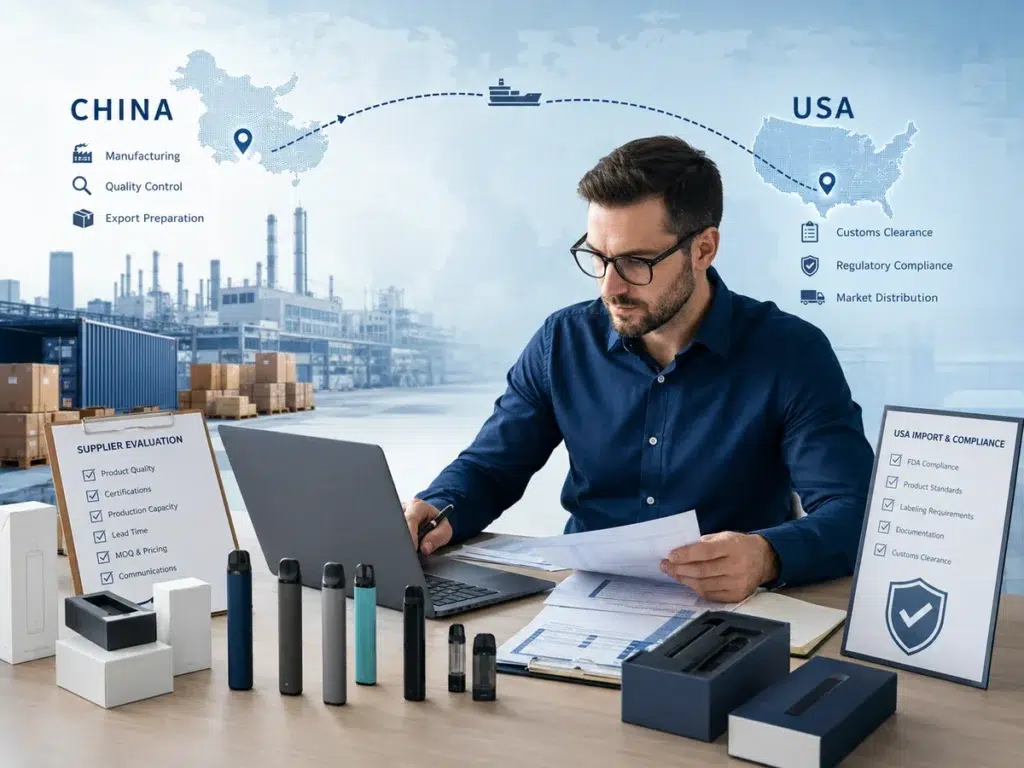
To choose a freight forwarder in China, start by confirming the company’s identity, service scope and experience with your destination country. Then ask for a written quotation showing the pickup charge, origin fees, international freight, customs scope, destination charges, duties, taxes and final delivery.
A reliable China freight forwarder should ask detailed questions about the cargo before quoting. These normally include the product name, weight, dimensions, number of cartons, cargo value, supplier location, destination, Incoterms and whether the shipment contains batteries, liquids, powders, magnets, chemicals or branded products.
Be cautious when a forwarder immediately promises the lowest price, guaranteed customs clearance or DDP shipping without checking the product, declared value and destination requirements. International freight depends on cargo characteristics, customs rules and carrier acceptance. A professional forwarder should explain these conditions before accepting the shipment.
The best freight forwarder is not always the company offering the lowest initial rate. It is the company that provides a suitable route, a transparent cost structure, realistic transit time and clear responsibility from pickup to delivery.
When Do You Need a Freight Forwarder in China?
Not every international shipment requires a full-service freight forwarder. A small document shipment may be handled directly by an express courier. However, a China freight forwarder becomes valuable when the shipment involves commercial cargo, multiple suppliers, customs procedures or delivery coordination.
Buying from Alibaba, 1688 or Chinese Factories
Many Chinese suppliers focus on manufacturing and domestic delivery. They may quote EXW prices and require the buyer to arrange pickup, export customs and international shipping. A freight forwarder can collect the cargo from the factory and coordinate the remaining logistics process.
This is particularly useful when the supplier has limited export experience or when the buyer needs help checking package quantities, dimensions, shipping marks and documents before the goods leave China.
Consolidating Goods from Multiple Suppliers
Importers often buy different products from suppliers in Shenzhen, Guangzhou, Dongguan, Foshan, Yiwu, Ningbo, Shanghai or other manufacturing areas. Shipping each order separately can increase freight charges, customs paperwork and destination delivery costs.
A freight forwarder can receive the goods at a China warehouse, check the cartons and combine them into one sea, air, rail or courier shipment. Consolidation can reduce repeated handling and improve control over the overall order.
Shipping Cartons, Pallets or Commercial Inventory
Once a shipment becomes too large or expensive for standard courier service, an importer may need air freight, LCL sea freight or a full container. A freight forwarder can compare these methods based on chargeable weight, CBM, deadline and final destination.
Shipping to Amazon FBA or a Third-Party Warehouse
Amazon and third-party warehouses may require carton labels, pallet labels, delivery appointments and specific package standards. A freight forwarder can help coordinate preparation and final delivery, reducing the risk of rejection or appointment delays.
Shipping Batteries, Liquids or Other Restricted Cargo
Products containing lithium batteries, liquids, powders, magnets, chemicals or pressurized components may require additional documents and carrier approval. The forwarder should check the product before booking and confirm whether MSDS, UN38.3, test reports or special packaging are required.
Using DDP or Door-to-Door Shipping
DDP and door-to-door shipments involve more than international transportation. They may include pickup, export customs, import customs, duties, taxes and final delivery. Because responsibilities vary by route and country, importers need a forwarder that can explain the complete service scope in writing.
What Services Should a China Freight Forwarder Provide?
A professional freight forwarding company in China should offer services that match the importer’s actual supply chain. The exact scope depends on the cargo, route, Incoterms and destination requirements.
- Supplier pickup: Collect goods from factories, warehouses and trading companies in China.
- Warehouse receiving: Receive cartons and record the shipment under the correct customer reference or shipping mark.
- Cargo measurement: Confirm gross weight, carton dimensions, package quantity and total CBM.
- Warehouse consolidation: Combine cargo from several suppliers into one international shipment.
- Basic cargo checking: Check carton condition, shipping marks, labels and visible package damage.
- Repacking and labeling: Reinforce weak cartons, apply shipping marks or support Amazon FBA labels where required.
- Carrier booking: Arrange sea freight, air freight, rail freight, truck freight or express courier.
- Export customs: Coordinate export declarations and supporting documents in China.
- Shipping documents: Prepare or review transport documents such as bills of lading and airway bills.
- Destination coordination: Work with overseas customs brokers, agents and delivery companies.
- Final delivery: Arrange delivery to a business address, warehouse, Amazon FBA center or project location.
- Cargo tracking: Update the importer about pickup, departure, arrival, customs clearance and delivery.
- Insurance support: Arrange cargo insurance for valuable, fragile or higher-risk shipments.
The forwarder does not always need to provide every service for every shipment. However, the quotation should clearly state which services are included and which remain the responsibility of the importer or supplier.
How to Choose a Reliable Freight Forwarder in China
The most effective way to evaluate a China freight forwarder is to review the company from several practical angles. Importers should not rely only on a website, a low quotation or a fast sales reply.
| What to Check | What a Reliable Forwarder Should Provide | Warning Sign |
|---|---|---|
| Company identity | Legal company name, business address and consistent contact information | Unclear company identity or payment to unrelated accounts |
| Quotation | Written list of included and excluded charges | One low total without explaining the service scope |
| Destination experience | Knowledge of customs, taxes, delivery and importer requirements | Same answer for every country and every product |
| Cargo review | Questions about product, value, batteries, liquids and dimensions | Immediate acceptance without checking the cargo |
| Warehouse service | Receiving, measuring, checking, consolidation and labeling | No clear process for identifying or checking cargo |
| DDP service | Written explanation of duty, tax, customs and delivery scope | Guaranteed DDP for every cargo without compliance review |
| Communication | Clear replies, milestone updates and problem explanations | Slow replies or unclear responsibility after payment |
| Risk management | Insurance options, document review and route alternatives | No explanation of delays, customs risks or claim procedures |
Verify the Company and Contact Details
Ask for the company’s legal name, address and business details. The company name used in the quotation, invoice and payment instructions should be consistent or clearly explained.
A freight forwarding brand may be operated by a registered logistics company, but the relationship should be transparent. Importers should be careful when the payment recipient has no obvious connection to the forwarder and no written explanation is provided.
Check Experience with the Destination Country
International shipping procedures vary by destination. A forwarder that regularly ships to the United States may not automatically understand VAT, EORI and customs requirements in Europe. Similarly, a company familiar with European DDP may not have strong experience with African port procedures or Middle Eastern import permits.
Ask how the cargo will enter the destination country, who will coordinate customs clearance, which final-delivery company may be used and what information the receiver must provide.
Ask for a Complete Written Quotation
A professional quotation should identify the shipping method, route, estimated transit time, chargeable weight or CBM, rate validity and included services.
For door-to-door shipping, the forwarder should explain whether the price includes:
- Pickup from the Chinese supplier
- China warehouse handling
- Export customs declaration
- Origin terminal charges
- International freight
- Destination customs clearance
- Import duties and taxes
- Final delivery
- Delivery appointment or residential surcharge
- Remote-area fees
- Insurance
If a charge is not included, it should be identified before booking.
Review Warehouse and Consolidation Capability
Warehouse service is important when the shipment comes from several suppliers or requires inspection before export. Ask how the warehouse identifies cargo, whether it provides receiving photos and whether it can confirm weight, dimensions and carton quantity.
Importers should also ask whether the forwarder can replace damaged cartons, apply shipping marks, palletize goods or support Amazon FBA labels when needed.
Check Experience with Restricted Cargo
A forwarder should not accept sensitive cargo without asking detailed questions. Lithium batteries, electronic devices, liquids, cosmetics, chemicals, magnets, powders, branded goods and medical products may require additional review.
Before booking, confirm whether the selected carrier accepts the cargo and whether supporting documents are required. Hiding restricted products or using an inaccurate cargo description may cause rejection, customs delay, penalties or loss of insurance coverage.
Confirm Customs and DDP Responsibility
DDP is useful when the importer wants a more predictable landed cost, but it should not be treated as a universal shipping solution. The forwarder must first review the destination country, product, customs value and delivery address.
Ask who acts as the importer, how duties and taxes are handled, whether the receiver must provide a tax number and what happens if customs requests additional documents or inspects the shipment.
Evaluate Communication and Tracking
International shipping may involve delays, customs inspections, vessel changes, flight changes or delivery appointments. A reliable forwarder should communicate these events clearly rather than only sending a tracking number.
Before booking, ask how frequently updates are provided and who will handle problems after the cargo leaves China.
How to Compare Freight Quotes from China
Two freight quotations cannot be compared accurately unless they cover the same cargo details and service scope. One company may quote only the ocean freight, while another includes pickup, export customs and delivery.
Confirm the Same Cargo Information
Every forwarder should quote using the same:
- Product description
- Number of cartons or pallets
- Total gross weight
- Carton dimensions
- Total CBM
- Supplier pickup location
- Destination port, airport or final address
- Cargo ready date
- Declared value
- Incoterms
If one quotation uses estimated dimensions and another uses final packing details, the results may be very different.
Check Chargeable Weight
Air freight and express courier rates are generally based on chargeable weight. The carrier compares the actual gross weight with volumetric weight and charges whichever is higher.
This means a shipment that weighs 100 kilograms may be charged as 160 kilograms if the cartons are large. Importers should provide accurate package dimensions before comparing air freight prices.
Check LCL Minimum Charges
LCL sea freight is normally calculated by CBM or weight, subject to carrier and warehouse rules. Small LCL shipments may also be subject to minimum charges, document fees, CFS fees and destination handling.
A very low ocean freight rate does not necessarily mean a low total landed cost. Destination charges can be significant, especially when the quotation covers only port-to-port transportation.
Check Rate Validity
Freight rates change according to fuel prices, carrier capacity, peak seasons, port congestion and trade conditions. A quotation should state how long the rate remains valid and whether the price must be reconfirmed before booking.
Compare the Total Landed Cost
The best comparison is not the lowest freight rate. It is the total amount required to move the cargo from the supplier to the final destination.
Importers should compare the cost of pickup, warehouse handling, international freight, customs clearance, duties, taxes, local charges, delivery and possible storage. They should also consider transit time, reliability and cargo risk.
Common Red Flags When Choosing a China Shipping Agent
Most freight forwarding problems begin before the goods are collected. Warning signs often appear in the quotation, payment instructions or cargo review process.
- The price is far below other quotations: Important charges may be excluded or added after the cargo arrives.
- The forwarder does not ask for dimensions: Accurate air freight and LCL quotations normally require package measurements.
- The forwarder does not ask about the product: Carrier acceptance and customs requirements depend on the actual cargo.
- Every shipment is promised as DDP: DDP feasibility depends on the product, value and destination country.
- The forwarder encourages underdeclaration: Artificially reducing the customs value can create penalties, delays and seizure risk.
- The quotation does not list included charges: A single total may hide destination, customs or delivery costs.
- Payment is requested to an unexplained account: The payment recipient should match or have a clear relationship with the contracted company.
- No written service terms are provided: Pickup, customs, tax and delivery responsibilities should be documented.
- Restricted cargo is accepted immediately: Batteries, liquids and chemicals normally require additional review.
- The company cannot explain the destination process: A forwarder should know how customs clearance and final delivery will be coordinated.
A low price is not automatically a warning sign. However, the forwarder should be able to explain why the selected route is cheaper and which services are included.
Which Shipping Methods Can a China Freight Forwarder Arrange?
A China freight forwarder may arrange several transportation methods. The correct option depends on shipment size, urgency, destination and product type.
Express Courier
DHL, UPS, FedEx and similar courier services are normally suitable for samples, documents, spare parts and small urgent shipments. Courier is convenient, but volumetric weight and remote-area charges can make it expensive for bulky cargo.
Air Freight
Air freight from China is suitable for urgent commercial cargo, high-value goods and inventory replenishment. It may be arranged airport-to-airport or as a door-to-door service.
Compared with express courier, air freight may provide a more economical solution for larger shipments. However, airport handling, customs clearance and final delivery must still be considered.
LCL Sea Freight
LCL allows several importers to share container space. It is suitable for cargo that is too large for air freight but does not fill a complete container.
LCL quotations should be reviewed carefully because origin CFS charges, destination handling and warehouse fees can affect the total cost.
FCL Sea Freight
Sea freight from China is normally the most cost-effective choice for large, heavy or non-urgent shipments. FCL provides the importer with a dedicated 20ft, 40ft or 40HQ container.
The forwarder may arrange port-to-port, door-to-port or full door-to-door service depending on the importer’s needs.
Rail Freight
Rail freight from China can be considered for selected China-Europe and Eurasian routes. It may provide a middle option between sea freight and air freight in terms of transit time and cost.
Truck Freight
Cross-border truck freight is available on selected routes, including parts of Europe, Russia and Central Asia. Availability depends on the destination, cargo type and customs arrangement.
DDP, DAP and Door-to-Door Shipping
Door-to-door shipping from China may combine pickup, international freight, customs coordination and delivery.
DAP normally places import duties and taxes with the buyer, while DDP includes them under the agreed conditions. The older term DDU is still used in daily logistics conversations, although DAP is the current Incoterms term commonly used for delivery without paid import duties.
How Freight Forwarding from China Works
A typical freight forwarding shipment follows seven main stages.
- Collect shipment information: Confirm the product, supplier location, package quantity, weight, dimensions, value, destination and cargo ready date.
- Confirm the Incoterms: Determine whether the supplier sells under EXW, FOB, CIF or another trade term.
- Arrange pickup or warehouse delivery: The forwarder collects the cargo or provides a China warehouse address for supplier delivery.
- Check and consolidate the cargo: The warehouse confirms the packages and combines goods from different suppliers where required.
- Prepare documents and book transport: The forwarder coordinates export customs and books the vessel, flight, train, truck or courier channel.
- Complete international transport and customs procedures: The cargo moves to the destination and is presented for import clearance.
- Arrange final delivery: The shipment is delivered to the importer, warehouse, Amazon FBA center or project site.
The exact process changes according to the shipping method and service terms. For example, an EXW shipment begins at the supplier’s location, while an FOB shipment may begin after the supplier completes the agreed origin responsibilities.
Documents and Cargo Information Needed for Shipping from China
Accurate documents help prevent customs delays, incorrect duties and carrier rejection. The commercial invoice and packing list should match the actual cargo.
Standard Shipping Documents
- Commercial invoice: Shows the seller, buyer, product description, quantity, unit price, total value, currency and Incoterms.
- Packing list: Shows carton quantity, package type, gross weight, net weight, dimensions and total CBM.
- Bill of lading: Transport document used for sea freight shipments.
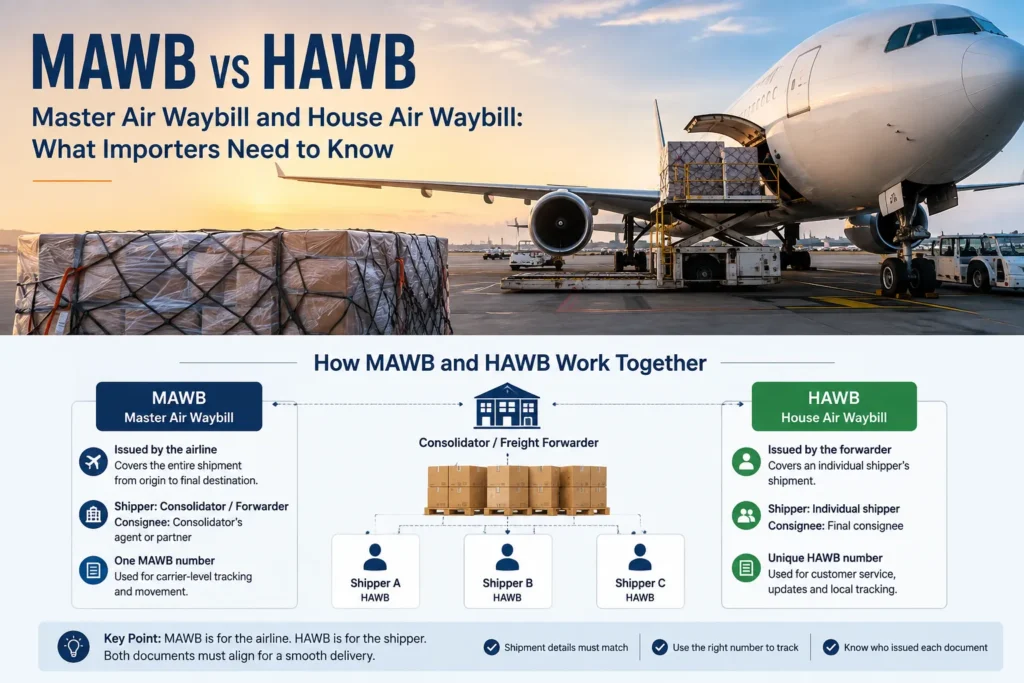
- Airway bill: Transport document used for air freight and courier shipments.
- HS code: Supports customs classification, import duties and regulatory checks.
- Consignee information: Includes the importer’s legal name, address, contact details and tax information where required.
- Certificate of origin: May be required by the buyer, customs authority or trade agreement.
Documents for Special or Regulated Cargo
- MSDS or SDS for chemicals, liquids and some battery products
- UN38.3 test documentation for applicable lithium battery shipments
- Battery test summary or product specification
- Dangerous goods declaration where applicable
- Import permits or licenses
- Product compliance certificates
- Brand authorization documents
- Fumigation or treatment certificates for certain wood packaging
A freight forwarder can help review logistics documents. However, the importer remains responsible for confirming product compliance, customs classification, licensing and tax obligations in the destination country.
How Much Does a Freight Forwarder in China Charge?
Freight forwarding costs depend on the shipment and service scope. There is no single standard fee for every cargo.
The total price may include:
- Supplier pickup in China
- Warehouse receiving and handling
- Measurement, weighing and consolidation
- Export customs declaration
- Origin terminal or port charges
- International sea, air, rail, truck or courier freight
- Fuel, security or peak-season surcharges
- Destination terminal charges
- Customs clearance fees
- Import duties and taxes
- Final-mile delivery
- Residential, remote-area or appointment fees
- Cargo insurance
- Storage, demurrage or detention if delays occur
FCL sea freight is generally calculated by container type. LCL sea freight is usually based on CBM or chargeable weight. Air freight and express courier are based on chargeable weight.
The importer should therefore request a complete quotation rather than asking only for a price per kilogram or per CBM.
Why Choose VoltFreight as Your Freight Forwarder in China?
VoltFreight helps importers coordinate international shipping from Chinese suppliers to overseas destinations. Our services are designed for B2B importers, wholesalers, e-commerce companies, Amazon sellers and businesses sourcing from one or multiple factories.
- Supplier pickup in China: Coordinate collection from factories, trading companies and warehouses.
- Shenzhen warehouse support: Receive, measure, weigh and identify incoming cargo.
- Multiple-supplier consolidation: Combine goods before international shipping.
- Package and label checking: Check visible carton condition, shipping marks and basic labels.
- Shipping-method comparison: Compare sea freight, air freight, rail freight, truck freight and express courier.
- DDP and DAP planning: Explain customs, duty, tax and delivery responsibilities before booking.
- Sensitive-cargo review: Check batteries, liquids, magnets, powders, chemicals and branded goods before shipment.
- Amazon FBA delivery: Support carton labels, shipment preparation and final warehouse delivery.
- Transparent quotations: Explain included charges, excluded charges and possible additional costs.
- Shipment updates: Provide communication from pickup through final delivery.
Our team does not recommend the same shipping method for every shipment. We compare the cargo size, product, destination, deadline and customs requirements before proposing a route.
For customs planning and document support, you can also review our customs clearance services.
Quote Checklist: What Should You Send a China Freight Forwarder?
Complete cargo information allows the forwarder to calculate chargeable weight, compare routes and identify restrictions before the quotation is issued.
- Product name and product photos
- Supplier city and pickup address
- Destination country and final delivery address
- Number of cartons, pallets or packages
- Gross weight of each package or total shipment
- Carton dimensions and total CBM
- Cargo value and currency
- HS code if available
- Cargo ready date
- Supplier Incoterms, such as EXW or FOB
- Preferred shipping method or required delivery deadline
- Details of batteries, liquids, powders, magnets, chemicals, brands or fragile goods
When these details are incomplete, the first quotation should be treated as an estimate rather than a final shipping price.
FAQ About Choosing a Freight Forwarder in China
How do I find a reliable freight forwarder in China?
Check the company’s legal identity, destination experience, warehouse capability, quotation transparency and communication process. Ask for a written service scope and compare the total landed cost instead of only the lowest freight rate.
How much does a China freight forwarder charge?
The cost depends on pickup location, cargo weight, CBM, shipping method, destination, customs scope and final delivery address. Forwarders may also charge for warehousing, consolidation, documentation, customs clearance, insurance and special handling.
Can a freight forwarder collect goods from Alibaba or 1688 suppliers?
Yes. A freight forwarder can collect goods from Alibaba, 1688, factories and trading companies. The cargo can be delivered to a China warehouse for checking, consolidation and international shipping.
Is DDP shipping from China safe?
DDP can be suitable when the cargo, customs value and destination route have been reviewed properly. The quotation should explain who handles customs, duties, taxes and final delivery. Avoid DDP offers that do not ask for detailed product information.
Can different suppliers be consolidated into one shipment?
Yes. Goods from multiple suppliers can be received at a China warehouse and combined into one sea, air, rail or courier shipment. Consolidation may reduce repeated freight, customs and delivery costs.
What information is needed for a freight quote?
The forwarder normally needs the product name, supplier location, destination, package quantity, gross weight, dimensions, total CBM, cargo value, ready date and Incoterms. Restricted-cargo information should also be provided before quoting.
Conclusion
A reliable freight forwarder in China should do more than provide a low shipping rate. The forwarder should understand the cargo, explain the shipping route, identify customs risks and provide a clear written quotation.
Before booking, importers should compare company identity, destination experience, warehouse service, chargeable weight, customs scope, DDP responsibility, final delivery and possible additional charges. They should also avoid underdeclaration, unclear payment instructions and shipping methods that do not match the cargo.
If you are importing from Alibaba, 1688, Chinese factories or several suppliers, contact VoltFreight with your shipment details. We can help compare sea freight, air freight, rail freight, express courier, DDP, DAP and door-to-door shipping based on your cargo and destination.
Information Sources
- FIATA: International Federation of Freight Forwarders Associations
- International Chamber of Commerce: Incoterms Rules
- International Trade Administration: Know Your Incoterms
- World Customs Organization: Harmonized System Overview
Important note: This article is provided for general logistics planning. Shipping cost, customs duty, tax, transit time, DDP feasibility, carrier acceptance and product compliance requirements vary by cargo and destination. Confirm final requirements with the freight forwarder, customs broker or relevant destination authority before shipment.