Best products to import from China to Nigeria are not always the cheapest items listed on Alibaba or AliExpress. A profitable import business depends on local demand, supplier quality, shipping cost, customs duty, exchange-rate risk, selling price and how quickly the goods can move in the Nigerian market.
China remains one of the most important sourcing countries for Nigerian importers. Buyers in Lagos, Abuja, Port Harcourt, Kano and other commercial cities import fashion items, phone accessories, electronics, furniture, home goods, auto parts, beauty tools, toys, machinery and packaging equipment from Chinese suppliers.
This guide explains how to choose profitable products to import from China to Nigeria, which categories are easier for beginners, which goods need additional compliance checks, how shipping affects landed cost and what import documents should be prepared before placing a large order.
Last reviewed: July 2026. Product demand, freight prices, exchange rates and Nigerian import requirements can change. Confirm current costs and compliance requirements before purchasing inventory.
Need help estimating your landed shipping cost? Send your supplier city, product name, carton quantity, gross weight, dimensions, total CBM and Nigerian delivery city. Contact VoltFreight to compare air freight, sea freight, DDP-style delivery, customs support and door-to-door options.
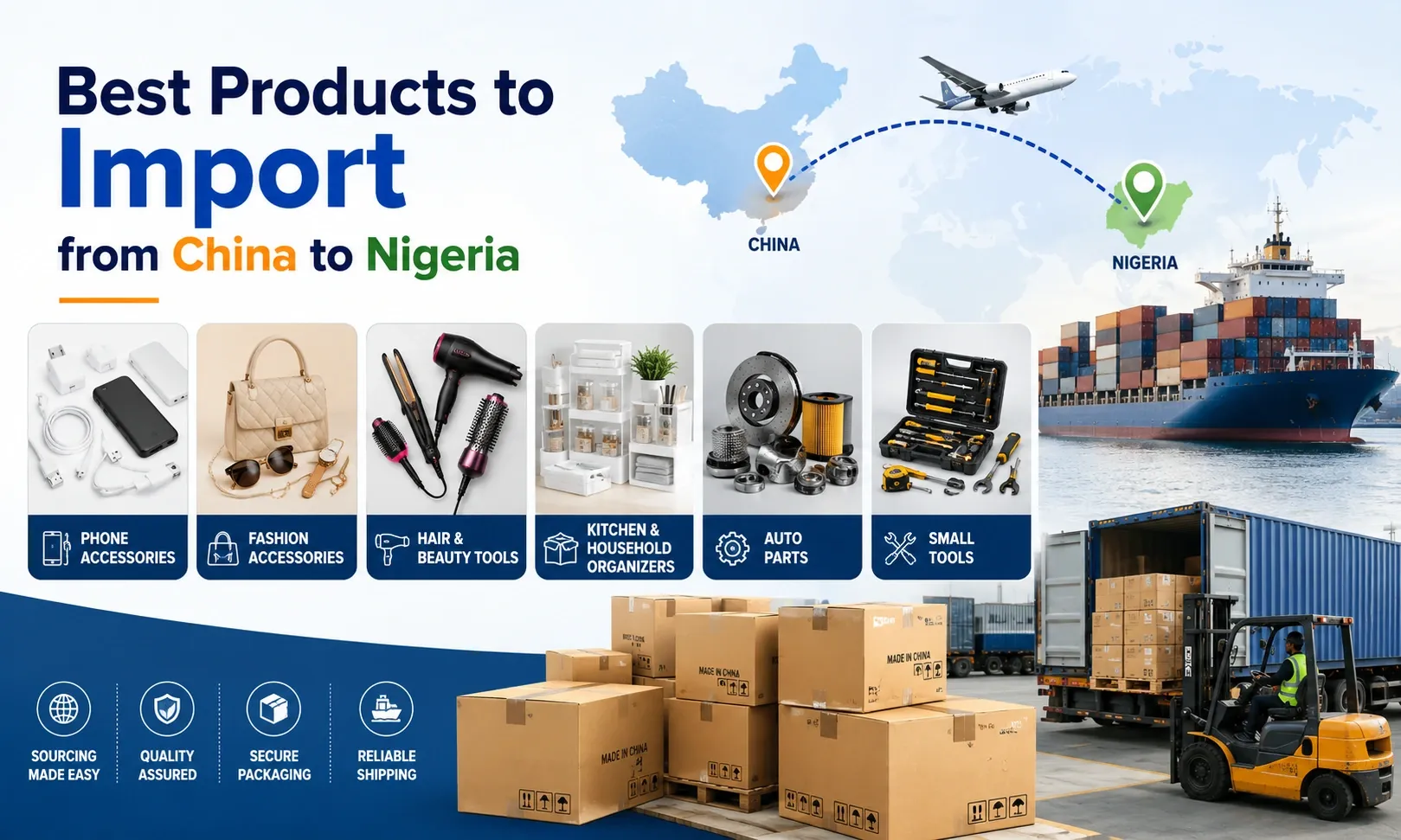
Quick Answer: What Are the Best Products to Import from China to Nigeria?
The best and most profitable items to import from China to Nigeria are usually products with steady local demand, manageable shipping cost, low defect risk and enough margin after customs clearance and final delivery.
Good examples include fashion accessories, phone accessories, hair products, beauty tools, small electronics, kitchenware, storage products, stickers, auto parts, hand tools and selected home goods.
For first-time importers, products such as phone accessories, fashion accessories, hair tools, kitchen organisers and small tools are usually easier to test than cosmetics, chemicals, large appliances or high-value electronics.
For more experienced importers, furniture, machinery, auto parts and appliances can also be profitable. However, they require more capital, stronger quality control, better customs planning and more careful sea-freight arrangements.
In practice, the best product is not simply the one with the highest selling price. It should also have reliable suppliers, low return risk, efficient packaging, clear customs documents and proven demand in Nigeria.
| Product Category | Why It Can Work | Main Risk to Check |
|---|---|---|
| Fashion and accessories | Strong daily demand and many low-cost product options | Quality, sizing, changing trends and counterfeit brand risk |
| Phones and electronics accessories | High demand among consumers, students and businesses | Battery rules, defects, warranties and SONCAP requirements |
| Hair and beauty tools | Strong local demand and repeat-purchase potential | Separate ordinary accessories from NAFDAC-regulated products |
| Furniture and home goods | Useful for households, offices, hotels and commercial projects | High CBM, damage risk, storage and sea-freight planning |
| Auto parts and tools | Steady replacement and repair demand | Compatibility, classification, weight and product quality |
| Kitchen and household products | Everyday demand and many products can be tested in small batches | CBM, breakage risk, materials and local competition |
| Small tools and machinery | Useful for repair, construction and small-business customers | Weight, voltage, spare parts, manuals and SONCAP scope |
After choosing a product, review our complete guide to shipping from China to Nigeria, including sea freight, air freight, express, DDP, Form M, PAAR and SONCAP planning.
Why Nigerian Importers Source Products from China
Nigerian importers buy from China because Chinese suppliers offer a wide product range, flexible minimum order quantities, competitive pricing and access to specialised manufacturing cities.
For example:
- Fashion and accessories are commonly sourced from Guangzhou.
- Electronics and phone accessories are widely available in Shenzhen.
- Small commodities and household products can be sourced from Yiwu.
- Furniture and building-related products are often sourced from Foshan.
- Machinery and industrial products are available across several Chinese manufacturing regions.
However, a low supplier price does not guarantee a profitable import. Importers must add China pickup, freight, customs duty, taxes, port or airport charges, customs clearance, Nigerian delivery, currency fluctuation and possible product defects before calculating the real margin.
China is already a major supplier to Nigeria, which creates opportunities but also increases competition. Successful importers therefore need to compete through quality, product selection, reliable stock availability, customer service and accurate landed-cost control.
How to Choose Profitable Products Before Importing
Before placing an order, check whether the product has real Nigerian demand, reasonable competition, manageable logistics cost and enough margin after all expenses.
A product that looks inexpensive online can become unprofitable after volumetric freight, customs duty, destination charges and local delivery are included. Meanwhile, a higher-priced product may remain profitable when it sells quickly, has low defect risk and is efficient to ship.
A simple landed-cost formula is:
Product cost + China pickup + international freight + customs duty + taxes + destination charges + local delivery + exchange-rate buffer = landed cost
After calculating landed cost, compare it with a realistic selling price in Nigeria. Then subtract advertising, marketplace fees, packaging, storage, damaged items and expected returns.
- Check local demand: Review Nigerian marketplaces, social media, physical shops and customer requests.
- Check competition: Avoid products where many sellers compete only on price.
- Check shipping efficiency: Lightweight and compact goods are generally easier for small importers.
- Check product quality: Request samples, videos, specifications and inspection photos.
- Check customs requirements: Confirm HS code, restrictions and certificates before purchasing.
- Check stock turnover: A smaller margin can still work when inventory sells quickly.
- Check after-sales risk: Electronics, machinery and fitted products can create returns and warranty costs.
How to Calculate Profit Before Importing
Profit should be calculated after all import and selling costs—not by comparing only the Chinese supplier price with the Nigerian retail price.
| Cost Item | Why It Matters |
|---|---|
| Product cost | The supplier price is only the starting point |
| China local cost | Pickup, warehouse receiving, consolidation or inspection can add cost |
| International freight | Depends on weight, dimensions, CBM, product type and shipping method |
| Customs duty and taxes | Depend on HS code, customs value and Nigerian import rules |
| Destination charges | Port, airport, storage, clearing and delivery fees can reduce margin |
| Exchange-rate buffer | Naira movement can change the actual cost before the stock is sold |
| Marketing and marketplace fees | Advertising and platform commissions reduce the final profit |
| Defects and returns | Damaged or unsold products should be included in the calculation |
A safer approach is to begin with a smaller test batch, confirm demand, monitor sales speed and increase volume only after the product proves commercially viable.
Already selected a product? Send VoltFreight your cargo details, including supplier city, product name, carton quantity, gross weight and dimensions. We can estimate the shipping portion of your landed cost before you place a large order.
Fashion, Shoes and Accessories
Fashion items are among the most popular products imported from China to Nigeria because demand is continuous. Clothing, shoes, handbags, sunglasses, belts, watches, jewellery, scarves and other accessories can sell well when importers select suitable designs, sizes and quality levels.
Still, fashion importers should avoid buying randomly. Trends can change quickly, incorrect sizing can create slow-moving inventory and poor stitching or fabric quality can damage customer trust.
- Women’s clothing: Check sizing, fabric quality, colour accuracy and whether the styles suit the target customer.
- Men’s clothing: Begin with common sizes and simple, repeatable designs.
- Shoes and sandals: Confirm size charts, carton CBM, materials and finishing quality.
- Bags and accessories: Inspect stitching, hardware and packaging, and avoid unauthorised branded designs.
- Jewellery and watches: Confirm material claims, plating quality and battery details where relevant.
Branded goods can create trademark and counterfeit risks. Import only authorised goods and keep purchase records or brand-authorisation documents available.
Phones, Electronics and Accessories
Phone cases, earbuds, chargers, USB cables, smart watches, laptop accessories, wireless mice and storage devices can be profitable when buyers control quality and after-sales risk.
Demand is strong because many Nigerian consumers need affordable accessories for communication, school, work and entertainment.
However, electronics require careful supplier selection. Low-quality chargers, power banks or cables can fail quickly and may create safety or warranty problems.
Battery-powered goods may also face airline or courier restrictions. For urgent commercial cartons, compare air freight from China with express freight before booking.
Some electronic products may require SONCAP or other conformity documentation. Ask the supplier for:
- Product specifications
- Voltage and plug type
- Battery capacity and type
- Test reports or conformity documents
- Real product photos and videos
- Warranty and defect policy
- Packaging information
For beginners, smaller accessories are usually safer than expensive smartphones, laptops or large appliances. Products such as phone cases, screen protectors, simple cables and non-battery accessories are easier to test in small quantities.
Hair, Beauty and Personal Care Products
Hair products and beauty tools can be profitable because demand in Nigeria is strong and repeat purchases are common.
Potential products include:
- Hair extensions and wigs
- Hair brushes and combs
- Hair dryers and styling tools
- Press-on nails and nail tools
- Makeup organisers
- Salon capes, clips and accessories
- Non-chemical beauty equipment
Importers must distinguish ordinary beauty accessories from regulated products. Cosmetics, creams, chemical hair treatments and products applied directly to the body may require NAFDAC registration, permits, ingredient review or additional labelling.
Before importing regulated beauty goods, confirm the ingredient list, intended use, product claims, packaging and Nigerian registration requirements. Beginners should avoid large purchases until the compliance process is clear.
Furniture, Home Goods and Kitchen Products
Furniture and household products can work well for importers with enough capital, storage and delivery capacity. Nigerian homes, offices, hotels, restaurants and commercial projects require chairs, desks, shelves, cabinets, kitchen products and home decoration.
Ocean freight from China is usually the most practical option for furniture and other high-CBM products, while air freight is rarely economical except for samples or replacement parts.
- Flat-pack furniture: Compare LCL and FCL sea freight and check carton strength, hardware and assembly instructions.
- Office chairs and desks: Review carton dimensions, loading plan and availability of replacement parts.
- Kitchenware: Check materials, weight, packaging, breakage risk and food-contact requirements where relevant.
- Storage organisers: Review nesting ability and carton utilisation because lightweight plastic goods can have high CBM.
- Home decoration: Consider fragile-item packaging and changing Nigerian design trends.
Small household tools, organisers, cookware, mugs and storage products can be easier to test than large furniture because they require less capital and warehouse space.
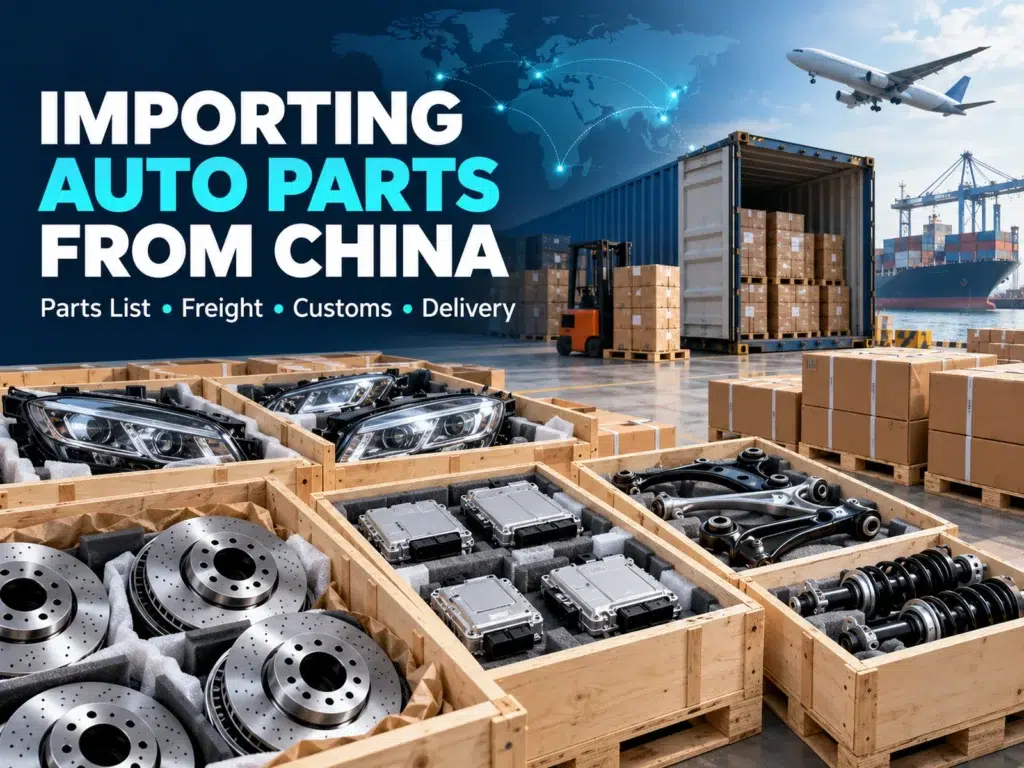
Auto Parts, Tools and Small Machinery
Auto parts, repair tools and small machinery can be profitable because Nigeria has continuing demand for vehicle maintenance, construction, small manufacturing, agriculture and workshop equipment.
Possible products include:
- Vehicle lamps and mirrors
- Filters and selected replacement parts
- Hand tools and small power tools
- Sealing and packaging machines
- Small workshop equipment
- Farm and cleaning tools
Compatibility is essential for auto parts. Importers should confirm vehicle model, production year, part number and dimensions before ordering.
For machinery and electrical tools, request:
- Technical specifications
- Voltage and frequency
- Plug type
- English manual
- Spare-parts list
- HS code
- Packaging dimensions
- Testing or SONCAP-related documents where applicable
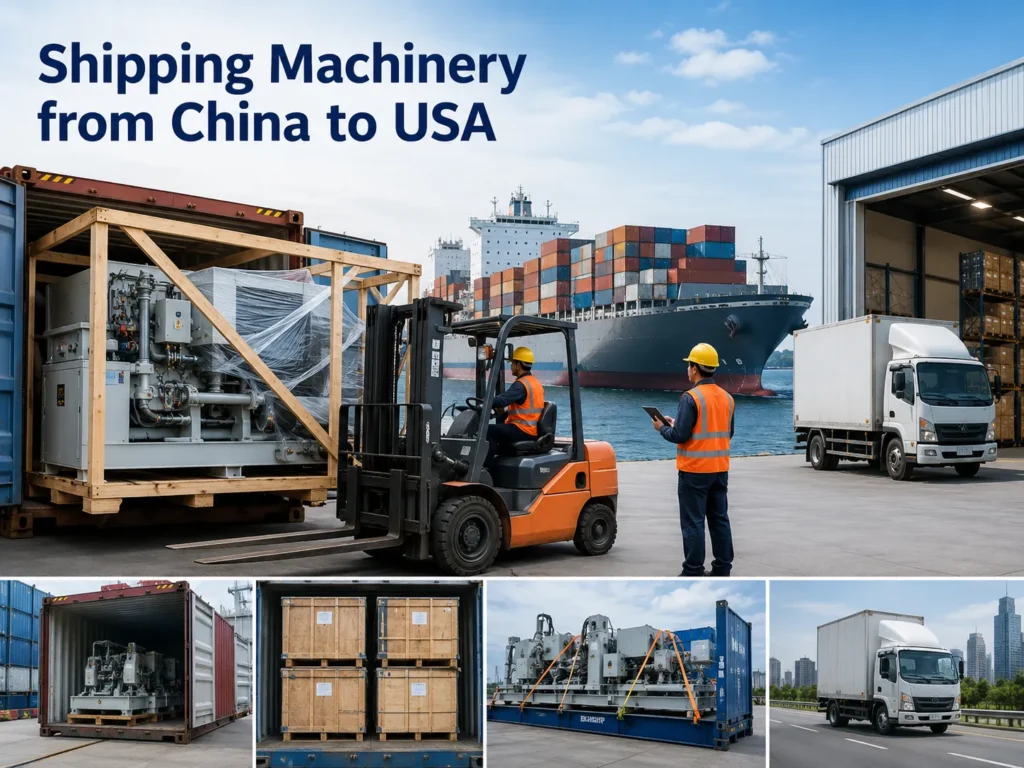
Heavy machinery usually requires LCL or FCL sea freight, while small spare parts can move by air when urgent.
Toys, Baby Products and Creative Items
Toys, baby accessories, stickers, tripods, LED lights and content-creation tools may also sell well. Many creative products are lightweight and easy to market online.
However, children’s products need additional caution. Toys and baby items can require safety and conformity checks, especially when they contain:
- Small detachable parts
- Batteries
- Liquids or chemicals
- Painted surfaces
- Materials that contact the skin or mouth
Stickers, stationery and simple creative products are easier to ship because they are compact and lightweight. Nevertheless, importers should avoid copyrighted characters, unauthorised logos and counterfeit brand designs.
Products That Need Extra Compliance Checks
Some goods can be commercially attractive but are not suitable for inexperienced importers because they need permits, certificates, registration or specialised customs handling.
| Product Type | Why It Needs Extra Checks | Importer Action |
|---|---|---|
| Chemicals | May require permits, MSDS and safe-storage information | Confirm NAFDAC, customs and transport requirements before purchase |
| Food and drinks | Regulated goods can require registration, labels and inspection | Confirm NAFDAC requirements before ordering stock |
| Cosmetics and body-care products | Ingredients, labels and claims may be regulated | Review registration and labelling before production or shipment |
| Electronics and electrical goods | May require SONCAP or conformity assessment | Request certificates, specifications and product test information |
| Batteries and power banks | Airlines and couriers apply strict transport rules | Confirm battery type, capacity, UN38.3 documents and accepted route |
| Toys and baby products | Can require safety and material checks | Confirm applicable standards and conformity documents |
| Branded goods | Counterfeit risk can result in seizure or legal action | Buy only authorised products and retain proof of rights |
| Medical-related products | May need registration or specialist approval | Confirm classification and Nigerian regulatory requirements first |
A low supplier price can become an expensive loss when goods cannot clear customs or require documents that were not prepared before shipment.
Shipping Methods from China to Nigeria
After selecting the product, choose the shipping method according to weight, CBM, urgency, product restrictions and final Nigerian delivery location.
| Shipping Method | Best For | Main Advantage | What to Check |
|---|---|---|---|
| Express courier | Samples, small parcels and urgent lightweight goods | Fast delivery and integrated tracking | Chargeable weight, remote fees, restricted goods and customs terms |
| Air freight | Small to medium urgent commercial cargo | Faster than sea freight and often better than courier for heavier cartons | Volumetric weight, airport clearance and final delivery |
| LCL sea freight | Small and medium shipments that are not urgent | Lower cost for heavier or bulkier products | CBM, consolidation time, destination charges and customs release |
| FCL sea freight | Large orders and full-container cargo | Better unit cost and stronger cargo control | Container size, loading plan, port charges and delivery address |
| DDP or door-to-door shipping | Importers seeking one coordinated logistics plan | Can simplify freight, customs coordination and delivery | Included charges, tax scope, importer responsibility and restricted goods |
For route-specific costs, transit times, Nigerian ports, Form M, PAAR and SONCAP planning, review our China-to-Nigeria freight service. Larger cargo can also be compared through our ocean freight and air freight services.
Nigeria Customs Clearance, Import Duty and Documents
Nigeria customs clearance should be planned before the goods leave China. The importer may need a commercial invoice, packing list, bill of lading or airway bill, HS code, Form M, PAAR, SONCAP Certificate, NAFDAC permit, MSDS or other product-specific documentation.
The documents required depend on the product, customs classification, value, shipping method and importer arrangement.
- Commercial invoice: Shows product name, material, quantity, unit price, total value, currency and seller information.
- Packing list: Shows carton quantity, gross weight, dimensions, CBM and package details.
- Bill of lading or airway bill: Transport document for sea or air freight.
- HS code: Used for product classification, duty and customs processing.
- Form M and PAAR: Important documents within the Nigerian import process.
- SONCAP: May apply to regulated products under Standards Organisation of Nigeria requirements.
- NAFDAC permits: May apply to food, cosmetics, chemicals, drugs and other regulated goods.
- MSDS and battery documents: May be required for chemicals, liquids, batteries and sensitive cargo.
Do not wait until cargo reaches Apapa, Tin Can Island, Lagos airport or another entry point before reviewing compliance. Missing documents can cause storage, inspection and amendment costs.
For more detailed support, review our customs clearance services before shipment.
Common Mistakes New Importers Should Avoid
- Ordering without samples: Supplier photos may not show the actual quality.
- Ignoring carton dimensions: A cheap lightweight product may have high volumetric freight.
- Buying counterfeit brands: Unauthorised goods can create customs and legal risk.
- Missing compliance requirements: Form M, PAAR, SONCAP or NAFDAC issues can delay clearance.
- Underestimating exchange-rate risk: Currency movement can reduce profit before the goods are sold.
- Buying too much inventory: Test local demand before committing to a large quantity.
- Using vague product descriptions: Customs documents should clearly describe the actual goods.
- Choosing the wrong shipping method: Courier may be too expensive for bulky cargo, while sea freight may be too slow for urgent inventory.
- Ignoring destination charges: Port, airport, customs and local delivery fees can exceed expectations.
How VoltFreight Helps Nigeria Importers
VoltFreight’s China-to-Nigeria freight service helps importers move goods from Chinese factories, trading companies, Alibaba suppliers and multiple sourcing locations.
Depending on the shipment, we can support:
- Supplier pickup in China: Coordinate collection from factories and warehouses.
- Warehouse consolidation: Combine goods from several suppliers before export.
- Carton checking and measurement: Support basic counting, weighing, measuring and repacking.
- Express, air and sea comparison: Select a route according to weight, CBM and deadline.
- LCL and FCL planning: Compare shared-container and full-container options.
- DDP and door-to-door review: Clarify service scope, included charges and delivery responsibilities.
- Document support: Review commercial invoice, packing list, HS code and product description.
- Sensitive cargo review: Flag batteries, chemicals, cosmetics, electronics and branded goods before booking.
Send VoltFreight your cargo details to compare freight cost, transit time, customs scope and final delivery before your goods leave China.
FAQ About Importing from China to Nigeria
What are the most profitable items to import from China to Nigeria?
Potentially profitable products include fashion accessories, phone accessories, hair products, beauty tools, kitchenware, household organisers, auto parts, tools and selected electronics.
Profitability depends on final landed cost, competition, product quality and stock turnover, so no product category guarantees a fixed margin.
How much does shipping from China to Nigeria cost?
The cost depends on shipping method, actual and volumetric weight, CBM, product type, Chinese pickup city, Nigerian destination, customs requirements and delivery terms.
Express and air freight are faster, while LCL and FCL sea freight are generally more suitable for heavier or bulkier cargo.
What documents are needed to import goods into Nigeria?
Common documents include the commercial invoice, packing list, bill of lading or airway bill, HS code, Form M and PAAR. Product-specific documents such as SONCAP Certificates, NAFDAC permits, MSDS or battery reports may also be required.
Can I use DDP shipping from China to Nigeria?
DDP-style or door-to-door shipping may be available for suitable products. Confirm whether freight, customs duty, taxes, destination charges and final delivery are included, and clarify who acts as importer before booking.
Which products should beginners avoid importing?
Beginners should be cautious with chemicals, food, cosmetics, medical products, batteries, branded goods, high-value electronics and used goods because these categories can involve additional registration, certificates, transport restrictions or customs risk.
Final Thoughts
The best products to import from China to Nigeria are products with real local demand, manageable logistics cost, acceptable quality risk and clear customs requirements.
Fashion accessories, phone accessories, hair tools, home products, auto parts, small tools and selected electronics can work well when importers calculate the full landed cost before purchasing.
Before ordering, compare supplier price, China pickup, international freight, customs duty, taxes, destination charges, exchange-rate risk and realistic Nigerian resale value. Also confirm whether the goods require SONCAP, NAFDAC permits, MSDS, battery documents or other compliance support.
For help comparing air freight, sea freight, DDP-style shipping or door-to-door delivery, contact VoltFreight with your supplier and cargo details.
Information Sources
- Trading Economics / UN COMTRADE: China Exports to Nigeria
- Nigeria Customs Service: Frequently Asked Questions and PAAR
- Nigerian Ports Authority: Import and Export Guidelines
- Standards Organisation of Nigeria: SONCAP Service
- NAFDAC: Regulatory Resources and Application Forms
- NAFDAC: Chemical Imports
- Trading Economics / UN COMTRADE: Nigeria Imports of Toys and Games from China
Important: This guide is for import planning and logistics information only. Final customs duty, tax, Form M, PAAR, SONCAP, NAFDAC, product registration and compliance requirements should be confirmed with the importer, customs broker or relevant Nigerian authority before shipment.