Shipping damage is one of the most expensive problems in eCommerce, Amazon FBA, wholesale distribution and international freight. A damaged product can create returns, refunds, bad reviews, rejected warehouse deliveries, insurance claims and lost customer trust.
However, most shipping damage is not caused by one single mistake. It usually happens when weak packaging, poor carton fit, empty space, rough handling, unclear labels, bad pallet wrapping or missing inspection records combine during transport.
This guide explains how to prevent shipping damage before goods leave the supplier, warehouse or freight forwarder. It covers packaging materials, carton strength, void fill, fragile products, liquids, pallet shipments, Amazon FBA preparation, freight insurance and the records importers should keep in case a damage claim becomes necessary.
Need help preparing cargo before international shipping? Send your product photos, carton size, gross weight, packing method, pallet details, destination country and delivery requirement. Contact VoltFreight to review packaging, shipping method, insurance and delivery risk before cargo moves from China.
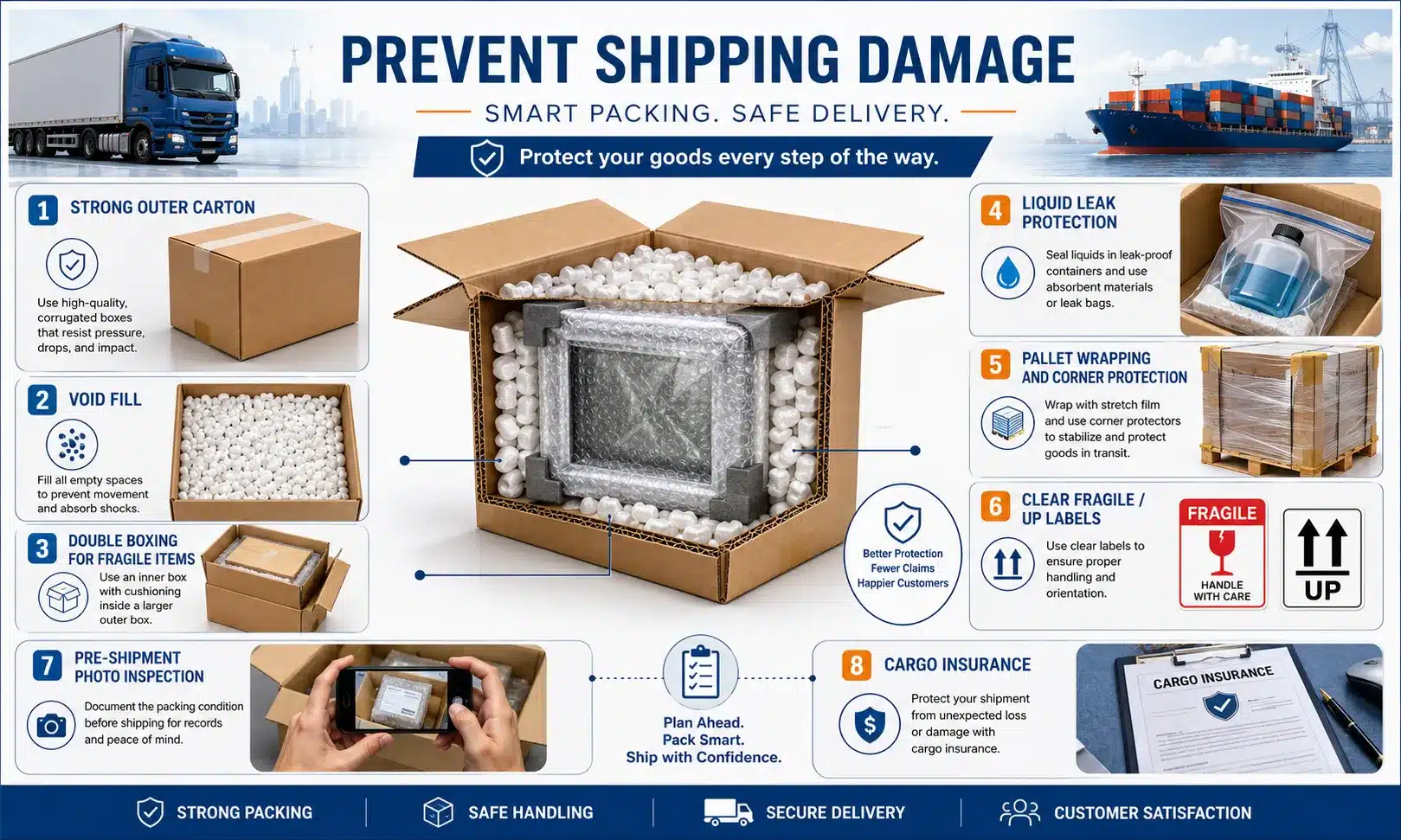
Quick Answer: How Do You Prevent Shipping Damage?
The fastest way to reduce shipping damage is to match the packaging to the product, the transport mode and the handling environment. A small parcel, an Amazon FBA carton, a pallet shipment and a sea freight container do not face the same risks.
In general, importers should use strong outer packaging, protect each product individually, fill empty space, separate fragile items, waterproof liquids, reinforce cartons, wrap pallets properly and document the cargo condition before pickup. In addition, insurance and clear receiving records can reduce financial loss when damage still happens.
| Damage Risk | Prevention Method | What to Check |
|---|---|---|
| Product impact | Use cushioning, bubble wrap, foam, molded pulp or inner packaging | Product should not touch the outer carton directly |
| Empty space inside carton | Use void fill such as kraft paper, air pillows or corrugated inserts | Product should not move when the box is shaken gently |
| Crushed cartons | Use stronger corrugated boxes and avoid overloading | Box strength should match product weight and stacking pressure |
| Liquid leakage | Seal bottles, use inner bags and separate liquids from dry goods | Each liquid item should have secondary containment |
| Fragile items colliding | Separate items with partitions or double boxing | Glass, ceramics, electronics and delicate goods need individual protection |
| Pallet movement | Use stable stacking, corner protectors, straps and stretch wrap | Pallet should not lean, collapse or overhang |
| Rejected warehouse delivery | Use correct labels, carton marks and appointment information | Amazon FBA and B2B warehouses need accurate carton data |
Start with Product Risk, Not the Box
Many sellers choose packaging only by box size. That is a mistake. The correct packaging should begin with product risk. A ceramic mug, LED light, cosmetic bottle, power bank, metal tool, textile item and machine part all need different protection.
Before packing, classify the product by fragility, weight, shape, value, moisture sensitivity and handling risk. After that, choose the carton, inner cushioning, void fill, pallet method and shipping mode.
| Product Type | Main Damage Risk | Packaging Priority |
|---|---|---|
| Glass, ceramics and fragile gifts | Breakage from impact or collision | Individual wrapping, dividers and double boxing |
| Electronics and LED products | Impact, compression, moisture and static risk | Foam inserts, anti-static protection and strong cartons |
| Liquids, cosmetics and bottles | Leakage and contamination | Sealed caps, inner bags and separation from dry goods |
| Heavy metal items or tools | Carton rupture and product-to-product impact | Reinforced cartons, dense cushioning and smaller carton weight |
| Textiles and soft goods | Moisture, dirt and compression | Polybag protection and clean outer cartons |
| Furniture or oversized goods | Corner damage, scratches and compression | Corner protectors, edge boards, foam and pallet/crate planning |
Choose the Right Outer Carton
The outer carton is the first protection layer against compression, drops, vibration and rough handling. UPS packaging guidance recommends using a rigid box with intact flaps and suitable packaging materials, while FedEx packaging guidance also emphasizes strong outer packaging and cushioning for fragile products.
For eCommerce and freight shipments, the carton should be strong enough for the product weight, stacking pressure and transport mode. In addition, cartons should not be reused if they are soft, crushed, wet, torn or structurally weak.
Outer carton checklist
- Use a rigid corrugated carton suitable for the product weight.
- Avoid cartons that are already crushed, damp or deformed.
- Do not exceed the carton’s realistic weight capacity.
- Choose a carton size that leaves room for cushioning but avoids excessive empty space.
- Use double-wall or reinforced cartons for heavy, fragile or high-value goods.
- Keep products away from carton corners, edges and walls.
- Seal all openings with proper shipping tape.
- Cover or remove old labels if reusing any outer packaging.
Fill Empty Space Inside the Box
Empty space is one of the main reasons products break during shipping. If a product can move inside the carton, it can hit the box wall, collide with other items or break through the packaging during handling.
Therefore, importers should use appropriate void fill. Kraft paper, corrugated rolls, foam, air pillows, honeycomb paper and molded inserts can reduce movement. However, the best material depends on the product weight and shape. Air pillows may work for lightweight goods, but they may not protect heavy or sharp products well.
| Void Fill Material | Best For | Watch Out For |
|---|---|---|
| Kraft paper | General eCommerce cartons and light-to-medium goods | May compress under heavy weight |
| Air pillows | Lightweight products and empty carton space | Not ideal for sharp or heavy items |
| Bubble wrap | Fragile items, glass, ceramics and accessories | Needs enough layers and proper wrapping |
| Foam inserts | Electronics, instruments and high-value goods | Higher cost but better shape protection |
| Corrugated dividers | Bottles, glass items and multiple fragile units | Must fit tightly to prevent movement |
| Molded pulp or custom inserts | Retail products and repeat eCommerce SKUs | Best when designed for the product shape |
Use Double Boxing for Fragile Items
Fragile items need more than a “Fragile” label. Glass, ceramics, electronics, gifts and delicate consumer products should be protected individually before they are placed in the outer carton.
For high-risk fragile goods, double boxing is often safer. The product is packed inside an inner box with cushioning, and that inner box is then placed inside a larger outer carton with additional cushioning around it. FedEx guidance for fragile products recommends individual wrapping and cushioning around the inner packaging, which supports this box-in-box approach.
Double boxing checklist
- Wrap each fragile item individually.
- Use an inner box that fits the product and cushioning.
- Place the inner box inside a stronger outer carton.
- Add cushioning on all sides between the inner and outer boxes.
- Make sure the inner box cannot move inside the outer carton.
- Use corner and edge protection for items with fragile edges.
- Seal the outer carton securely with shipping tape.
Separate Multiple Products in the Same Carton
When multiple units are placed in one carton, product-to-product damage becomes a major risk. Items can hit each other during vibration, sorting, trucking, air handling or last-mile delivery.
To reduce this risk, use dividers, partitions, individual sleeves, foam inserts or smaller inner cartons. This is especially important for bottles, glassware, ceramics, electronics, metal parts, cosmetics and products with finished surfaces.
| Packaging Method | Best Use | Benefit |
|---|---|---|
| Corrugated partitions | Bottles, glassware and small fragile units | Prevents product-to-product collision |
| Individual wrapping | Mixed products, accessories and delicate surfaces | Protects each item from scratches and impact |
| Foam trays | Electronics, instruments and precise components | Holds products in fixed positions |
| Inner cartons | Multi-unit wholesale or FBA cartons | Improves handling and SKU separation |
Protect Liquids from Leakage and Water Damage
Liquid leakage can damage the leaking product, other products in the carton and even nearby shipments. For cosmetics, cleaning products, oils, gels and bottled liquids, packaging should include both product-level sealing and carton-level separation.
Use sealed caps, leak-proof inner bags and upright carton marks where needed. In addition, avoid placing liquids directly beside paper goods, textiles, electronics or dry products without secondary containment.
Liquid packaging checklist
- Tighten and seal caps before packing.
- Use shrink bands or cap seals where suitable.
- Place each liquid product in a polybag or leak-resistant bag.
- Use absorbent material if leakage risk is high.
- Separate liquids from electronics, paper, textiles and dry goods.
- Use dividers or inner cartons to reduce bottle collision.
- Mark orientation if the product must remain upright.
- Check whether the product is restricted, regulated or classified as dangerous goods.
Improve Pallet Packaging for Freight Shipments
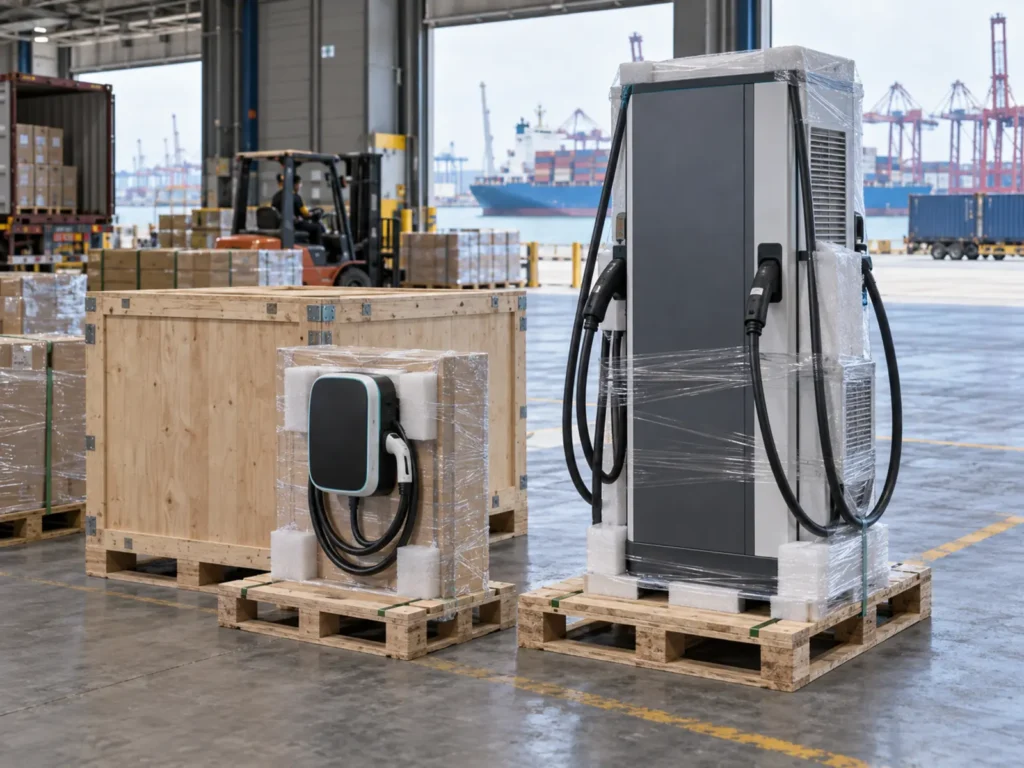
Parcel packaging and freight packaging are different. A carton that survives courier delivery may still fail when it is stacked on a pallet, moved by forklift, consolidated in a warehouse or loaded into a container.
For LCL, FCL, truck freight, rail freight and warehouse delivery, pallet quality matters. Poor pallet stacking can cause carton crush, leaning pallets, broken corners and rejected deliveries.
| Pallet Risk | Prevention Method | What to Check |
|---|---|---|
| Cartons collapse | Use strong cartons and avoid overstacking | Bottom cartons must handle vertical pressure |
| Pallet leans during transport | Stack cartons evenly and keep weight balanced | Pallet should not lean before loading |
| Cartons overhang pallet edge | Keep cartons inside pallet footprint | Overhang increases corner damage risk |
| Forklift damage | Use corner boards, edge protectors and strong wrap | Protect carton corners and pallet sides |
| Loose pallet load | Use stretch wrap, straps and top protection | Cartons should not shift when pushed gently |
| Moisture damage | Use pallet cover or moisture barrier where needed | Important for long-distance sea or warehouse storage |
Prepare Cartons for Amazon FBA and Warehouse Receiving
For Amazon FBA and eCommerce warehouse delivery, shipping damage is not the only problem. Incorrect labels, poor carton condition, wrong box content information or non-compliant packaging can delay receiving or create extra fees.
Amazon Seller Central packaging guidance emphasizes that products need suitable packaging and scannable barcode requirements. Therefore, sellers should check FNSKU labels, carton labels, shipment plans, box content information and prep requirements before cargo leaves the supplier or China warehouse.
Amazon and warehouse checklist
- Confirm whether each unit needs an FNSKU label or manufacturer barcode.
- Make sure each barcode is clear and scannable.
- Apply correct carton labels generated from the shipment plan.
- Check box content information before dispatch.
- Confirm carton weight and dimension limits.
- Use polybags, suffocation warnings or prep materials where required.
- Prepare pallet labels if the shipment is palletized.
- Confirm warehouse appointment rules and delivery requirements.
For FBA and eCommerce shipments from China, review Door-to-Door Shipping from China and Express Freight from China.
Use Clear Shipping Labels and Handling Marks
Labels do not replace protective packaging, but they still help reduce handling mistakes. If a carton contains fragile goods, liquids, upright-only products or heavy items, the label should communicate that clearly.
However, importers should not assume a “Fragile” label will protect poorly packed goods. The packaging must survive normal handling even if the carrier does not treat every carton gently.
| Label or Mark | When to Use | Important Note |
|---|---|---|
| Fragile | Glass, ceramics, delicate electronics and gift items | Still requires proper cushioning and inner protection |
| This Side Up | Liquids, display units and orientation-sensitive goods | Use with packaging that protects against accidental tilting |
| Keep Dry | Paper goods, textiles, electronics and moisture-sensitive cargo | Use waterproofing or inner bag protection as well |
| Heavy | Cartons that require careful lifting | Keep carton weight reasonable for manual handling |
| Do Not Stack | Fragile or pressure-sensitive goods | Carriers may require special handling; confirm before booking |
Choose the Right Shipping Method for Damage-Sensitive Cargo
Packaging is important, but the shipping method also affects damage risk. A fragile product moving through several warehouses, trucks, sorting centers and last-mile delivery points faces more handling than a direct pallet or container shipment.
As a result, importers should match the shipping method to the product value, urgency, fragility and volume. For some fragile or high-value goods, paying more for better handling may cost less than replacing damaged inventory.
| Shipping Method | Best For | Damage Risk to Manage |
|---|---|---|
| Express freight from China | Samples, urgent parcels and small eCommerce shipments | Sorting center handling, drops and carton compression |
| Air freight from China | Urgent, high-value and time-sensitive cargo | Warehouse handling, pallet preparation and final delivery |
| Sea freight from China | Large, heavy and non-urgent shipments | Moisture, container movement, pallet stacking and long transit |
| Railway freight from China | Medium-value cargo needing a balance of speed and cost | Terminal handling, pallet stability and border/transloading conditions |
| Door-to-door shipping from China | Importers wanting coordinated delivery to warehouse or business address | Final delivery appointment, unloading and receiving condition |
Inspect and Photograph Cargo Before Pickup
Packaging work is not finished until the cargo condition is recorded. If goods are damaged later, photos and videos can help identify whether the problem started before pickup, during warehouse handling, during international transport or at final delivery.
Before the shipment leaves the factory, supplier warehouse or freight forwarder warehouse, importers should collect clear packing records. This is especially important for fragile goods, high-value products, Amazon FBA inventory and shipments with insurance coverage.
Pre-shipment record checklist
- Product photos before packing
- Inner packaging photos
- Outer carton photos
- Carton label photos
- Pallet photos from all sides
- Stretch wrap and corner protector photos
- Weight and dimension records
- Loading photos for pallets or containers
- Seal number photo for FCL containers if applicable
- Warehouse handover record or pickup receipt
Use Cargo Insurance for Higher-Risk Shipments
Insurance does not prevent damage, but it can reduce financial loss when damage happens during international shipping. For high-value, fragile, seasonal or hard-to-replace goods, cargo insurance is usually worth reviewing before shipment.
That said, insurance is not a substitute for proper packaging. Many insurance claims require evidence of adequate packaging, cargo value, damage photos and receiving records. Therefore, importers should keep documents and photos from packing to delivery.
| Insurance Item | Why It Matters | What to Keep |
|---|---|---|
| Commercial invoice | Proves cargo value | Supplier invoice and payment records |
| Packing list | Shows carton quantity and shipment details | Final packing list and weight records |
| Pre-shipment photos | Shows packaging condition before pickup | Product, carton, pallet and loading photos |
| Transport documents | Shows shipment route and carrier handling | Bill of lading, air waybill or courier record |
| Delivery photos | Shows damage at arrival | Photos before unpacking and after opening damaged cartons |
| Damage report | Supports the claim timeline | Warehouse report, carrier note or receiving exception |
What to Do If Goods Arrive Damaged
Even with careful packaging, damage can still happen. When it does, the first response matters. Importers should document the condition immediately and avoid discarding packaging before the carrier, warehouse or insurer reviews the case.
Damage response checklist
- Take photos before opening visibly damaged cartons.
- Photograph all sides of the outer carton.
- Keep inner packaging, cushioning and damaged product parts.
- Record carton number, SKU, quantity and damage type.
- Ask the carrier or warehouse to note visible damage on the delivery receipt.
- Report the issue quickly according to carrier or insurance deadlines.
- Separate damaged goods from sellable inventory.
- Share evidence with supplier, forwarder, warehouse and insurer.
- Review whether packaging needs improvement before the next shipment.
Common Packaging Mistakes That Cause Shipping Damage
Many shipping damage cases are preventable. The problem is usually not one dramatic accident, but a series of small packaging and handling mistakes that make the cargo vulnerable.
- Using a carton that is too large for the product
- Leaving empty space inside the carton
- Using weak or reused cartons for heavy goods
- Putting multiple fragile items together without dividers
- Using air pillows for heavy or sharp products
- Shipping liquid products without inner leak protection
- Stacking heavy cartons on top of fragile cartons
- Allowing cartons to overhang the pallet edge
- Using too little stretch wrap or no corner protection
- Forgetting FBA carton labels or barcode requirements
- Not photographing packaging before pickup
- Buying insurance but keeping no claim evidence
Packaging Checklist Before Shipping from China
Before goods leave China, importers should complete one final packaging and shipping check. This helps prevent damage, reduce customs and warehouse delays, and improve claim support if something goes wrong.
| Checkpoint | Question to Ask | Why It Matters |
|---|---|---|
| Product protection | Is each item protected from impact, pressure and moisture? | Prevents breakage and product-level damage |
| Carton strength | Is the outer box strong enough for weight and stacking? | Reduces crush and carton rupture |
| Void fill | Can the product move inside the box? | Movement increases impact damage risk |
| Fragile separation | Are fragile units separated or double boxed? | Prevents item-to-item collision |
| Liquid protection | Are bottles sealed and isolated? | Prevents leakage and contamination |
| Pallet stability | Are cartons stacked, wrapped and protected correctly? | Prevents leaning, collapse and forklift damage |
| Labels | Are shipping labels, FBA labels and handling marks correct? | Prevents receiving and delivery errors |
| Insurance | Is the shipment value high enough to require insurance? | Reduces financial loss from damage |
| Evidence | Do you have photos before pickup? | Supports supplier, carrier or insurance claims |
How VoltFreight Helps Reduce Shipping Damage Risk
VoltFreight helps importers review packaging, shipment method, warehouse handling, pallet preparation, delivery requirements and insurance options before goods move from China.
For fragile goods, Amazon FBA inventory, high-value products, liquids, electronics, furniture and palletized shipments, our team can check whether the packaging and route match the real transport risk.
- Supplier pickup coordination in China
- China warehouse receiving and carton inspection
- Carton measurement and weight checking
- Photo records before shipment
- Pallet wrapping and consolidation support where arranged
- Shipping method comparison: express, air, sea, rail and door-to-door
- Insurance review for higher-risk shipments
- Amazon FBA and warehouse delivery planning
- Damage evidence support when a shipment problem occurs
Related Shipping Guides
Use these VoltFreight guides to compare shipping methods, delivery risk, customs clearance and door-to-door logistics before sending cargo from China.
- Door-to-Door Shipping from China
- Express Freight from China
- Air Freight from China
- Sea Freight from China
- Railway Freight from China
- Customs Clearance
- Shipping from China to USA
- Shipping from China to the UK
- Shipping from China to Germany
- Contact VoltFreight
FAQ About Preventing Shipping Damage
What is the best way to prevent shipping damage?
The best way to prevent shipping damage is to match the packaging to the product and shipping method. Use a strong outer carton, protect each product individually, fill empty space, reinforce fragile items, prepare pallets correctly and document cargo condition before pickup.
Does a fragile label prevent damage?
No. A fragile label helps communicate handling needs, but it does not replace proper packaging. Fragile products still need cushioning, separation, strong cartons and possibly double boxing.
What is void fill in packaging?
Void fill is material used to fill empty space inside a carton. Common examples include kraft paper, air pillows, foam, bubble wrap, corrugated rolls and molded inserts. It helps stop products from moving inside the box.
Should fragile items be double boxed?
High-risk fragile items are often safer with double boxing. The product is protected inside an inner box, and that box is placed inside a stronger outer carton with cushioning between the two boxes.
How do I protect liquids during shipping?
Seal caps, use inner polybags or leak-resistant bags, add absorbent material when needed and separate liquids from dry goods, electronics, paper and textiles. Also check whether the liquid is restricted or regulated for transport.
How can I prevent pallet damage?
Use strong pallets, stack cartons evenly, avoid pallet overhang, place heavier cartons at the bottom, use corner boards, apply enough stretch wrap and add straps or top protection when needed.
Do Amazon FBA shipments need special packaging?
Yes. Amazon FBA shipments may require unit labels, carton labels, scannable barcodes, specific packaging, suffocation warnings, box content information and pallet labels depending on the shipment plan and product type.
Does cargo insurance cover shipping damage?
Cargo insurance can reduce financial loss from shipping damage, but coverage depends on policy terms, packaging adequacy, evidence, cargo value and claim timing. Keep photos, invoices, packing lists and delivery records.
What photos should I take before shipping?
Take photos of products before packing, inner packaging, outer cartons, labels, pallets, stretch wrap, loading process and container seal if applicable. These records help if damage is discovered later.
What should I do if my shipment arrives damaged?
Photograph the damage immediately, keep all packaging, record carton numbers and quantities, ask the carrier or warehouse to note the damage on the delivery record, and report the issue quickly to the forwarder, supplier, carrier or insurer.
Final Thoughts
Shipping damage is not completely avoidable, but importers and sellers can reduce the risk with better packaging decisions before goods leave the warehouse. The key is to protect the product, control empty space, strengthen the carton, stabilize pallets, label shipments clearly and keep evidence.
For eCommerce, Amazon FBA, wholesale and international freight, packaging should be treated as part of the logistics plan, not an afterthought. A slightly better carton, stronger pallet wrap or clearer label can prevent returns, warehouse rejection and customer complaints.
If you need help reviewing cargo before shipment from China, contact VoltFreight with your product photos, carton details, pallet information and destination address. Our team can help compare shipping methods, packaging risk, insurance options and delivery planning.
Information Sources
- UPS: How to Pack a Box or Pallet for Shipping
- FedEx: General Packaging Guidelines
- FedEx: Special Care Shipments
- DHL: Packaging Guide
- DHL eCommerce: Packaging Made Easy
- Amazon Seller Central: Product Packaging Requirements
- Amazon Seller Central: Prepare Your Products for FBA Shipping
Important note: This guide is for logistics and packaging planning only. Packaging requirements, damage risk, carrier acceptance, Amazon FBA rules, insurance coverage, claim deadlines and final delivery requirements depend on product type, shipping method, destination country, carrier rules, warehouse requirements and current policy. Always confirm final packaging and shipping requirements with your supplier, freight forwarder, carrier, warehouse, insurer and Amazon Seller Central where applicable.