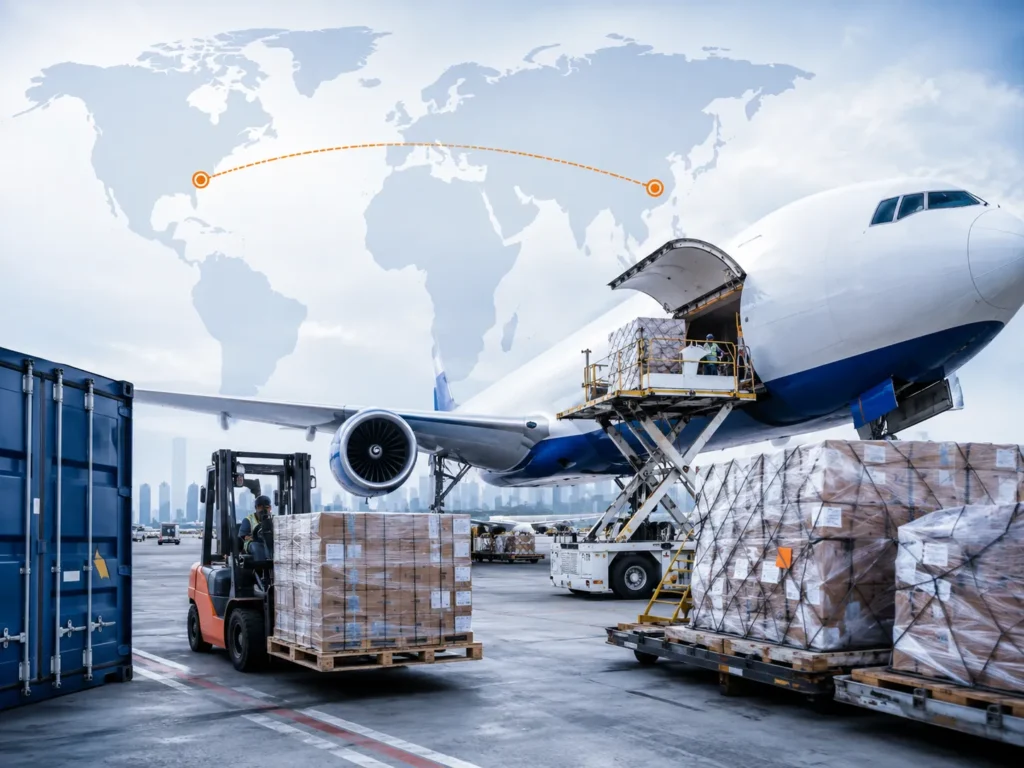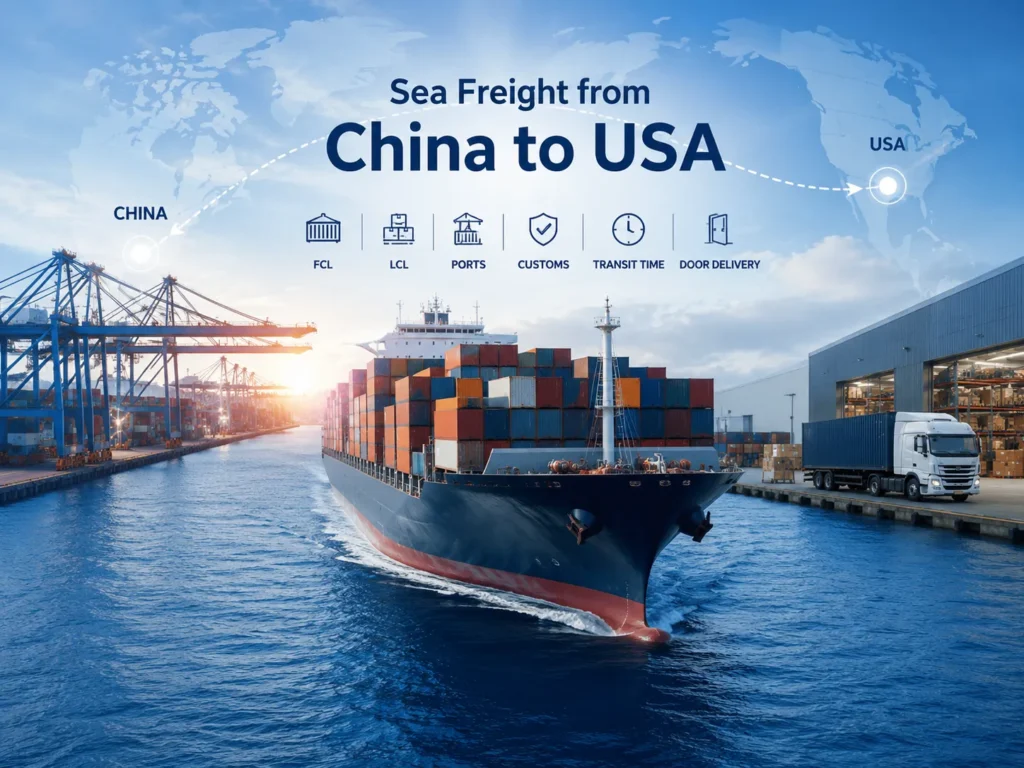
Express shipping from China is one of the fastest ways to send samples, small parcels, urgent replacement parts, e-commerce orders, documents and lightweight commercial goods to overseas buyers. In many cases, DHL, FedEx, UPS and other courier networks can combine pickup, international transport, customs processing and final delivery into one door-to-door service.
However, express courier is not only about speed. Importers also need to check chargeable weight, commercial invoice data, declared value, HS code, duties and taxes, consignee information, remote area fees, low-value parcel rules, lithium battery restrictions and product acceptance before booking.
This guide explains how express shipping from China works, how to compare DHL, FedEx and UPS, what affects shipping time and cost, how customs clearance works, what documents you need and when air freight or sea freight may be a better option.
Need an express shipping quote from China? Send your supplier city, destination country, ZIP code, product name, carton quantity, weight, dimensions, declared value and product photos. Contact VoltFreight to compare courier, air freight, sea freight and door-to-door shipping options.
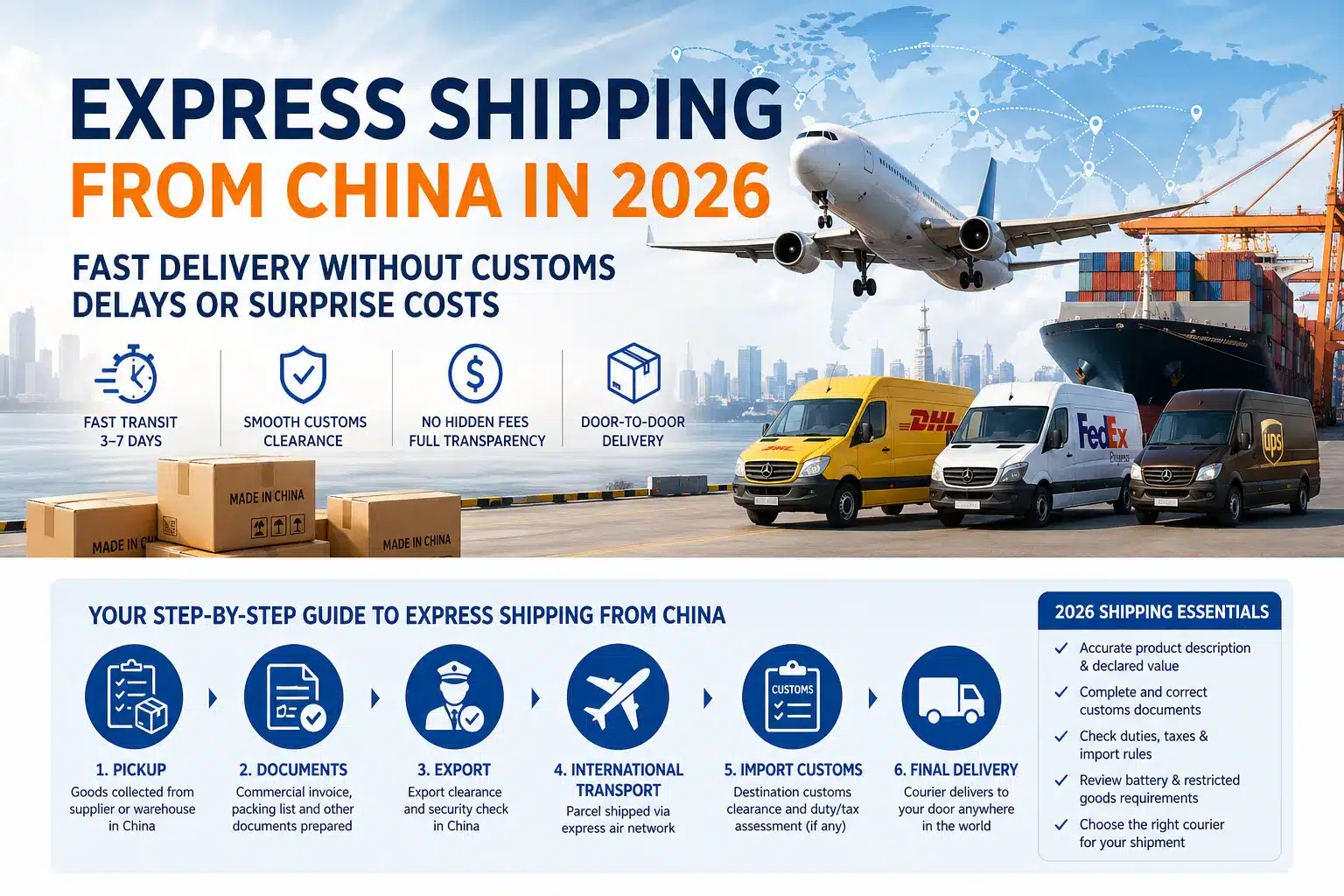
Quick Answer: When Should You Use Express Shipping from China?
Express shipping from China is usually the right option when the shipment is small, urgent, lightweight or high-value. It is especially useful for samples, documents, prototypes, replacement parts, small e-commerce parcels and urgent B2B goods that need fast door-to-door delivery.
In contrast, express courier may become expensive for large cartons, heavy shipments or bulky goods. Therefore, importers should compare express courier with air freight from China and sea freight from China before shipping larger commercial cargo.
| Shipment Type | Best Option to Compare | Why |
|---|---|---|
| Product samples | Express courier | Fast door-to-door delivery with tracking |
| Urgent documents | DHL, FedEx, UPS or similar courier | Simple handling and fast international movement |
| Small e-commerce parcels | Express or parcel courier | Suitable when speed and tracking matter |
| Heavy commercial cartons | Air freight | Often better cost control than express courier |
| Bulky inventory shipments | Sea freight or LCL shipping | Lower cost per unit for larger shipments |
| One coordinated delivery plan | Door-to-door shipping | Connects pickup, freight, customs support and final delivery |
What Is Express Shipping from China?
Express shipping from China is an international courier service that moves parcels through an integrated express network. The courier or freight forwarder may collect goods from a supplier, China warehouse or consolidation point, prepare shipping data, arrange export handling, move the shipment by air, support import customs clearance and deliver the parcel to the consignee.
Compared with standard air freight, express shipping is usually simpler for small shipments because one courier network may handle most steps. At the same time, it can cost more per kilogram when the shipment becomes heavy or bulky.
Common express shipping use cases
- Supplier samples from China
- Small parcels for e-commerce sellers
- Urgent replacement parts
- Documents, catalogs and prototypes
- High-value lightweight goods
- Amazon FBA samples or urgent cartons
- Trade show materials
- Small B2B shipments before a larger order
DHL, FedEx and UPS Shipping from China: Which Courier Should You Choose?
There is no single best courier for every shipment. DHL, FedEx and UPS can all work well, but the best option depends on destination country, delivery address, product type, parcel size, declared value, service level, customs requirements and current carrier capacity.
For example, DHL may be strong on many time-definite lanes, FedEx may work well for many commercial shipments and UPS can be a good option for certain B2B and North America delivery routes. However, the right answer should come from a lane-by-lane comparison, not from a fixed rule.
| Courier Option | Best Fit | What to Confirm Before Booking |
|---|---|---|
| DHL Express | Urgent parcels, time-sensitive samples and many B2B shipments | Destination service, remote area fee, volumetric weight, customs documents and restricted goods |
| FedEx | Commercial parcels, priority shipments and many global delivery lanes | Service level, declared value, importer details, customs data and delivery area |
| UPS | B2B parcels, international express and shipments needing strong delivery tracking | Worldwide Express service level, duties/taxes responsibility, customs forms and address type |
| EMS or postal courier | Some non-urgent and lower-value parcels | Tracking quality, customs handover, delivery reliability and destination restrictions |
| Freight forwarder express channel | Importers needing rate comparison, supplier pickup and document review | Courier used, service scope, customs support, insurance and excluded charges |
Express Shipping Time from China to Major Destinations
Express shipping time from China depends on origin city, destination country, courier service, customs clearance, flight capacity, product category and final delivery address. Published carrier delivery windows are lane-specific, so importers should confirm the exact service before booking.
Many express lanes move in business days rather than weeks. Nevertheless, customs questions, missing invoice data, restricted goods, duties/taxes, remote area delivery and failed delivery attempts can add time.
| Destination Region | Typical Planning Range | Main Variables |
|---|---|---|
| China to USA express shipping | Often several business days after pickup, depending on service and clearance | Customs data, duties, tariff treatment, destination ZIP code and product type |
| China to Europe express shipping | Often several business days after pickup, depending on country and service | VAT, customs declaration, low-value parcel rules and final delivery country |
| China to UK express shipping | Usually a fast courier lane for eligible goods | Importer details, commodity description, duty/tax payment and address accuracy |
| China to Canada express shipping | Often several business days after pickup, depending on service and customs | Importer number, product type, duty/tax and final delivery address |
| China to Australia express shipping | Usually fast for eligible goods, but regulated products need review | GST, biosecurity, product restrictions and remote delivery area |
| China to Middle East express shipping | Depends on country, courier and customs requirements | Importer registration, product restrictions, invoice data and address format |
Express Shipping Cost from China: Actual Weight vs Volumetric Weight
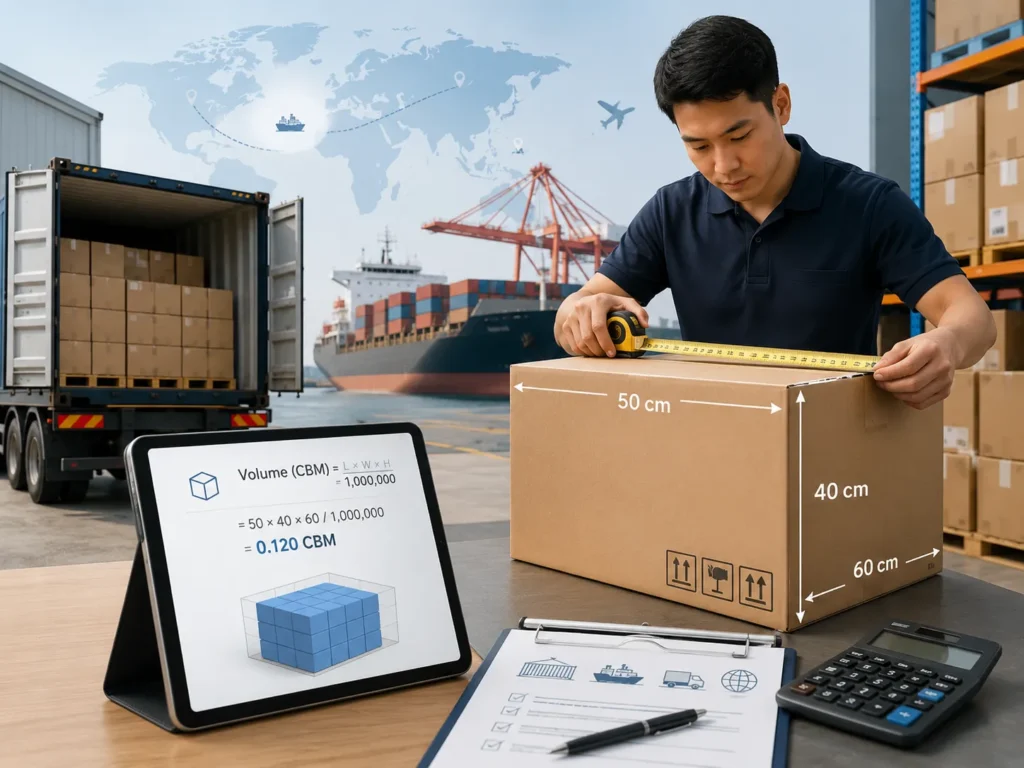
Express shipping cost from China usually depends on chargeable weight. The courier compares actual weight and volumetric weight, then charges based on the higher number. This is why a lightweight but large box can cost more than expected.
For many international express shipments, volumetric weight uses a dimensional weight formula such as length × width × height divided by a courier divisor. The exact divisor and pricing rule may vary by courier, country, service and contract, so importers should confirm the calculation before shipping.
| Cost Factor | Why It Matters | How to Control It |
|---|---|---|
| Actual weight | Heavy parcels increase courier cost quickly | Weigh each carton before pickup |
| Volumetric weight | Large boxes can be charged as heavier shipments | Reduce empty space and use proper carton size |
| Destination country and ZIP code | Remote areas, islands and non-standard addresses may trigger extra charges | Send full address before quotation |
| Declared value | Value can affect duties, taxes, entry type and insurance needs | Use realistic transaction value |
| Product category | Batteries, liquids, powders, cosmetics and branded goods may need extra review | Send product photos and specifications early |
| Service level | Time-definite services usually cost more | Compare priority and economy express options |
| Duties and taxes | Freight cost may not include import duty, VAT, GST or brokerage fees | Confirm DAP, DDP or receiver-paid duty terms |
How to reduce express shipping costs
- Reduce carton size and avoid empty space.
- Combine small parcels when it does not increase customs risk.
- Compare DHL, FedEx, UPS and forwarder express channels by destination and weight range.
- Use air freight when the shipment becomes too heavy for courier pricing.
- Use sea freight when the cargo is bulky and not urgent.
- Prepare documents correctly to avoid amendment, storage, return or redelivery costs.
- Check duties and taxes before shipping instead of focusing only on freight cost.
What Changed for Low-Value Express Parcels?
Low-value parcel rules have become more important for express shipping from China. Many importers used to assume that small parcels would clear customs with fewer duties or simpler requirements. That assumption is now risky, especially for shipments to the United States and the European Union.
United States: de minimis duty-free treatment changed
For China to USA express shipping, importers should no longer rely on old low-value parcel assumptions. U.S. CBP guidance states that duty-free de minimis treatment under 19 U.S.C. § 1321(a)(2)(C) is no longer available for shipments entering the United States from any country, effective August 29, 2025, unless covered by specific exceptions.
As a result, e-commerce sellers, sample buyers and small parcel importers should prepare better customs data, correct declared value, HS code review and duty/tax planning before shipping to the USA.
European Union: low-value e-commerce parcel rules are changing
For EU shipments, importers should also watch low-value parcel rule changes. The Council of the European Union has announced a fixed €3 customs duty for small consignments valued under €150 from July 1, 2026, for goods entering the EU under the relevant low-value e-commerce framework.
Therefore, EU-bound express parcels should not be quoted with outdated “low value means no duty” assumptions. VAT, customs declarations, IOSS, product compliance and future duty treatment should all be reviewed before shipping.
Customs Clearance for Express Shipping from China
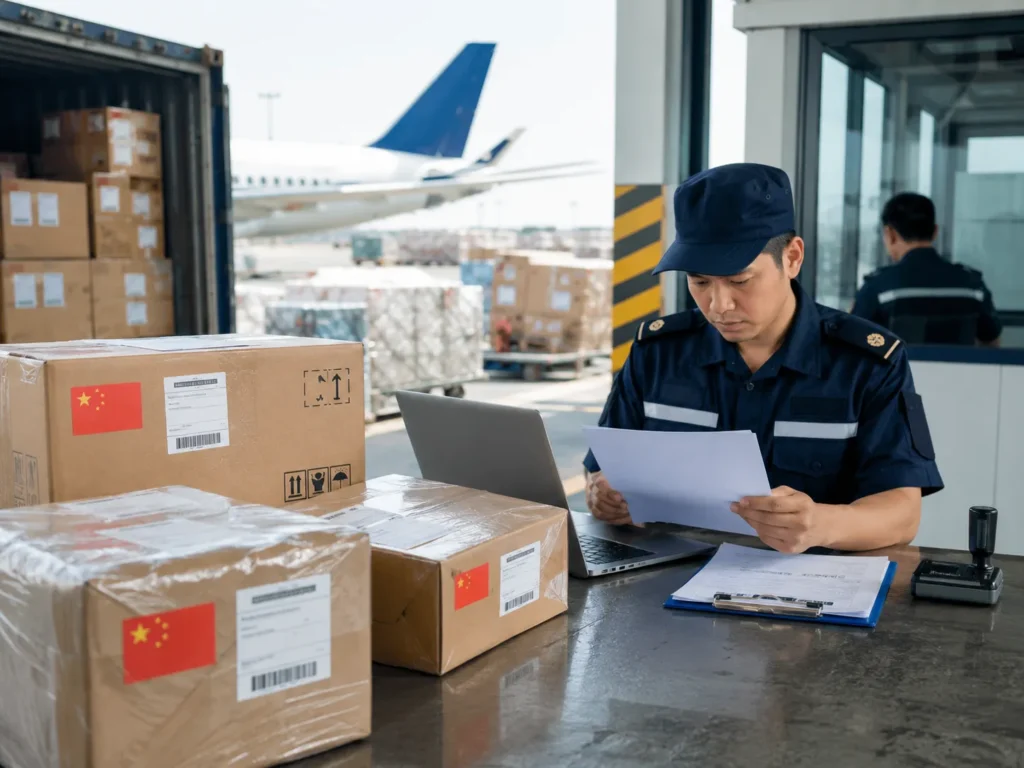
Express courier can simplify customs processing, but it does not remove customs responsibility. The courier still needs accurate shipment data, and customs authorities may still review product description, declared value, HS code, origin, importer details and compliance documents.
In practice, many express delays come from poor invoice data rather than slow aircraft movement. Vague descriptions such as “sample,” “gift,” “parts” or “accessories” can trigger customs questions. Likewise, under-declared value or missing importer tax information may delay clearance.
Common customs documents and data
- Air waybill: Carrier transport document with shipper, receiver and routing information.
- Commercial invoice: Shows product description, value, quantity, currency, origin, shipper, consignee and transaction details.
- Packing list: Useful for multi-carton shipments with weight and dimension details.
- HS code: Helps customs classify goods and calculate duties and taxes.
- Certificate of origin: May be requested for some products or tariff treatment.
- Importer information: Tax ID, EORI, EIN, ABN, VAT number or local registration details may be required depending on destination.
- Product compliance documents: May be required for batteries, electronics, cosmetics, toys, medical-related goods, food-contact goods or regulated products.
- Brand authorization: May be requested for branded goods.
For more support with import documents, review Customs Clearance.
Commercial Invoice Checklist for Express Courier Shipments
A complete commercial invoice is one of the most important documents in express shipping from China. It helps the courier and customs authority understand what is inside the parcel, how much it is worth, who is shipping it and who receives it.
Before pickup, check the invoice line by line. A better invoice can reduce customs questions, amendment requests and delivery delays.
| Invoice Item | What to Include | Common Mistake |
|---|---|---|
| Product description | Clear product name, material, function and use | Using vague words such as “sample” or “gift” |
| Quantity | Units, pieces, sets or cartons | Invoice quantity does not match parcel contents |
| Declared value | Realistic unit price and total value | Under-declaring value to avoid duty |
| Currency | USD, EUR, GBP or other transaction currency | Missing currency or inconsistent values |
| HS code | Product classification if available | Wrong code or no classification review |
| Origin | Country of origin, often China | Missing origin or inconsistent supplier information |
| Shipper and consignee | Full company or person name, address, phone and email | Wrong phone number or incomplete address |
| Importer details | Tax ID, EORI, EIN, VAT, ABN or other local details where required | Receiver cannot provide local import information |
Express Shipping from China to USA, EU, UK, Australia and Canada
Destination rules can change the real cost and timing of express shipping. Therefore, importers should not rely only on courier transit time. Customs, duties, taxes, product restrictions and importer data can all affect final delivery.
China to USA express shipping
China to USA express shipping is suitable for samples, urgent parts, documents, small parcels and lightweight commercial goods. However, importers should check current duty treatment, HS code, declared value, importer details and product restrictions before shipping.
For e-commerce parcels and low-value shipments, the end of old de minimis assumptions makes accurate customs data more important. In addition, products such as batteries, electronics, cosmetics, food-contact goods, branded items and medical-related goods may need extra review.
China to EU express shipping
For China to EU express shipping, importers should check VAT, customs declarations, IOSS where applicable, product compliance and low-value parcel changes. The destination country also matters because final delivery and importer requirements can vary across the EU.
Small parcels may still need clear product descriptions, realistic declared value and proper customs data. Therefore, do not treat EU-bound courier parcels as simple “no document” shipments.
China to UK express shipping
For the UK, importers should confirm declared value, commodity description, duty/tax payment responsibility, importer details and delivery address accuracy. Business shipments may need better invoice data than personal parcels.
China to Australia express shipping
For Australia, importers should check GST, customs value, product restrictions and biosecurity requirements. Food, plant materials, wood, cosmetics, medical-related products and other regulated goods may need extra review before courier pickup.
China to Canada express shipping
For Canada, importers should check duties, taxes, importer information, product category and courier service level. Regulated products, branded goods and commercial shipments with higher declared value may need more detailed customs support.
Sensitive and Restricted Goods in Express Shipping
Express couriers move many shipments by air, so sensitive and restricted cargo must be reviewed before pickup. Some products can move with the right documents and courier service, while others may be refused by the carrier or stopped by destination customs.
| Product Type | Why It Needs Review | What to Prepare |
|---|---|---|
| Lithium batteries | Air transport rules depend on battery type, watt-hour rating, packing and whether batteries are inside equipment | Battery type, UN number, MSDS if needed, UN38.3 test summary, packaging details and courier approval |
| Liquids, powders and chemicals | May be dangerous goods or restricted commodities | MSDS, ingredients, photos, packaging details and destination compliance documents |
| Cosmetics and beauty products | May need ingredient review, labeling or product registration depending on destination | Product photos, ingredient list, declared use, invoice and destination requirements |
| Electronics and wireless devices | May involve batteries, radio frequency rules, certification or brand restrictions | Product model, battery information, certificates and brand authorization if applicable |
| Food-contact goods | May require safety or material compliance review | Product use, material, certificates, importer information and destination rules |
| Medical-related items | May need regulatory approval or special import documents | Product classification, intended use, certificates and importer details |
| Branded goods | Customs or courier may request proof of authorization | Brand authorization, purchase invoice, product photos and consignee information |
Lithium Batteries, Cosmetics, Liquids and Branded Goods
Some products need more than a normal courier label. Batteries, cosmetics, liquids and branded goods can create delays even when the parcel is small. For that reason, importers should send product details before booking.
Lithium batteries
Lithium batteries and battery-powered products need careful air transport review. The rules depend on battery type, watt-hour rating, lithium content, packing method, whether the battery is installed in equipment and the courier’s current acceptance policy.
Cosmetics and beauty products
Cosmetics may need ingredient review, labeling review and destination-specific compliance checks. Liquids, creams, powders and aerosols may also face carrier restrictions.
Liquids, powders and chemicals
Liquids, powders and chemicals can trigger dangerous goods questions. A courier may request MSDS, ingredients, packaging photos and destination compliance documents before accepting the shipment.
Branded goods
Branded goods may require authorization documents or proof of purchase. Without clear documentation, customs may suspect counterfeit goods or request additional evidence.
Express Shipping vs Air Freight vs Sea Freight
Express shipping is fast and simple for small parcels, but it is not always the best method for commercial cargo. As the shipment becomes heavier or bulkier, air freight or sea freight may reduce the landed cost.
| Shipping Method | Best For | Main Advantage | Main Limitation |
|---|---|---|---|
| Express courier | Samples, small parcels, documents and urgent lightweight cargo | Fast door-to-door service with tracking | Expensive for bulky or heavy shipments |
| Air freight | Medium urgent commercial shipments | Better cost control for larger shipments than express courier | Requires more coordination for pickup, customs and delivery |
| Sea freight | Large, bulky and planned inventory shipments | Lower cost per unit for large cargo | Slower and requires earlier planning |
| Door-to-door shipping | Importers needing one coordinated route | Can combine pickup, freight, customs support and delivery | Service scope must be clearly defined |
When express courier becomes too expensive, compare Air Freight from China, Sea Freight from China and Door-to-Door Shipping from China.
Step-by-Step Express Shipping Process from China
A smooth express shipment starts before courier pickup. The supplier or freight forwarder should check packing, dimensions, product details, invoice data and destination requirements before creating the shipping label.
| Step | What Happens | What to Check |
|---|---|---|
| Supplier pickup | Goods are collected from a factory, supplier or China warehouse | Carton quantity, weight, dimensions, product name and packing condition |
| Document preparation | Commercial invoice, waybill and product details are prepared | Declared value, HS code, consignee details and product description |
| Export handling | Courier or agent handles China export processing | Restricted goods, battery rules and product compliance |
| International transport | Parcel moves through an express air network | Tracking updates, service level and flight capacity |
| Import customs clearance | Destination customs reviews shipment data and may assess duties and taxes | Importer details, duties, VAT/GST, certificates and customs questions |
| Final delivery | Courier delivers the parcel to the consignee’s address | Address accuracy, phone number, business hours and failed-delivery risk |
Common Mistakes That Delay Express Shipments
Most express shipping delays come from avoidable problems. The parcel may move quickly through the courier network, but customs or delivery can still stop the shipment when information is incomplete.
- Using vague product names: “Gift,” “sample,” “accessory” and “parts” can trigger customs questions.
- Ignoring volumetric weight: A lightweight but oversized carton can cost much more than expected.
- Under-declaring value: Customs may revalue the shipment, request documents or assess penalties.
- Forgetting importer details: Some countries require tax ID, EORI, VAT, EIN, ABN or company registration.
- Shipping batteries without approval: Lithium batteries and power banks have strict air transport rules.
- Choosing express for bulky cargo: Air freight or sea freight may be cheaper for larger shipments.
- Not checking duties and taxes: Import duty, VAT, GST and brokerage charges may surprise the receiver.
- Using weak packaging: Express parcels go through multiple hubs, scans and handling points.
- Sending restricted products without review: Cosmetics, food-contact goods, chemicals, medical items and branded goods may need extra documents.
- Using the wrong consignee phone number: Failed contact can delay delivery or cause return.
Quote Checklist for Express Shipping from China
To get an accurate express shipping quote from China, send complete shipment details. A freight forwarder cannot quote properly with only the destination country and product name.
- Supplier city and pickup address in China
- Destination country, city and ZIP/postal code
- Full delivery address if available
- Product name and product photos
- Product material and intended use
- Carton quantity
- Carton dimensions
- Gross weight per carton
- Total actual weight
- Declared value and currency
- HS code if available
- Whether the goods include batteries, liquids, powders, magnets or chemicals
- Whether the goods are branded
- Whether the shipment is commercial, sample, personal or e-commerce order
- Preferred courier: DHL, FedEx, UPS or open comparison
- Expected delivery deadline
- Who pays duties and taxes: shipper, receiver or DDP-style review
- Whether insurance is needed
How VoltFreight Helps with Express Shipping from China
VoltFreight helps importers arrange express shipping, air freight, sea freight, customs clearance and door-to-door delivery from China. For urgent small parcels, our team can help compare courier options, check product details, coordinate supplier pickup and review documents before shipment.
Our role is not only to quote a courier price. We help buyers check whether express is the right method, whether the product is acceptable, whether the invoice is clear and whether air freight or sea freight would make more sense for larger shipments.
- China supplier pickup coordination
- DHL, FedEx, UPS and express channel comparison
- Warehouse receiving and parcel consolidation
- Carton checking, weighing and measurement support where arranged
- Commercial invoice and product description review
- HS code and declared value review support based on importer information
- Battery, liquid, powder, cosmetic and branded goods review before booking
- Door-to-door delivery planning for suitable shipments
- Air freight and sea freight comparison when express becomes too expensive
- China warehouse storage support for eligible shipments
Related China Shipping Guides
Use these VoltFreight guides to compare express courier, air freight, sea freight, customs clearance and door-to-door delivery before booking your shipment.
- Express Freight from China
- Air Freight from China
- Sea Freight from China
- Door-to-Door Shipping from China
- Customs Clearance
- Shipping from China to USA
- Shipping from China to UK
- Shipping from China to Australia
- Contact VoltFreight
FAQ About Express Shipping from China
What is express shipping from China?
Express shipping from China is a fast international courier service, usually handled through DHL, FedEx, UPS or other courier networks. It is commonly used for samples, small parcels, documents, urgent shipments and door-to-door delivery.
Is DHL, FedEx or UPS better for express shipping from China?
There is no single best courier for every shipment. DHL, FedEx and UPS each have different strengths by route, service level, weight range, customs process and destination country. The best option should be compared shipment by shipment.
How long does express shipping from China take?
Express shipping from China often moves in business days rather than weeks, but the exact time depends on origin city, destination country, courier service, customs clearance, flight capacity and delivery address.
How much does express shipping from China cost?
The cost depends on chargeable weight, destination, courier, service level, declared value, product type, remote area charges, fuel surcharge and customs-related fees. Bulky cartons may cost more because express couriers use volumetric weight.
What is volumetric weight in express shipping?
Volumetric weight measures how much space a parcel occupies. Express couriers compare actual weight and volumetric weight, then usually charge based on the higher number.
Can I ship batteries by express courier from China?
Some battery shipments can move by express courier, but the rules depend on battery type, watt-hour rating, packing method, whether the battery is inside equipment and carrier acceptance. Lithium batteries must be reviewed before booking.
Do I need a commercial invoice for express shipping from China?
Yes, most international express shipments with commercial value need a commercial invoice. The invoice should include accurate product description, value, quantity, currency, shipper, consignee, origin and other customs details.
Does express shipping include customs duties and taxes?
Not always. Express freight charges usually cover courier transportation, but import duty, VAT, GST, brokerage fees, disbursement fees or destination charges may be billed separately depending on service terms and destination country.
Is express shipping better than air freight?
Express shipping is often better for small urgent parcels because it is simpler and door-to-door. Air freight is often better for larger commercial shipments where the buyer wants better cost control than express courier.
When should I use sea freight instead of express shipping?
Sea freight is usually better when the cargo is large, bulky, heavy and not urgent. Express shipping is faster, but sea freight usually provides a much lower cost per unit for planned inventory shipments.
Can express shipping handle customs clearance?
Express couriers can support customs processing, but they still need accurate product descriptions, declared value, HS code, importer details and required documents. Customs may still ask questions or assess duties and taxes.
Can I ship branded goods by express from China?
Branded goods need extra review. Customs or the courier may request authorization, purchase invoice, product photos or proof that the goods are genuine and legally shipped.
Can VoltFreight help compare DHL, FedEx and UPS from China?
Yes. VoltFreight can help compare courier options based on pickup city, destination country, parcel weight, carton dimensions, product type, declared value and delivery deadline.
Final Thoughts
Express shipping from China is fast and convenient, but a successful shipment still depends on correct product details, accurate declared value, proper commercial invoice, suitable courier selection, customs readiness and realistic cost planning.
In the current market, importers should also pay close attention to low-value parcel rule changes, duties, VAT, GST, lithium battery rules and destination-specific restrictions. A cheap courier rate is not useful if the parcel gets held, returned or billed with unexpected charges after arrival.
If you are shipping samples, small parcels, e-commerce goods, urgent replacement parts or high-value products from China, contact VoltFreight with your cargo details. Our team can help you compare express courier, air freight, sea freight and door-to-door delivery options based on your real shipment.
Information Sources
- U.S. CBP: Suspending Duty-Free De Minimis Treatment for All Countries
- Council of the EU: Customs duty on small parcels from July 2026
- DHL: Commercial Invoice guide for international shipping
- FedEx: Understanding international shipping cost
- DHL: What is dimensional weight?
- IATA: 2026 Battery Guidance Document
- DHL: Time Definite International Shipping
- FedEx: International Priority
- UPS: International Shipping Services
Important note: This guide is for logistics planning only. Express shipping time, courier acceptance, cost, customs clearance, duties, taxes, VAT, GST, low-value parcel treatment, battery rules, restricted goods, branded goods, commercial invoice requirements, importer data and final delivery requirements depend on cargo type, destination country, declared value, courier service, shipper, consignee and current regulations. Always confirm final requirements with your freight forwarder, courier, customs broker, importer and compliance specialist before shipment.