


Import Guide for Australian Sellers
How to Ship Products from China to Australia: Cost, Time & Customs Guide
Learn how Australian sellers can ship products from China using sea freight, air freight, express shipping, dedicated line services, and postal options. This guide compares costs, transit times, customs requirements, and fulfillment choices.
Best for small urgent parcels
Express
3–7 days
Best for medium cargo
Air Freight
5–12 days
Best for bulk shipments
Sea Freight
15–35 days
Best for ecommerce sellers
Dedicated Line
7–15 days
If you’re a small business owner, ecommerce seller, Amazon seller, or importer in Australia, importing products from China can be one of the most cost-effective ways to grow your business. However, the challenge is choosing the right shipping method, understanding the real cost, preparing customs documents, and avoiding delays.
In this seller guide, we’ll explain how to ship products from China to Australia, including the main shipping methods, estimated costs, transit times, customs clearance requirements, and how to choose the best option for your shipment.
Quick recommendation: For shipments under 100kg, air freight or express shipping is usually a strong option. For 2–13 CBM, LCL sea freight is often more cost-effective. Meanwhile, for 14+ CBM, FCL is usually the better choice. If you need simple door-to-door service, ask for a DDP shipping solution.
China to Australia Shipping Methods: Quick Comparison
The best way to ship products from China to Australia depends on cargo size, delivery deadline, budget, product type, and whether you need port-to-port or door-to-door service. Therefore, comparing the main options before booking can help you avoid unnecessary costs.
How Can Sellers Ship Products from China to Australia?
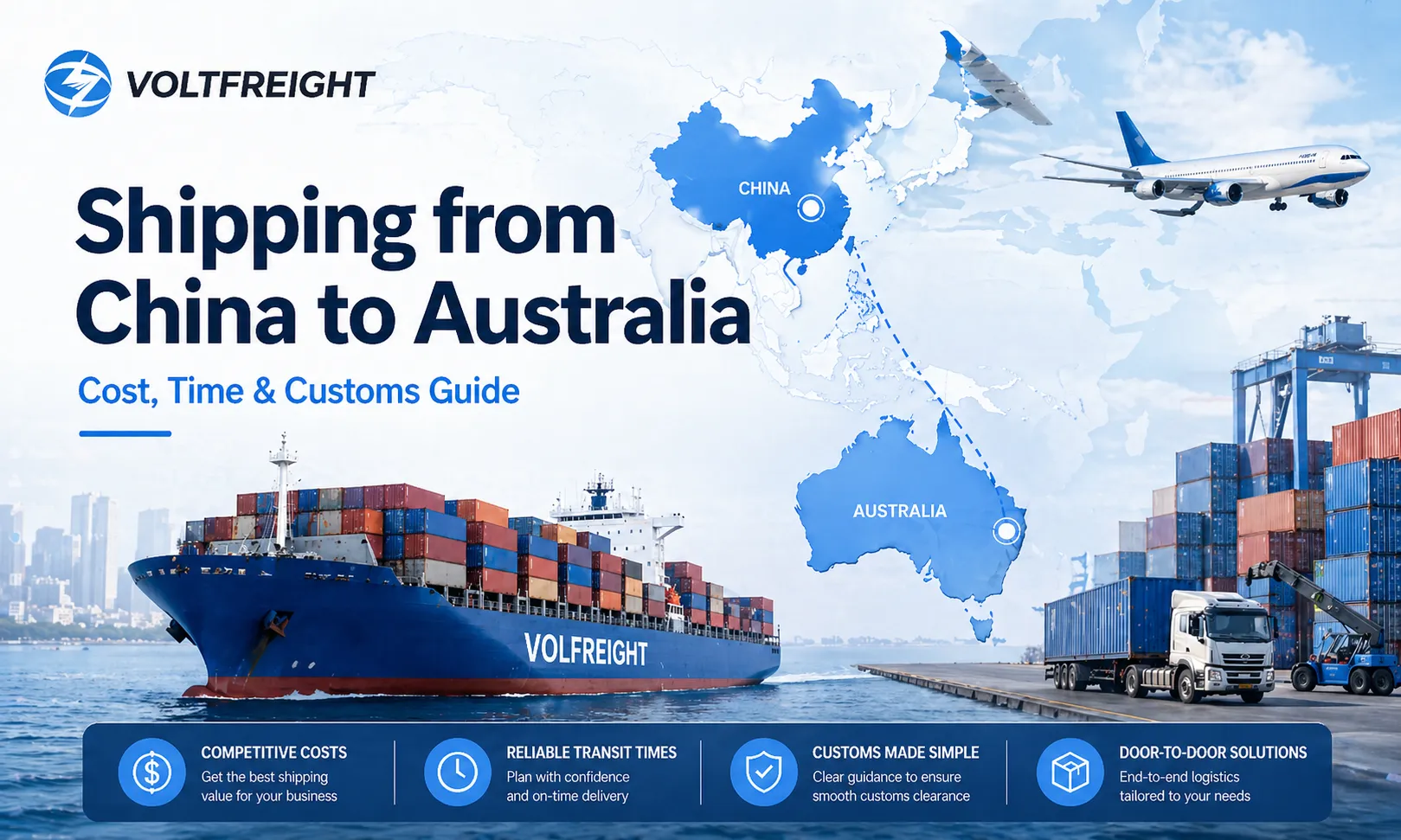
Australian sellers have several options when shipping products from China. The most common methods include:
- Express shipping
- Air freight
- Sea freight
- Dedicated line shipping
- International postal services
Each method has advantages and limitations. For urgent shipments, express shipping or air freight may be the best option. For larger volumes, sea freight is usually more economical. On the other hand, ecommerce businesses that need a balance between speed and cost may benefit from dedicated line shipping.
Express Shipping for Small Parcels and Samples
Express shipping is the fastest option for sending small parcels, supplier samples, and urgent goods from China to Australia. In most cases, major carriers such as DHL, UPS, FedEx, and TNT handle this type of shipment.
This method is ideal for small parcels, urgent samples, high-value goods, or seasonal products that need to arrive quickly. As a result, many sellers use express shipping when every day matters. Depending on the carrier, customs clearance, and delivery address, express shipments can often arrive in Australia within 3–7 days.
Best For
- Urgent goods
- Small and lightweight parcels
- Supplier samples
- High-value products
- Simple door-to-door delivery
Watch Out For
- Usually the most expensive option
- Not suitable for large cargo
- Remote areas may cost more
- Some products may need extra documents
Air Freight for Medium-Sized Shipments
Air freight is a faster alternative to sea freight. In addition, it is often more cost-effective than express shipping for medium-sized shipments. It is commonly used for commercial goods, ecommerce inventory, electronics, fashion products, and urgent restocking.
In most cases, air freight is a good option for shipments under 100–300 kg. However, the final recommendation depends on the product type, chargeable weight, and delivery deadline.
Air Freight Advantages
- Faster than sea freight
- More affordable than express shipping for medium-sized cargo
- Suitable for urgent commercial shipments
- Good for ecommerce sellers that need fast inventory replenishment
For example, special cargo such as lithium batteries, cosmetics, frozen products, liquids, and sensitive electronics may require extra checks before being accepted by airlines. Therefore, it is important to confirm cargo requirements before booking.
Sea Freight Options: LCL vs FCL
Sea freight is usually the most cost-effective way to move larger volumes from China to Australia. However, it is slower than air freight and express shipping. Because of this, it is best for businesses that can plan inventory in advance.
When shipping by sea, you can choose between FCL and LCL. Both options can reduce freight costs, but the right choice depends on cargo volume.
Full Container Load
FCL Shipping
FCL means you book the entire container for your own goods. Generally, it is recommended when your shipment is around 14 CBM or more.
- Best for large shipments
- Lower cost per unit
- Less cargo handling
- Lower risk of damage
Less Than Container Load
LCL Shipping
LCL means your goods share container space with cargo from other importers. This option is usually suitable for shipments between 2 and 13 CBM.
- Best for small bulk shipments
- You only pay for the space you use
- Good for ecommerce inventory
- More cost-effective than air freight
Dedicated Line Shipping for Ecommerce Sellers
Dedicated line shipping is a popular option for ecommerce sellers who need a balance between cost and delivery speed. For example, it is often used for DTC orders, Shopify sellers, Amazon sellers, and crowdfunding reward fulfillment.
Compared with postal shipping, this method is usually faster and more reliable. Meanwhile, it is often cheaper than major express carriers. Depending on the service plan, it may also include customs clearance and last-mile delivery.
Dedicated Line Is Best For
- Ecommerce parcels
- Shopify and WooCommerce orders
- Amazon seller shipments
- Crowdfunding reward deliveries
- Medium-volume shipments that do not require express delivery
Postal Shipping for Small Low-Value Parcels
International postal shipping is usually the cheapest option for small, low-value, non-urgent parcels. For this reason, it may be suitable for samples, lightweight goods, and products that do not require special handling.
However, postal shipping is slower and less predictable than express shipping or dedicated line shipping. In addition, tracking may be limited depending on the carrier and service level.
How Much Does It Cost to Ship Products from China to Australia?
The cost of shipping goods from China to Australia depends on several factors, including the shipping method, cargo weight, cargo volume, pickup city, destination city, product type, customs requirements, and whether you need door-to-door delivery. Therefore, it is difficult to give one fixed price without shipment details.
| Shipping Method | Estimated Cost Level | Best For |
|---|---|---|
| Express Shipping | Highest | Small urgent parcels and samples |
| Air Freight | Medium to high | Urgent commercial shipments and medium-sized cargo |
| LCL Sea Freight | Low | 2–13 CBM shipments |
| FCL Sea Freight | Lowest cost per unit | 14+ CBM shipments or full containers |
| Dedicated Line | Medium | Ecommerce parcels and regular order fulfillment |
For shipments over 500 kg or larger-volume cargo, sea freight is usually the most affordable choice. For example, a 20-foot container from China to Australia may cost around USD 1,700, while a 40-foot container may cost around USD 2,200, depending on route, season, carrier, and market conditions.
If you are not filling a full container, LCL shipping is usually charged by cubic meter. As a rough estimate, LCL rates may range from around AUD 150 to AUD 250 per CBM, depending on the route and service provider.
Air freight is faster but more expensive. For example, rates may start from around USD 5 per kg, but the final cost depends on chargeable weight, product type, airline space, fuel surcharge, and destination.
Important note: Freight rates change frequently. Fuel costs, peak seasons, port congestion, exchange rates, product type, and available carrier space can all affect the final price. Therefore, the figures above should be treated as general estimates only.
Want an Accurate China to Australia Shipping Cost?
Send VoltFreight your cargo weight, volume, pickup city, destination, product name, and preferred delivery time. Then, our team will recommend the most cost-effective shipping option.
How Long Does It Take to Ship from China to Australia?
Transit time depends on the shipping method, origin port, destination port, customs clearance, and final delivery address. In addition, peak seasons and inspection requirements can also affect the final delivery timeline.
| Shipping Method | Estimated Transit Time | Best For |
|---|---|---|
| Express Shipping | 3–7 days | Urgent parcels and samples |
| Air Freight | 5–12 days | Fast commercial shipments |
| Dedicated Line | 7–15 days | Ecommerce parcels |
| Sea Freight | 15–35 days | Bulk cargo and lower-cost shipping |
| Postal Shipping | 10–30+ days | Low-value non-urgent parcels |
Estimated Sea Freight Transit Times
| China Port | Australia Destination | Estimated Transit Time |
|---|---|---|
| Shenzhen | Sydney / Melbourne | 11–15 days |
| Shenzhen | Brisbane | Around 11 days |
| Shanghai | Sydney / Melbourne | 17–20 days |
| Shanghai | Brisbane | Around 13 days |
| Hong Kong | Sydney / Melbourne | 12–22 days |
| Hong Kong | Brisbane / Adelaide | 28–30 days |
Please note that the times above usually refer to port-to-port transit. However, if you need door-to-door delivery, you should also allow time for supplier pickup, export handling, customs clearance, warehouse processing, and local delivery in Australia.
What Can Affect Shipping Time?
Peak season congestion
Port delays
Weather conditions
Biosecurity inspection
Remote delivery areas
As a result, even a simple shipment can be delayed if documents are missing or inspection is required. Working with an experienced freight forwarder can help you reduce delays and avoid unexpected costs.
How to Track a China-to-Australia Shipment
Once your shipment has been dispatched, you should receive a tracking number, bill of lading number, airway bill number, or carrier reference number. This allows you to check the shipment status while it is in transit.
Depending on the shipping method, you may be able to track your shipment through DHL, FedEx, UPS, TNT, airline cargo systems, shipping line websites, China Post, Australia Post, 17track, or your freight forwarder’s tracking system. In addition, your logistics provider can help you understand delays and next steps.
Customs Clearance for Imports into Australia
When importing goods into Australia, your shipment must go through customs clearance. In most cases, you may need to provide information to Australian authorities, including the Department of Agriculture, Fisheries and Forestry and the Department of Home Affairs.
Common Documents Required
- Commercial invoice
- Packing list
- Bill of lading or airway bill
- Certificate of origin
- Customs import declaration
- Customs value declaration
- Import permit, if required
- Proof of insurance, if applicable
- Product certificates or test reports, if required
Biosecurity and Product Restrictions
Australia has strict biosecurity rules. For example, products such as food, plants, wood, animal products, fresh produce, chemicals, cosmetics, pharmaceuticals, and certain packaging materials may require special checks or import permits.
Duties, GST, and Import Charges
Importers may need to pay customs duties, GST, import processing charges, and other fees. The final amount depends on the product’s HS code, customs value, origin, and applicable trade agreement. Therefore, checking your product classification before shipping is important.
Not Sure What Documents Your Shipment Needs?
VoltFreight can help review your shipment details and coordinate the import process. As a result, you can reduce paperwork mistakes and avoid unnecessary delays.
What Are Incoterms and Why Do They Matter?
Incoterms are international commercial terms that define the responsibilities of buyers and sellers in global trade. In other words, they clarify who is responsible for shipping costs, customs clearance, insurance, delivery, and risk at each stage of transportation.
EXW
Buyer handles pickup, export, freight, customs and delivery.
FOB
Seller delivers goods onto the vessel. After that, the buyer handles the rest.
CIF
Seller pays freight and insurance to the destination port.
DDP
Seller or service provider handles shipping, duties and delivery.
Which Shipping Method Should Australian Sellers Choose?
- For small parcels and samples: choose express shipping.
- For medium-sized urgent cargo: choose air freight.
- For 2–13 CBM shipments: choose LCL sea freight.
- For 14+ CBM shipments: choose FCL sea freight.
- For ecommerce sellers: choose dedicated line shipping or a combined freight and fulfillment solution.
How VoltFreight Supports Australian Sellers Importing from China
VoltFreight helps Australian sellers import products from China with reliable freight forwarding, fulfillment, warehousing, and delivery solutions. In addition, our team can help you compare different shipping methods before you commit to a route.
Whether you are importing full containers, LCL cargo, ecommerce parcels, Amazon FBA inventory, or crowdfunding rewards, our team can help you choose a cost-effective shipping plan based on your cargo size, destination, and delivery deadline.
Freight Forwarding
Air freight, sea freight, dedicated line shipping and door-to-door solutions.
Customs Support
Document support and customs coordination to reduce delays and paperwork mistakes.
Warehousing & Fulfillment
Australia storage, pick and pack, Shopify fulfillment, Amazon FBA prep and returns.
Why Work with VoltFreight?
Need Help Choosing a Shipping Method?
Send us your shipment details and our team will recommend the most suitable shipping method for your business. Therefore, you can make a decision based on cost, speed, and customs requirements.
FAQs About Importing Products from China to Australia
What is the cheapest way for Australian sellers to import from China?
Sea freight is usually the cheapest option for larger shipments. For smaller bulk shipments, LCL is suitable. For larger cargo or full containers, FCL is often better.
What is the fastest shipping option for small parcels?
Express shipping is usually the fastest option, with delivery often taking around 3–7 days. However, air freight is also fast and may be more cost-effective for medium-sized commercial shipments.
How long does sea freight usually take?
Sea freight usually takes around 15–35 days. However, the final timeline depends on the origin port, destination port, shipping schedule, customs clearance, and final delivery address.
Should I choose LCL or FCL?
If your shipment is between 2 and 13 CBM, LCL may be more cost-effective. On the other hand, if your shipment is around 14 CBM or more, FCL may offer better value, less handling, and lower risk of damage.
Can VoltFreight help with door-to-door delivery?
Yes. VoltFreight can support supplier pickup in China, international freight, customs coordination, warehousing, fulfillment, and local delivery in Australia.
Get a Quote for Your China-to-Australia Import Shipment
Importing from China does not have to be complicated. With the right shipping method, you can reduce costs, avoid delays, and keep your customers happy.
To get an accurate quote, please prepare the following information:
- Product name
- Cargo weight
- Cargo volume or carton dimensions
- Pickup city in China
- Destination city in Australia
- Preferred shipping method
- Required delivery time
- Whether you need customs clearance, warehousing, or fulfillment
Contact VoltFreight Today
Get a free, no-obligation quote for your next China-to-Australia shipment.