


✍️ VoltFreight Editorial Team
⏱️ 13 min read
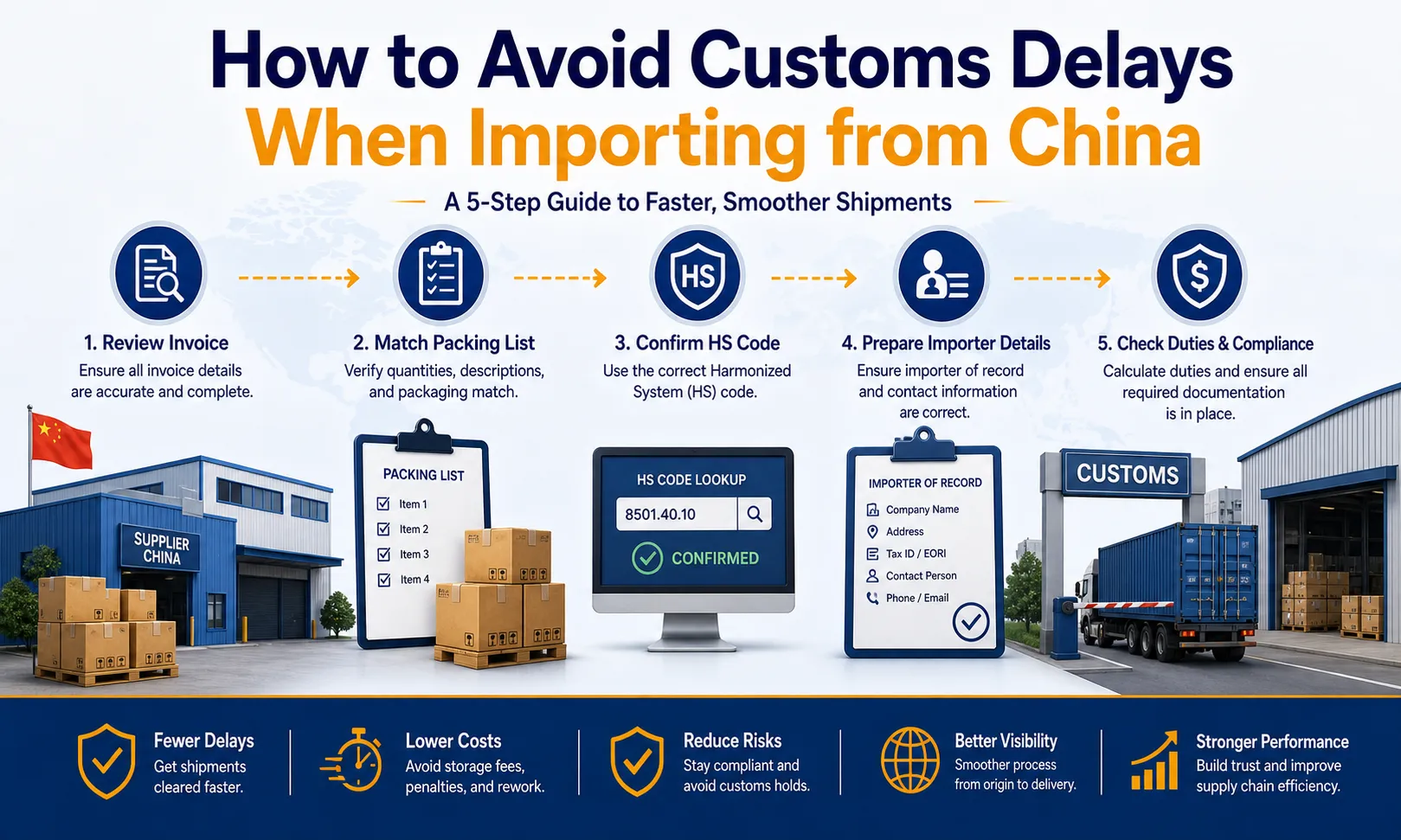
Many import problems do not begin when the cargo arrives at the destination port or airport. They begin much earlier, before the shipment even leaves China. Missing documents, vague product descriptions, invoice and packing list mismatches, incorrect HS codes, unclear importer details, unpaid duties, or missing product compliance records can all create customs delays.
This guide focuses on one practical question: how can importers avoid customs delays when importing from China? Instead of repeating a basic definition of customs clearance, this page explains the real issues that often cause customs holds, document questions, storage charges, and delivery delays.
If you buy from Chinese suppliers, Alibaba vendors, factories, trading companies, or multiple suppliers in China, use this checklist before your cargo moves. Preparing early can help you reduce customs risk, compare shipping terms more clearly, and avoid last-minute problems at destination.
Quick Answer
- Main cause of customs delays: inaccurate or incomplete shipping documents, unclear product descriptions, wrong HS codes, importer issues, unpaid duties, or missing compliance documents.
- Best time to prevent delays: before pickup in China, not after the cargo arrives at customs.
- Documents to check: commercial invoice, packing list, bill of lading or air waybill, product details, HS code, importer details, and any required certificates.
- Key responsibility: the importer of record should make sure entry details, classification, and declared values are correct.
- Practical solution: ask your supplier, freight forwarder, or customs broker to review documents before the shipment leaves China.
Key takeaway: Customs delay prevention is a pre-shipment task. Do not wait until your goods arrive at destination to fix invoice errors, HS code questions, importer of record problems, unpaid duties, or missing compliance documents.
Why Shipments Get Delayed at Customs
Customs authorities review shipment information to decide whether goods can enter the country, whether the declared value looks reasonable, whether the importer has supplied the required documents, and whether the shipment meets import rules. When key information is missing or inconsistent, customs may hold the shipment for clarification.
The delay may look like a carrier problem, but the root cause often comes from documentation or compliance. Importers can reduce the risk by checking the shipment file before the cargo leaves China.
Common Customs Delay Reasons
| Delay Reason | What Can Go Wrong | How to Prevent It |
|---|---|---|
| Invoice errors | Product value, quantity, currency, seller details, or buyer details do not match the shipment. | Review the commercial invoice before pickup and compare it with the packing list. |
| Vague product description | The invoice says “parts,” “accessories,” “sample,” or “goods” without enough detail. | Use clear product names, material, usage, model number, and product function. |
| HS code problem | The classification does not match the product or duty rate. | Ask your broker or forwarder to review the HS or HTS code before shipping. |
| Importer of record issue | No qualified party is ready to act as importer or provide entry details. | Confirm importer details before the shipment leaves China. |
| Missing compliance documents | The product needs a certificate, inspection record, safety document, or origin document. | Check product-specific import requirements before production or pickup. |
| Unpaid duties or unclear tax responsibility | The buyer, seller, and broker do not know who should pay duties and taxes. | Confirm whether the shipment uses DDP, DAP, DDU-style terms, or importer-managed clearance. |
What DHL, FedEx and Maersk Emphasize About Customs Delays
Major logistics companies and official trade resources point to the same basic pattern: shipments move more smoothly when importers prepare accurate documents, complete product descriptions, correct HS codes, realistic values, duty payment plans, and required compliance records before the cargo moves.
| Source | What It Emphasizes | How Importers Should Use It |
|---|---|---|
| DHL | Incomplete or inaccurate documentation, incorrect HS codes, undervaluation, regulatory non-compliance, and unpaid duties can slow clearance. | Check invoice data, product descriptions, tariff codes, declared value, permits, and duty responsibility before shipment. |
| FedEx | The commercial invoice is a foundation document for international commodity shipments and customs processing. | Prepare the commercial invoice early and make sure values, descriptions, parties, and terms match the shipment. |
| Maersk | Incorrect HS codes can cause duty problems, delays, fines, inspections, or other customs issues. | Do not rely blindly on supplier HS codes. Review classification with a broker or qualified import reviewer. |
| Trade.gov | The packing list is not a substitute for the commercial invoice, and customs officials may use it to check cargo. | Make sure the packing list matches the invoice, carton count, weights, and product details. |
Commercial Invoice Mistakes That Cause Customs Holds
The commercial invoice is one of the most important import documents. Customs may use it to understand what the product is, who sold it, who bought it, how much it is worth, what currency the transaction uses, and which shipping term applies.
A weak invoice can trigger questions even when the cargo itself is acceptable. Many customs delays happen because the invoice does not describe the product clearly or does not match other shipment documents.
Commercial Invoice Checklist
- Seller name, address, and contact information
- Buyer or importer name, address, and contact information
- Clear product description, material, use, model number, and SKU if available
- Quantity, unit price, total value, and transaction currency
- Country of origin
- Shipping term, such as EXW, FOB, FCA, DAP, or DDP
- Invoice number and invoice date
Practical tip: Avoid vague descriptions like “gift,” “parts,” “sample,” “accessory,” or “plastic item.” A clearer description helps your broker classify the product and helps customs understand the cargo.
Packing List and Carton Details: What Customs May Check
The packing list gives shipment details that the invoice may not show fully. It can include carton count, package dimensions, gross weight, net weight, product quantity, packing method, and marks or numbers on cartons.
A packing list should not replace the commercial invoice. It should support it. If the invoice shows one quantity but the packing list shows another, customs, the carrier, or the destination warehouse may ask for clarification.
Packing List Details to Verify
- Total carton count
- Product quantity per carton
- Gross weight and net weight
- Carton dimensions and total CBM
- Marks, carton labels, pallet details, or FBA carton labels if applicable
- Consistency with the commercial invoice and booking details
HS Code and Product Description Problems
HS code problems can create delays, duty surprises, and broker questions. A product’s classification affects duty rates, import restrictions, reporting requirements, and sometimes product-specific compliance checks.
Many suppliers provide an HS code, but importers should not rely on supplier information blindly. A supplier may use an export code from China, while the destination country may require a different tariff schedule or a more specific import classification.
Information That Helps HS Code Review
- Product name and product photos
- Material composition
- Product function and end use
- Model number, SKU, and technical specifications
- Country of origin
- Previous import records or broker classification notes if available
Importer of Record: Who Is Responsible?
The importer of record, often shortened to IOR, plays a critical role in import clearance. The IOR is the party responsible for entry information, classification, declared value, duties, taxes, and import compliance in the destination country.
Even when an importer hires a customs broker, the importer should still provide accurate product and transaction details. A broker can help file entries and review documents, but the importer should not treat the broker as a substitute for accurate information.
Importer warning: Confirm the importer of record before cargo leaves China. If nobody is ready to act as importer, the shipment may face delays, storage charges, or failed delivery after arrival.
Product Compliance Documents You May Need
Some products move through customs with standard documents only. Other products need special records, certificates, test reports, licenses, inspection documents, or safety compliance evidence. Requirements depend on product type and destination country.
Do not wait until the goods arrive to ask whether the product needs special documents. If the shipment includes regulated goods, customs may ask for proof before release.
Examples of Possible Compliance Documents
- Certificate of origin
- Product test report or safety certificate
- Pre-shipment inspection certificate if required
- Fumigation certificate for certain wood packaging or regulated goods
- FDA, FCC, CE, CPSIA, or other product-specific documents where applicable
- Free trade agreement documents if claiming a special tariff treatment
Duties, Taxes and Landed Cost: What to Estimate Before Shipping
A low freight quote does not always mean a low total import cost. Importers should estimate duties, taxes, customs brokerage, destination charges, inspection risk, storage risk, and final delivery before approving a shipment.
This matters especially when comparing DDP, DAP, DDU-style shipping, or importer-managed clearance. A quote may look cheaper because it excludes duties and taxes. Another quote may look higher because it includes more destination-side costs.
Simple landed cost formula:
Total landed cost = product cost + supplier pickup + export handling + international freight + customs brokerage + import duties + import taxes + destination charges + storage risk + final delivery + cargo insurance if needed.
DDP vs Importer-Managed Customs: Which Option Reduces Delay Risk?
Some importers want full control over customs clearance. Others want a more managed solution. The best option depends on your product, destination country, importer setup, broker relationship, and risk tolerance.
| Option | Best For | Delay Risk to Watch |
|---|---|---|
| DDP shipping | New importers or ecommerce sellers who want a duty-paid door-to-door option. | The quote must clearly state what duties, taxes, delivery services, and compliance responsibilities it includes. |
| Importer-managed clearance | Experienced importers with their own broker and importer record. | The importer must prepare entry details, HS codes, value, duties, and compliance documents on time. |
| DAP or DDU-style shipping | Buyers who want the seller or forwarder to arrange transport but want to manage import clearance themselves. | The buyer must know who pays duties, who appoints the broker, and what final delivery includes. |
Pre-Shipment Customs Delay Prevention Checklist
Use this checklist before the cargo leaves your Chinese supplier. The goal is to solve document and compliance issues while the shipment is still easy to control.
- Confirm the exact supplier pickup address in China.
- Check that the commercial invoice matches the real transaction.
- Compare invoice quantity, packing list quantity, carton count, and gross weight.
- Review product descriptions and avoid vague wording.
- Confirm HS or HTS code with a broker or qualified reviewer.
- Confirm importer of record details before booking.
- Estimate duties, taxes, and brokerage charges.
- Check whether the product needs certificates, test reports, or special import permits.
- Confirm whether final delivery requires appointment, liftgate, Amazon FBA delivery, warehouse receiving rules, or pallet requirements.
- Ask your forwarder or broker to review the full shipment file before departure.
Red Flags Before Your Cargo Leaves China
If you see any of these red flags, pause before pickup. Fixing the problem before export often costs less than fixing it after arrival.
- The supplier invoice only says “sample,” “accessory,” “parts,” or “gift.”
- The invoice value does not match the real transaction value.
- The packing list carton count does not match the booking details.
- Nobody has confirmed the HS code or destination tariff classification.
- The buyer does not know who will act as importer of record.
- The product may need compliance documents, but nobody has checked the requirement.
- The shipping quote does not explain who pays duties, taxes, brokerage, storage, or final delivery charges.
How VoltFreight Helps Importers Reduce Customs Delay Risk
VoltFreight helps importers review shipping details before cargo leaves China. We can help you compare shipping terms, prepare document information, coordinate with suppliers, review delivery requirements, and plan air freight, sea freight, DDP shipping, customs support, and final delivery.
- China supplier pickup coordination
- Commercial invoice and packing list review support
- HS code and product description discussion with brokers or import teams
- DDP, DAP, and importer-managed clearance comparison
- Air freight, sea freight, LCL, FCL, and door-to-door delivery options
- Final delivery planning for warehouses, commercial addresses, Amazon FBA, and appointment-based deliveries
Need help reducing customs delay risk before shipping from China?
Send VoltFreight your supplier city, destination address, product details, carton quantity, carton size, gross weight, invoice, packing list, and preferred shipping term. We can help you review the shipment plan before cargo leaves China.
FAQ: Avoiding Customs Delays When Importing from China
What causes customs delays when importing from China?
Common causes include missing documents, vague product descriptions, commercial invoice mistakes, packing list mismatches, HS code issues, unclear importer of record details, unpaid duties, or missing compliance certificates.
How can I avoid customs holds before shipping from China?
Review the commercial invoice, packing list, HS code, product description, importer details, duties, taxes, and product compliance requirements before pickup. Ask your freight forwarder or broker to check the shipment file before departure.
Can a wrong HS code delay customs clearance?
Yes. A wrong or unclear HS code can lead to broker questions, duty changes, additional documentation requests, customs review, inspections, fines, or shipment delays. Importers should confirm product classification before shipping.
Does the packing list need to match the commercial invoice?
Yes. The packing list should support the commercial invoice. Quantity, carton count, product descriptions, weight, and shipment details should be consistent across documents.
Who is responsible for customs entry accuracy?
The importer of record is generally responsible for accurate entry information, classification, value, and supporting details. A broker can help with filing and review, but the importer should provide accurate shipment information.
Do I need a customs broker for China imports?
Many importers use a customs broker to file entry documents, review classification, estimate duties, and communicate with customs. Whether you need one depends on the destination country, product type, and your import setup.
Does DDP shipping reduce customs delay risk?
DDP can reduce confusion for some buyers because the quote may include import clearance and duty payment. However, the DDP provider must still prepare accurate documents, classify goods correctly, and handle compliance requirements properly.
What documents should I prepare before importing from China?
Common documents include the commercial invoice, packing list, bill of lading or air waybill, product details, HS code, importer information, and any required certificates, test reports, inspection records, or origin documents.
Can VoltFreight help check documents before shipping?
Yes. VoltFreight can help importers review shipment details, coordinate with suppliers, compare shipping terms, plan customs support, and arrange air freight, sea freight, DDP shipping, and final delivery from China.
Final Thoughts
Customs delays often come from preventable problems. If you prepare documents early, review HS codes, confirm importer details, estimate duties and taxes, and check compliance requirements before the cargo leaves China, you can reduce many common delay risks.
The best time to fix customs issues is before pickup, not after arrival. Work with your supplier, freight forwarder, and customs broker early so the shipment file is complete before the cargo moves.
Need help reviewing a China shipment before it leaves? Contact VoltFreight to compare shipping options, prepare document details, and reduce customs delay risk before importing from China.
Sources & References
- International Trade Administration — Common Export Documents, commercial invoice and packing list guidance. trade.gov
- International Trade Administration — Packing list details and customs use. trade.gov
- International Trade Administration — Special documents, certificates, inspections and origin documents. trade.gov
- U.S. Customs and Border Protection — Tips for New Importers and Exporters, importer of record responsibility. cbp.gov
- U.S. Customs and Border Protection — Reasonable Care guidance for importers. cbp.gov
- DHL — Customs clearance delay reasons, documentation, HS code, value, compliance and duty payment guidance. dhl.com
- FedEx — Commercial invoice and customs document guidance for international shipments. fedex.com
- Maersk — Customs declaration mistakes, HS code accuracy and shipment delay risks. maersk.com
- VoltFreight — Customs clearance service support for importers and international shipments. voltfreight.com
Tags
Importing from China
China Import Documents
HS Code Review
Importer of Record
Customs Hold Prevention